The Monochrome Set Durham University 1981
 The Monochrome Set was formed in London in 1978. The original line-up consisted of Indian-born lead singer and songwriter Bid, Canadian guitarist Lester Square, drummer John Haney and bass guitarist Charlie Harper. The band went through several bassists in the next few years. Experimental filmmaker Tony Potts began working with the band in 1979, designing their lighting and stage sets with the use of film projections for their live shows. The band’s early shows were defined by the shadowy, stage images created by his films and he is often described as being their “fifth member”. Today they are spoken of in reverential terms and are thought of as a seminal, legendary new wave / art-rock band. I only recall seeing the Monochrome Set once, at this gig at Durham University Dunelm Ballroom in 1981. By this point the line-up was John, Bid, Lester and Andy Warren on bass. My memories of the band are of a weird, slightly avant-garde arty new wave ensemble, very black and white (hence their name); quite strange.
From their official site: “You can never pin down The Monochrome Set. They’re so difficult in many ways, yet easy to appreciate.
They’ve been together now …. since the dying days of punk, developing a music which oscillates between furtive seriousness and high enjoyment and tries to connect fantasy with the world. Label them and their music at your peril. Because of the Rough Trade alliance, brief enigmatic press coverage, shadowy pictures, the casualness of the group, their seemingly aloof airs and faces, and the apparent strictness of their live performances, the wrong impression of the group is being communicated. I’m not sure they are doing all they can to change this.” Support came from local heroes the Carpettes.
The band have recently reformed and have been playing concerts to renewed acclaim.
Posts Tagged ‘gigs’
29 Oct
The Monochrome Set Durham University 1981
28 Oct
Don McLean Newcastle City Hall 1980
Don McLean Newcastle City Hall 1980  American Pie is an epic song in several senses. The album version runs at an incredible 8 minutes, although it was shortened to four minutes for the single release. Much has been written about the meaning of its cryptic lyrics, with the general consensus seeming to be that the song is about the tragic death of McLean’s hero Buddy Holly in a plane crash. McLean has been reluctant to explain the song’s meaning and is on record as joking: “It means I don’t ever have to work again if I don’t want to.” or more seriously “You will find many interpretations of my lyrics but none of them by me…. Sorry to leave you all on your own like this but long ago I realized that songwriters should make their statements and move on, maintaining a dignified silence.”.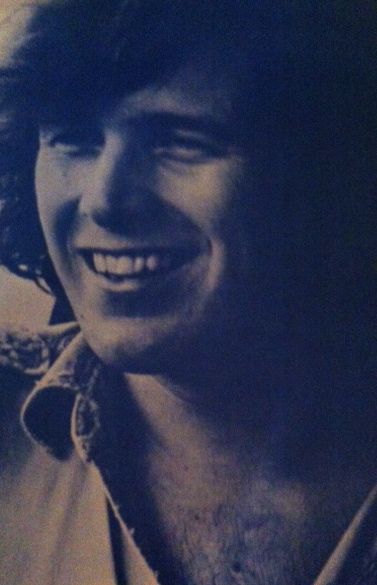
My enduring memory of the song is seeing Don McLean perform it at the Lincoln Festival in 1972. The weather at the festival was awful, and the heavens opened during Don’s set. However when he sang this song the rain stopped, almost as if by magic, and we all sang along.
I saw Don McLean again in 1980 at a concert at Newcastle City Hall. The tour was to support a “Greatest Hits” compilation and the support act was local folk trio Prelude. As well as “American Pie” you could be sure that Don McLean would sing his other hits “Vincent” and “Crying”, as well as less known, but just as beautiful, songs like “And I Love You So” and “Castles in the Air”. He would also include one or two Buddy Holly songs such as “Everyday”, perhaps some Elvis or Bob Dylan, and some rock’n’roll.  From the programme: “Don McLean is without doubt one of the most influential singer songwriters in the history of popular music. He has inspired many of his contemporaries and his classic song “American Pie” (released in 1971) has become a perennial on radio all-time Top Ten request lists. Another song “Vincent” – which is played every single day at the Van Gogh Museum in Amsterdam, Holland – was cited recently by Stevie Wonder as one of his all-time favourites. And another – “And I Love You So” – has become a standard. It is also one of the most sung and recorded songs in history with versions by Frank Sinatra, Elvis Presley, Perry Como and Helen Reddy leading the way.”
Thanks to John for the scan of an early tour programme. The lower image is the front cover of the 1980 UK tour programme.
27 Oct
The Mo-dettes Dunelm Ballroom Durham University Students Union 25 October 1980
The Mo-dettes Dunelm Ballroom Durham University Students Union 25 October 1980. 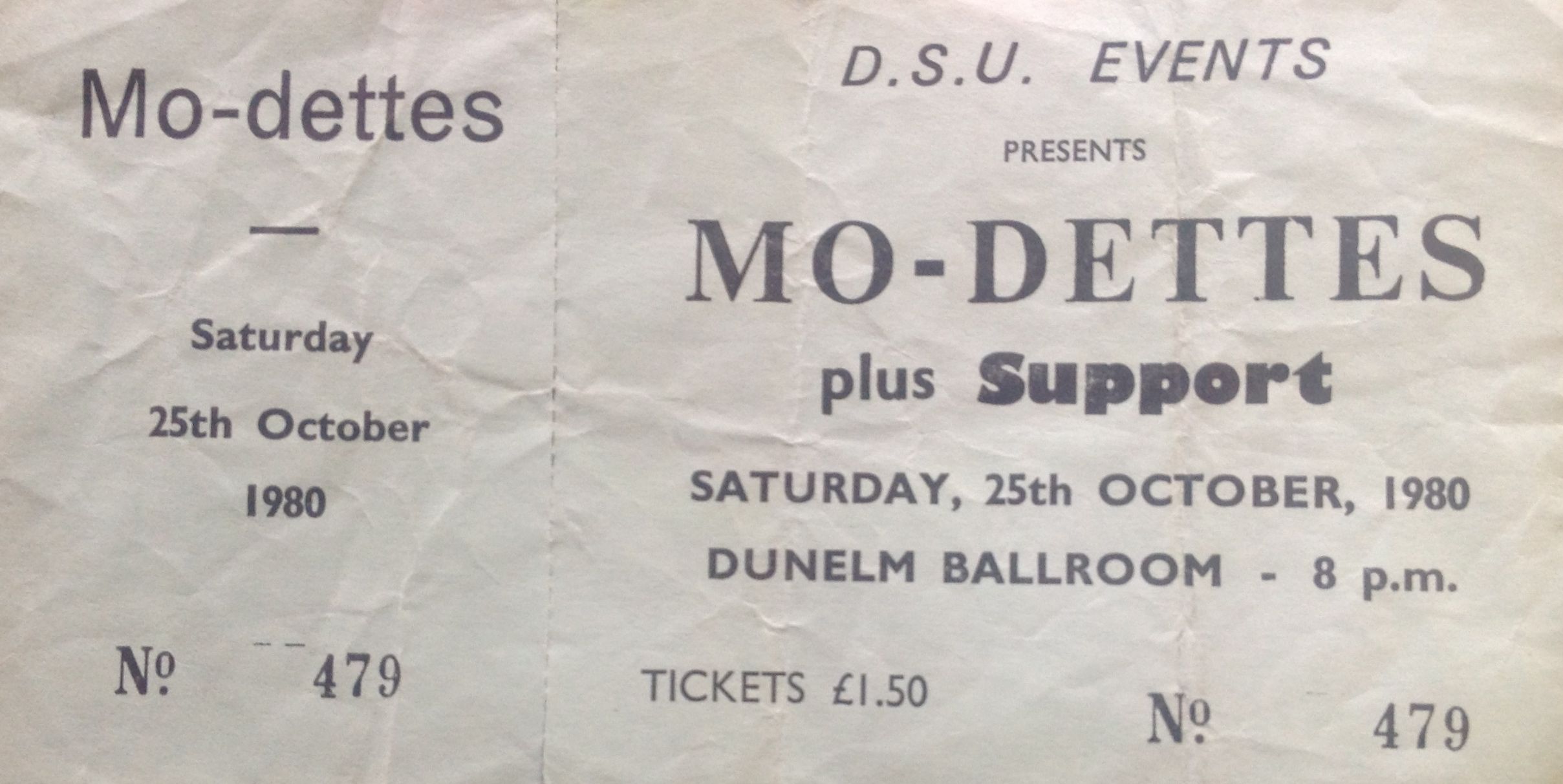 The Mo-dettes were an all-female punk/new wave band. They were formed in 1979 by guitarist Kate Korris, who had been an original member of The Slits and was also briefly a member of The Raincoats. The other members of the band were Jane Crockford (bass), Ramona Carlier (vocals) and June Miles-Kingston (drums). The Mo-dettes were championed by John Peel and their best known song is “White Mice”, which was self-released as their first single in mid-1979 on Mode records, and spent five weeks at No 1 on the Indie chart. They were a fun live band, dressed in shiny 60s gear, all jerky guitar rhythms. The highlights of their set were “White Mice” and a reggae-tinged version of the Stones “Paint it Black”. I saw them live on at least a couple of occasions; once at this gig at Durham University and again at Darlington Arts Centre. I may also have seen them at Middlesbrough Rock Garden, but can’t be certain. The Mo-dettes only existed for a couple of years, and are largely forgotten now. If you are interested, there is a great video of them playing “White Mice” on YouTube.
26 Oct
Roy Harper Manchester Bridgewater Hall 25th October 2013
Roy Harper Manchester Bridgewater Hall 25th October 2013
 It’s interesting seeing how time has affected some of my old heroes, as they reach their later years. In some cases their health has failed, and their performance and voice is a shadow of former glories; while for others, the years have been kinder and maturity and experience of stage and life have added to their concert outings. Roy Harper is in the latter category. He looks well; slim, fit, alert and his wit, sarcasm and performance are as engaging as they ever were. The young angry folk singer that I first saw almost 45 years ago seems a wiser, calmer soul, at peace with himself, his music and the friends who filled Manchester’s Bridgewater Hall to see him perform, chat with him. harangue him, and listen to songs old and new.
I arrived late, just before 8pm and a couple of minutes before Roy joined special guest Jonathan Wilson on stage. The roadworks have returned to the M62, and the pouring rain and spray slowed my journey across the Pennines. As Roy joined us, a lady came down to the front and handed him a couple of roses; he took hold of both her hands and thanked her before he started the first song. A fitting start to the evening. Like all Roy Harper concerts these days, there is a feeling of a coming together of friends, reinforced by the usual Harper banter between the man and his audience. “Show us your bus pas Roy” shouted one guy. “Hold on. I may just have it on me.” replied Roy. He did, and he held it up for all of us to see. Roy has been playing a short tour of three dates to promote his new album “Man & Myth” which has been receiving great reviews from critics and fans alike.  The tour started at the Festival Hall a few days ago, popped into his hometown of Manchester last night, and rounds off in Bristol tomorrow. Being the only northern date, it attracted fans from all over the north of England and several Scottish hecklers were in attendance. Roy has been accompanied by Jonathan Wilson and a string and brass section for the concerts. He opened with old favourite “Highway Blues”, and his set also featured several songs from the new record: The Enemy, Time Is Temporary, Heaven Is Here, January Man, and The Stranger. This was the first time that I’d heard the new tracks, and they all sounded strong, and quite typical Roy. There was a short interval. Roy also sang old favourites “Girl from the North Country”, “Another Day” and closed with “Me and My Woman”, all of which benefited from the strings and horns. He returned to sing a beautiful version of “When an Old Cricketer Leaves the Crease”, and thank us all for coming “I’d like to do it again; if the scales come out right and allow me”. He admitted to being quite nervous about playing in his home town. He needn’t have been. This was classic Roy at his best.
The concert finished just after 10.30pm. I was expecting to get home by 1am, but there was an accident on the A1 near the Harrogate turn off, which caused a 10 mile tail back and a 2 hour delay. I finally reached home at 3am.
25 Oct
The Members Dunelm House Durham University 1980
The Members Dunelm House Durham University Sat 16th Feb 1980
 I saw quite a few bands at Durham University Students Union, which held student dances in Dunelm House during the 70s. The trouble was I usually paid at the door, and as result I have few ticket stubs to remind me of the bands that I saw there. I recall attending gigs there by Adam and the Ants, Curved Air, Slade, Climax Blues Band, Siouxsie and the Banshees, and probably many more that I have forgotten. This is one of the rare gigs that I do have a ticket stub for. The Members were “formed in Surrey, England, in the summer of 1977, …. and played at the Roxy and all the other Punk clubs on the London circuit. The original band – composed of Nicky Tesco (vocals), Jean-Marie Caroll (guitar), Nigel Bennett (guitar), Adrian Lillywhite (drums), and Chris Payne (bass) – was among the first to successfully blend reggae rhythms with punk’s attitude and aggression.” (from the Members’ official site). I saw these guys at least three times; at this gig, supporting Eddie and the Hot Rods at the City Hall and at the Reading Festival. Nicky Tesco was a great front man, who sang with a passion and really engaged with the crowd. Members’ music was a cross between punk and reggae which worked pretty well, and the hit single “The Sounds of the Suburbs” was played everywhere I went in 1979, when it reached No 12 in the UK charts, which was their biggest hit. The Members were good fun, although the only song that really sticks in my mind is “The Sounds of the Suburbs”, which was a favourite of mine “back in the day”. The Members have recently reformed although I don’t think Nicky Tesco is in the line-up. Still I bet its fun to see them again.
“Same old boring Sunday morning old mans out washing the car, Mums in the kitchen cooking Sunday dinner her best meal moaning while it lasts. Johnnys upstairs in his bedroom sitting in the dark, Annoying the neighbours with his punk rock electric guitar.
This is the Sound, This is the Sound of the Suburbs, This is the Sound, This is the Sound of the Suburbs !!!! 🙂 (The Members, 1979).
24 Oct
Medicine Head live in the early to mid 70s
Medicine Head live in the early to mid 70s. 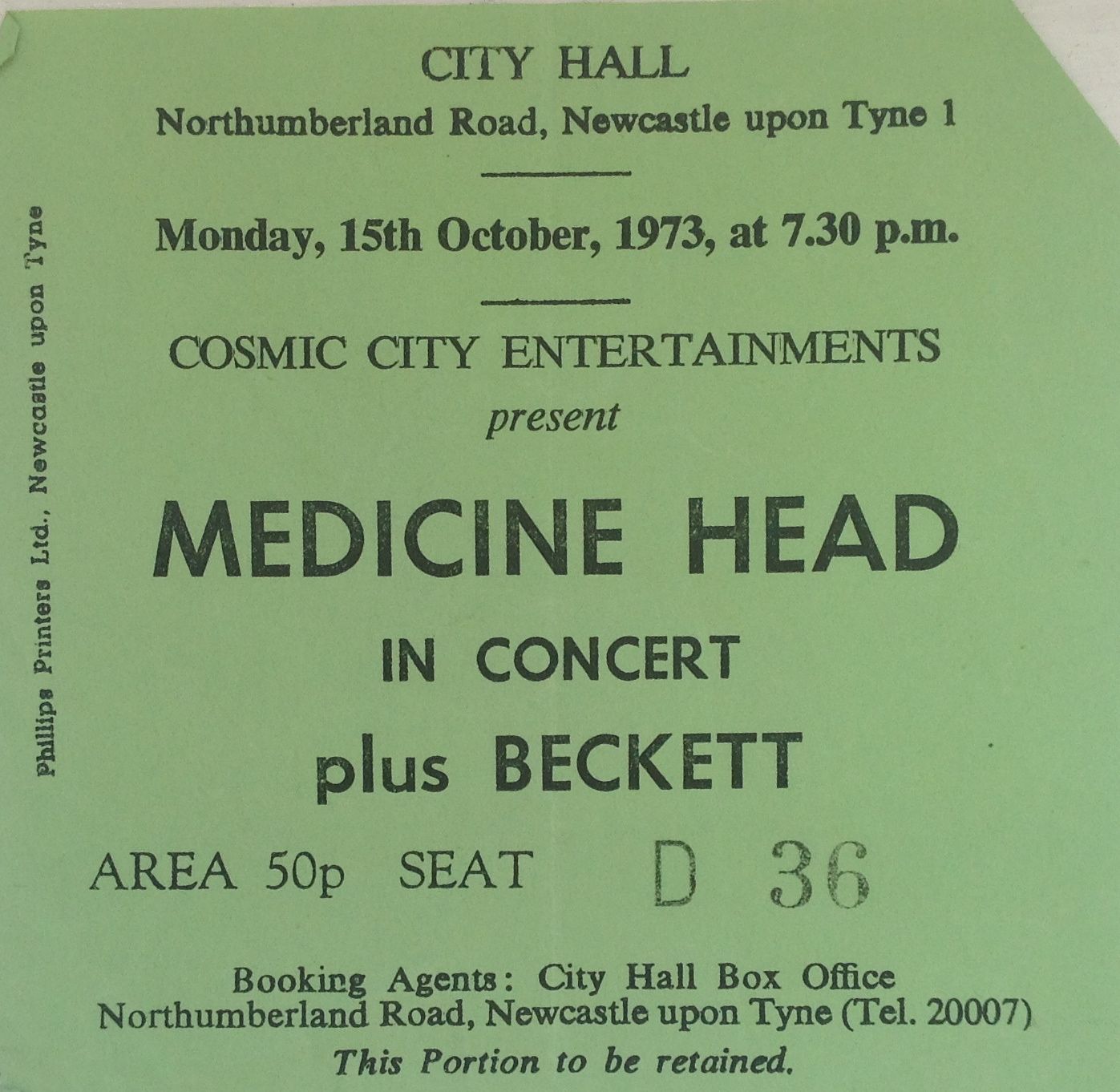 Medicine Head were one of several hippie/underground bands who played their own unique blend of the blues and broke through to the mainstream, hitting the charts in the early 70s. Championed by John Peel, they featured on his Dandelion record label and would often pop up at festivals “back in the day”. The core of Medicine Head were John Fiddler (guitar and vocals) and Peter Hope-Evans (mouth harp, jaw harp, and crazy bushy hair). In the early days they played as a duo, although they were augmented by additional musicians in some later incarnations. I saw them at least four times: at the Buxton 1973 festival (which was the duo), at Sunderland Locarno (during a period where ex Yardbird front man Keith Relf was singing and playing bass with them, and Peter Hope-Evans had left the band for a spell), at a great gig at Spennymoor Top Hat Club (back to the duo), and at a gig at Newcastle City Hall (where they were joined by a full band). The City Hall seemed a big venue for Medicine Head to play, and the venue was pretty sparsely attended, even though they had hit the charts with their single “One and One is One”, which reached No 3 in 1973. My ticket is pictured here, and tells me that the support act was local band Beckett, featuring singer Terry Wilson Slesser who went on to play in Back Street Crawler with Paul Kossoff. The Medicine Head band for the City Hall show featured Rob Townsend (ex Family) on drums, and possibly Tony Ashton (Ashton, Gardner and Dyke) on keyboards.
 The gig I have the strongest memories of is when I saw Medicine Head at Spennymoor Top Hat Club. The Top Hat was a great little club in a village near Durham. It seemed very modern at the time, with golden cages where dancing girls would entertain the crowd. The Top Hat played host to many rock concerts in the early 70s. I remember seeing Stray, the Groundhogs, and the Edgar Broughton Band play there. Marie and I went to the Medicine Head gig. It must have been in 1976, as I remember it being on the same night as the Eurovision Song Contest, and that we kept popping downstairs to the bar to watch the TV and see how we were doing. We won that year, of course, with Brotherhood of Man and “Save your kisses for me” 🙂 Anyway enough of my guilty past, and back to Medicine Head. They were back to the duo format, and were just great fun. John Fiddler would sit playing guitar and singing, and banging a bass drum with a foot pedal. But the star of the show for me that night was mouth harp player Peter Hope-Evans. He is quite a little guy, and I’ve never seen anyone put so much power and passion into playing a mouth organ. He would blow it as if his life depended upon it; I was almost expecting his head to explode. Peter had a massive round ball of curly hair which would fly about as he played, and he would run around the crowd at the same time. At the Top Hat gig, Peter ventured into the audience as was his style, running up and down the stairs, around the tables, and squeezing unbelievable bluesy howls out of his instrument. Marie and I were just amazed by his performance. Unforgettable.
That gig at the Top Hat was the last time I saw Medicine Head. They split shortly afterwards, and are largely forgotten. John Fiddler has been promising a reunion on his website, and a couple of dates were set up, but never took place for some reason. It would be good to see them again.
Thanks to John for the scan of the amazing poster from the City Hall gig.
23 Oct
Frankie Miller live in the 70s
Thoughts on Frankie Miller live in the 70s.  Frankie who? Frankie Fu**in’ Miller – That’s who! So said the tour t-shirts for Frankie Miller’s Full House at gigs in the mid 70s. Frankie Miller is one of the greatest white soul and R&B singers that the UK has produced, easily on a par with Paul Rodgers (with whom he was often compared at the time), Eric Burdon, Rod Stewart and Joe Cocker. I first became aware of Frankie when he played Sunderland Poly’s Wearmouth Hall in the band Jude, which also featured ex Procul Harum guitarist Robin Trower, ex Jethro Tull drummer Clive Bunker and old friend, fellow Scotsman and bassist Jimmy Dewar who had just left Stone The Crows. I have very vague recollections of that gig, and can’t be certain I was present, but I’m pretty sure that it happened. Frankie Miller then went on to front his own band, which became Frankie Miller’s Full House, and they toured relentlessly on the club and university circuit throughout the mid 70s.
  I recall attending tremendous rowdy Frankie Miller gigs at Newcastle Poly, Newcastle Mayfair and Redcar Coatham Bowl. My ticket stub from the Redcar gig is pictured here. The gig at Redcar was around the time that “Darlin'” was in the charts, which makes it 1978. Frankie hit the charts twice; with “Be good to yourself” and “Darlin'”, but it is his great live performances that I remember most of all. Frankie Miller live in the 70s just couldn’t be topped for a rocking night of great R&B and soul..
Frankie Miller suffered a brain haemorrhage in New York on 25 August 1994, while writing material for a new band he was forming with Joe Walsh of The Eagles. He almost died, and was in a coma for several months. Since then Frankie has slowly been regaining his health.
Rod Stewart said of Frankie Miller, “He is the only white guy that ever brought a tear to my eye!” Wish I’d bought one of those t-shirts. Guess it wouldn’t fit me now anyway. Thanks to John for the scan of his Frankie Miller EP.
Thanks to Mitch for reminding me that I must also have seen Frankie Miller supporting Ten Years After in 1972: “Frankie Miller played Newcastle City Hall on 29/10/72 as support on Ten Years After’s Rock ‘n’ Roll Music To The World tour. I was there – both acts were terrific…and this was before his debut solo album was released. He also duetted with Phil Lynott on the original version of Still In Love With You which appears on Lizzy’s 1974 album Nightlife.”
22 Oct
John Mayall and Chicken Shack Gateshead Sage 2006
John Mayall and Chicken Shack Gateshead Sage 2006
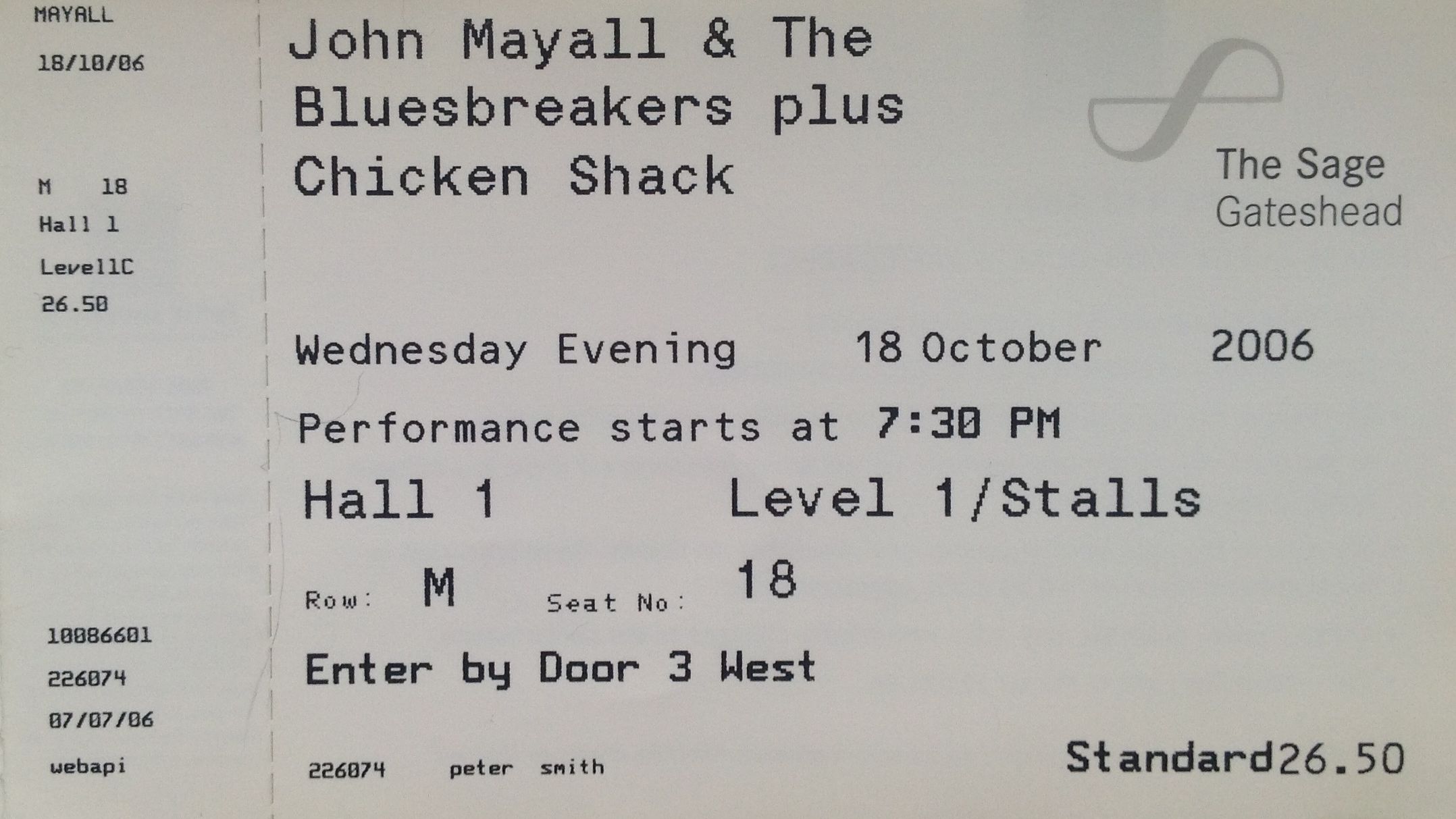 The last time I saw John Mayall and his Bluesbreakers was at the Sage Gateshead in 2006. This was another superb double bill, showcasing John Mayall and the Bluesbreakers alongside Stan Webb and Chicken Shack. I’ve already written about Stan the Man Webb and his fine guitar prowess, and will unashamedly use my entry today as a further excuse to do so. Stan is one of the best blues rock guitarists around, but in my view he rarely gets the credit he deserves. He mixes excellent technique with a real blues feel, and understands how to use tone and sound dynamics to great effect. My favourite Chicken Shack songs are the rock numbers from his early 70s albums, such as Poor Boy, and Daughter of the Hillside.
  If you get the chance listen to the track Poor Boy, and you’ll see what I mean about the use of dynamics. The song starts very quietly, but Stan and the rest of his band soon come thundering in with a great riff and drums, usually deafeningly loud. Stan’s not a bad blues singer either. This concert saw Chicken Shacl opening for the legend that is John Mayall, and his Bluesbreakers, who again featured Buddy Whittington on guitar. A great pairing and a great gig. The line up for the Bluesbreakers was Mayall, Whittington, Joe Yuele, and Hank Van Sickle. Chicke Shack featured Webb, Jum Rudge, Gary Davis and Mick Jones. From the programme: “Good Evening and Welcome. British Blues Legends John Mayall and Stan Webb join forces on a musical bill that promises blues at its very finest – it just doesn’t come better than this!”
I recently bought a live DVD of Stan and Chicken Shack. The tracklisting gives an idea of a typical set (although Poor Boy is sadly missing): So Tell Me; The Thrill Has Gone; Reconsider Baby; I Know You Know Me; You Are The Sweetest Little Thing/Hurt; Stan Webb’s Chicken Shack Opera; Spoonful; Doctor Brown 10. I’d Rather Go Blind; The Daughter Of The Hillside; Stan’s Blues.
Its been a few years since I’ve seen Stan Webb or John Mayall in concert; something I intend to put right when I get the chance. Mayall is promising to tour the UK for his 80th birthday in October 2014, which is a tour to look forward to.
21 Oct
John Mayall Chicken Shack Mick Taylor Newcastle City Hall 2004
John Mayall Chicken Shack Mick Taylor Newcastle City Hall 2004
 The next time I saw John Mayall was on a strong triple bill of Mayall and the Bluesbreakers, Stan Webb and Chicken Shack ,and Mick Taylor. I am a big fan of Stan and Chicken Shack. I’ve always thought that he is a greatly under-rated guitarist, easily on a par with Clapton and Page. The surprise for me on the night was just how great Mick Taylor was. I saw him with the Stones in the early 70s, where his playing really shone on the bluesier tracks like Stray Cat Blues and Midnight Rambler. I then saw him perform a quite shambolic concert in a marquee somewhere behind Gateshead stadium one night, some time in the 1980s.
  On this tour in 2004, Mick Taylor was back on form and gave the other guitarists Stan Webb and Buddy Whittington a run for their money. Stan and Chicken Shack were first up followed by an interval, during which I surprised to be greeted by John Mayall at the merchandise stall, so I bought his latest CD and got it signed. After the break, Mayall and his band took to the stage, with Mick Taylor guesting for part of the set. On this tour Mayall and the Bluesbreakers drew heavily from his back catalogue, probably more so than on other recent tours including a note perfect version of “All your Love” from the Beano album. When Mick Taylor joined, they also played songs from the Crusade album which debuted the guitarist at the yoin age of 18. Songs played included: Can’t You Hear Me Knocking, Walking On Sunset, Oh, Pretty Woman (from Crusade, an Albert King song and not the Roy Orbison track), and of course my own favourite Room To Move.
20 Oct
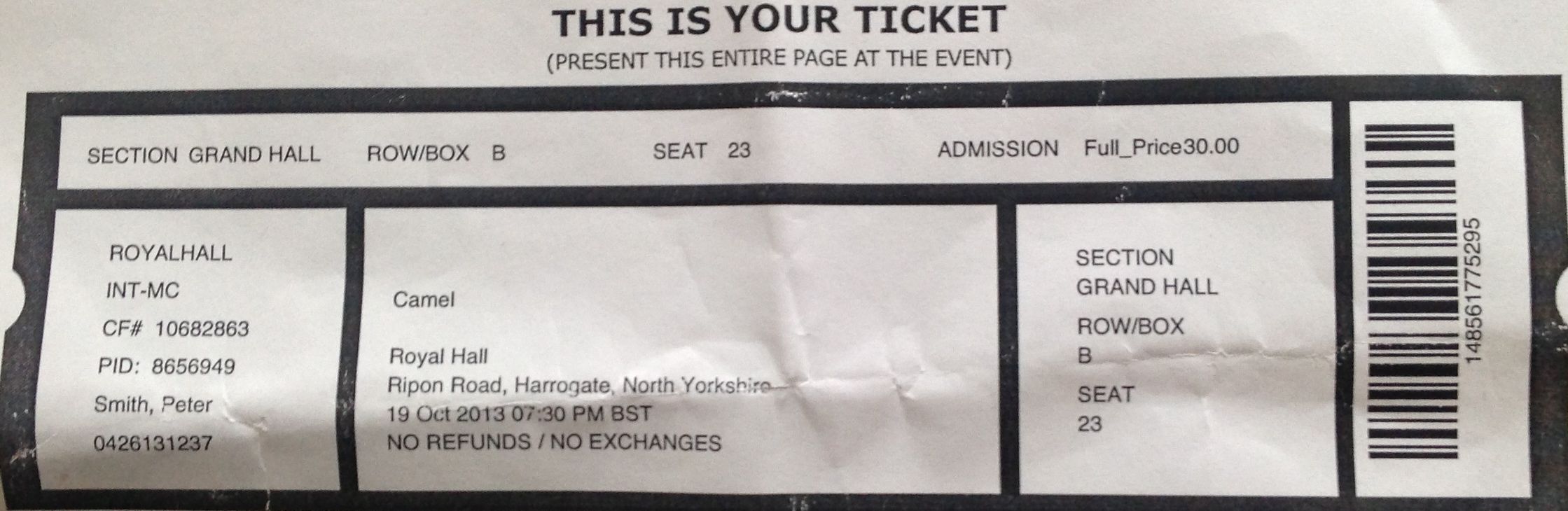
Camel Harrogate Royal Hall Oct 19th 2103
Camel Harrogate Royal Hall Oct 19th 2103
 Last night I renewed my acquaintance with the band Camel, who opened their UK tour with a concert at Harrogate Royal Hall. I saw Camel 5 or 6 times in the 70s, but can’t claim to be a massive fan. The last time I saw them was in 1979 at Newcastle City Hall. Camel guitarist front Andrew Latimer has been battling illness for many years, and for that reason the band have not performed for 10 years. He has regained his health and is taking Camel out on the Road, playing their epic Snow Goose album in full in tribute to his friend and former Camel original member Peter Bardens who died of cancer some years ago, and in celebration of a career spanning more than 40 years. The current line-up of the band is: leader and original member Andrew Latimer (guitar, vocals), long time band member Colin Bass (bass vocals), with Denis Clement (drums), Guy LeBlanc (keyboards) along with keyboardist and special guest Jan Schelhaus. A statement explains: “The evening pays tribute to former band member Peter Bardens, who died of cancer at the same time as frontman Latimer was battling a terminal illness. Ten years later, Latimer has regained health and is willing to celebrate a career that spans over four decades. This two-set show will also embrace compositions recorded throughout those years in a personal covenant of appreciation for a deeply rewarding life of music.”
The entire tour is sold out; the band retains a strong and loyal fan base.
My mate Norm decided to come along for the ride, and we drove down the A19; arriving around 7.30. I went straight into the Royal Hall, which is a beautiful restored old venue, and took my seat in the front row. The band had just taken the stage and were playing their classic Snow Goose album. Norm walked up the road to a local hostelry. I’ve been playing the Snow Goose for the past couple of weeks to familiarise myself with the tracks. This concept album is based on the short story by Gallico, and is classic 70s progressive rock; led by Latimer’s soaring guitar, and with the highs, lows, and intricacies that you would expect of the genre. Purely instrumental it stands as a great example of the period and of orchestral rock. Last night Camel performed the piece perfectly to the delight of the crowd who sat intently throughout, giving the band a tremendous ovation at the end of each section.
 “The Snow Goose: A Story of Dunkirk is a short novella by the American author Paul Gallico. It was first published in 1940 as a short story in The Saturday Evening Post, then he expanded it to create a short novella which was first published on April 7, 1941. The Snow Goose is a simple, short written parable on the regenerative power of friendship and love, set against a backdrop of the horror of war. It documents the growth of a friendship between Philip Rhayader, an artist living a solitary life in an abandoned lighthouse in the marshlands of wartime Essex because of his disabilities, and a young local girl, Fritha. The Snow Goose, symbolic of both Rhayader (Gallico) and the world itself, wounded by gunshot and many miles from home, is found by Fritha and, as the human friendship blossoms, the bird is nursed back to flight, and revisits the lighthouse in its migration for several years, as Fritha grows up. Rhayader and his small sailboat eventually are lost in the British retreat from Dunkirk, having saved several hundred men. The bird, which was with Rhayader, returns briefly to the grown Fritha on the marshes. She interprets this as Rhayader’s soul taking farewell of her (and realizes she had come to love him). Afterwards, a German pilot destroys Rhayader’s lighthouse and all of his work, except for one portrait Fritha saves after his death: a painting of her as Rhayader first saw her—a child, with the wounded snow goose in her arms.” (Wikipedia).
During the interval I popped out and met up with Norm, for a swift drink. In the second half of the show Camel played a selection of tracks from their large back catalogue. I should have invested more time listening to their material before the show, as most of the tracks were unfamiliar to me. Vocals were shared between Colin Bass and Latimer, but it was the latter who shone as the star of the show. His guitar playing was outstanding; I’d forgotten just how good he is. It looked like he was really enjoying himself, and that he couldn’t believe the crowd reaction. The stand out track for me was Mystic Queen from their first eponymous lp. Other tracks played included: Never Let Go, Echoes, Fox Hill (which was quite amusing) and closing song For Today. Encores were: Lady Fantasy and Never Let Go. After the gig I met up with Norm and we drove home, getting back around midnight. It was good to see Camel again. I need to spend some time listening to their early lps, as there are surely some gems therein.
 Vintagerock's Weblog.