Rick Wakeman Newcastle City Hall 18th Sep 1980
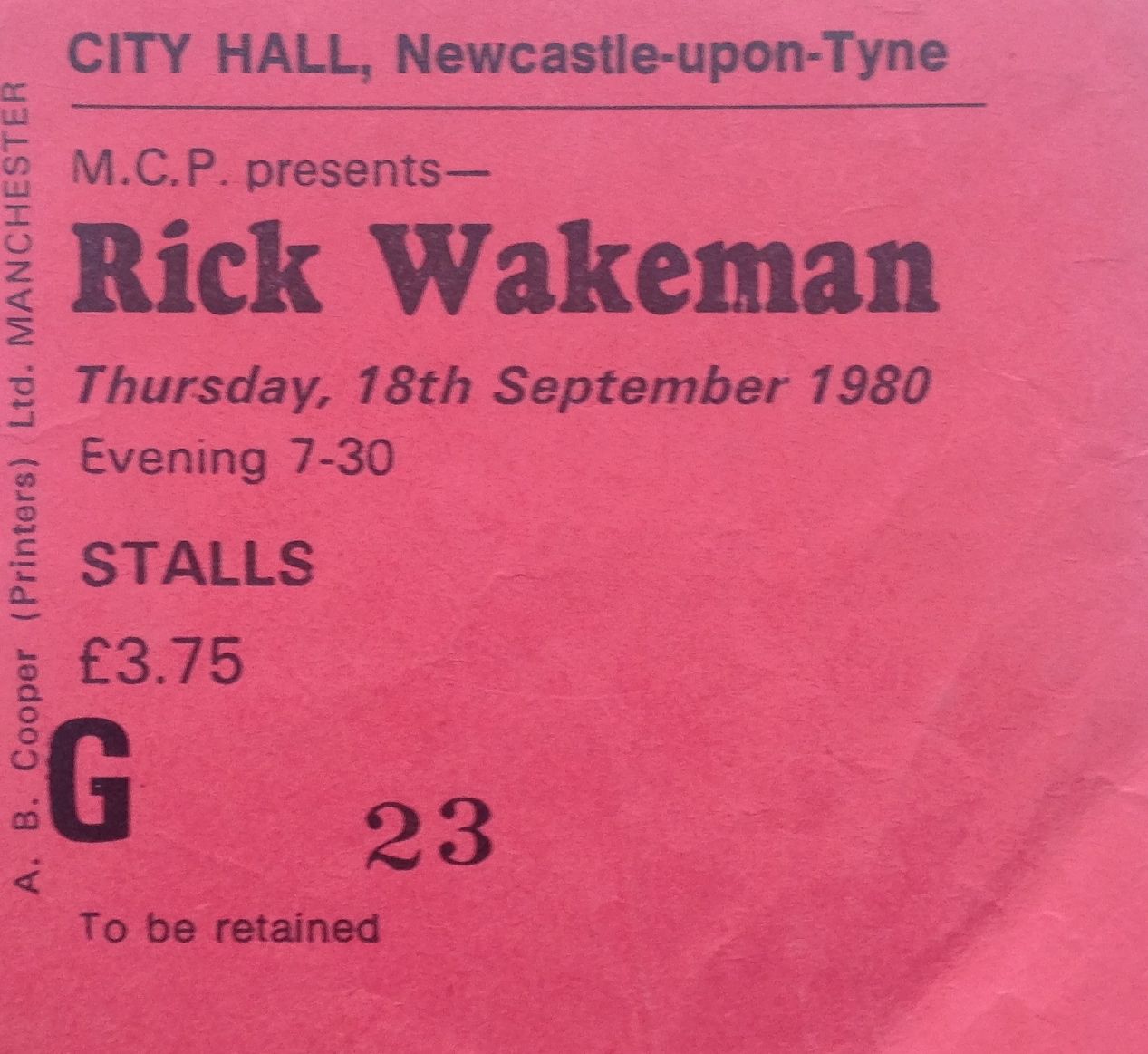 Rick Wakeman rejoined Yes in 1977, but left a few years later and in 1980 he was again on tour as a solo act, accompanied by his band.
I recall going to see the film “White Rock” in 1977. It was a documentary film about the 1976 Winter Olympics held in Innsbruck, Austria, and the soundtrack was by Rick Wakeman. It wasn’t the most enjoyable film…all I can remember is lots of footage of bobsleds speeding through ice and snow…..
Rick was back at the City Hall again in 1980. This time the tour programme featured a spoof newspaper which proclaims: “Yes The Rick Wakeman Show is on the road. Months of government pressure both in England and abroad, high level summit meetings with the President in the White House and even a telephone call from Her Majesty the Queen, failed to stop Rick Wakeman taking his bunch of suicidal perverts around the world to seriously upset music lovers”. 🙂
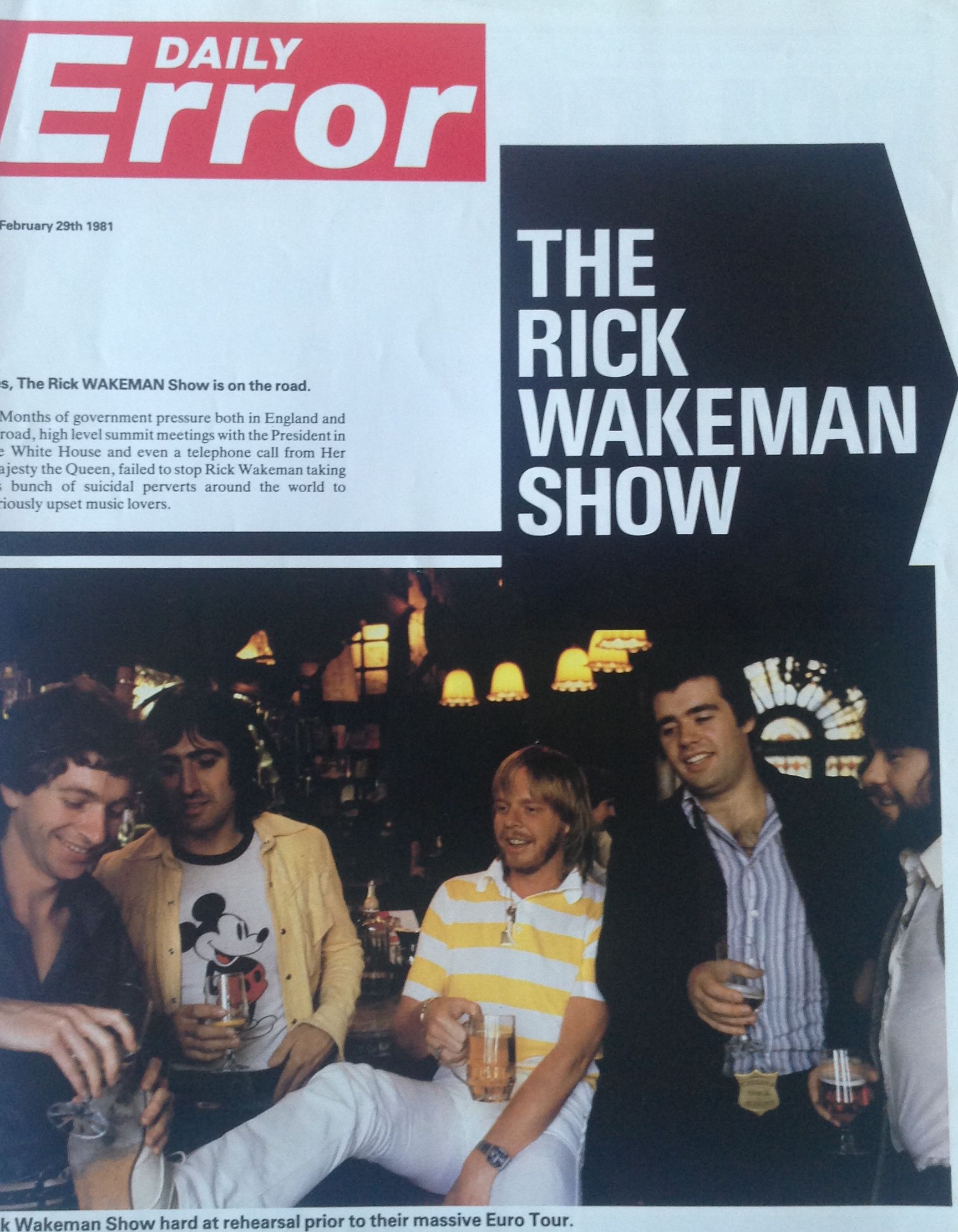 Headlines in the programme included “Police Called to riot in Rick Wakeman show” and “Road Manager in Sex Scandal”. The band was Tony Fernanez (previous job ice cream salesman, drums), Ashley Holt (nickname Fatty, vocals), Tim Stone (previous job tester in a nose stretching factory, guitar) and Steve Barnacle (nickname Bog head, bass). As you might have gathered, as well as being a progrock giant, Rick also had a sense of humour and his concerts reflected this being celebrations of prog pomposity alongside some very silly stories and jokes from the band leader himself. A Rick Wakeman concert was thus a mix of fun and great music, which was also sometimes just a little too long and thus often frustrating.
Setlist (something like): Arthur; Katherine Howard; No Earthly Connection; Anne Boleyn; Sea Horses; Geraldine O’Brien; Catherine Parr; The Spider; Merlin the Magician; Journey to the Centre of the Earth; Swan Lager
Encore: White Rock
Posts Tagged ‘prog rock’
7 Jan
Rick Wakeman Newcastle City Hall 18th Sep 1980
6 Jan
Rick Wakeman Newcastle City Hall 4th May 1976
Rick Wakeman Newcastle City Hall 4th May 1976
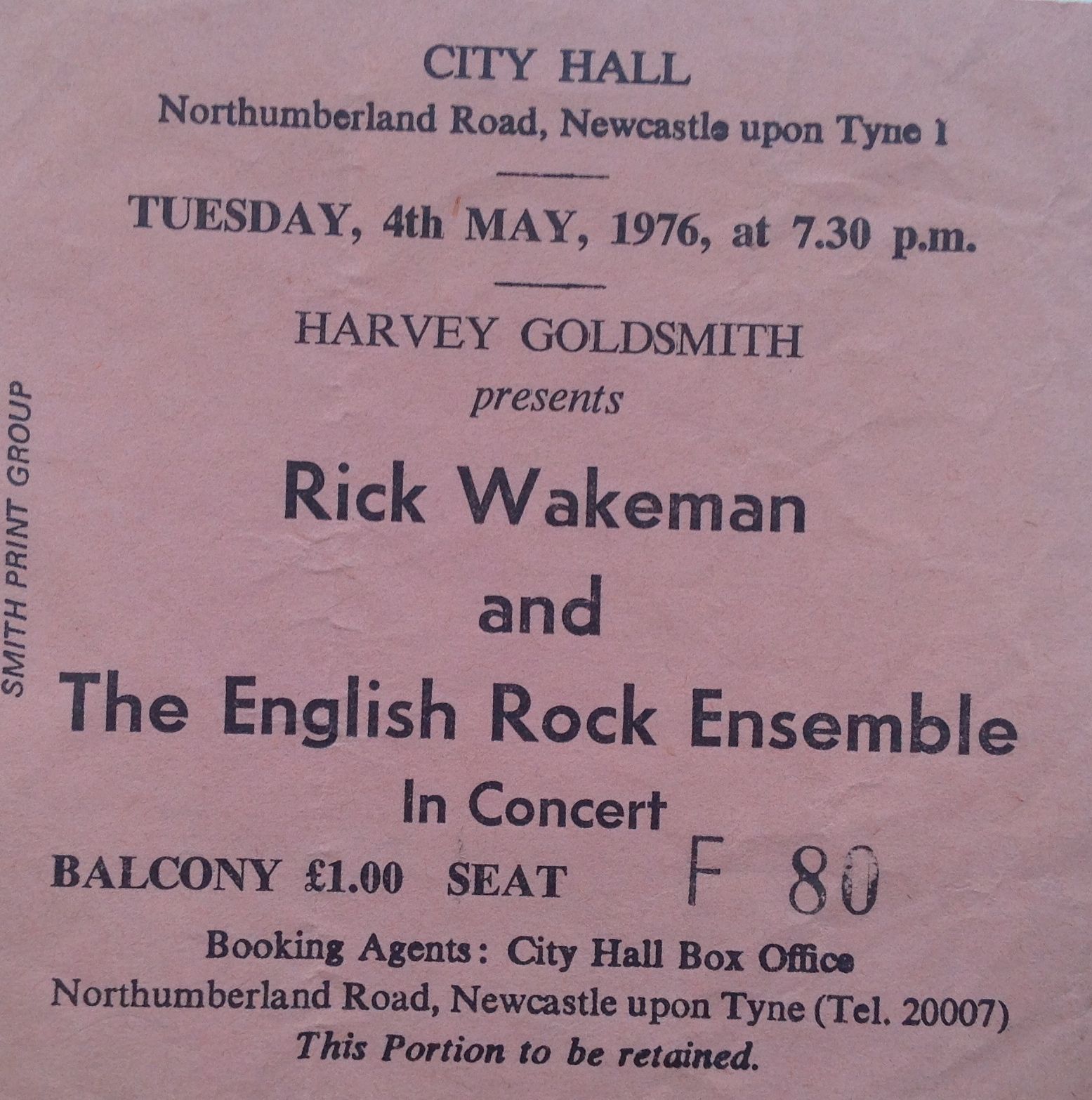 Rick Wakeman left Yes in 1974 to follow a solo career. He had already produced his first three solo albums “Piano Vibrations” (1971), “The Six Wives of Henry VIII” (1973) and “Journey to the Centre of the Earth” (1974) while he was still a member of Yes. On leaving Yes he continued to record epic prog / orchestral pieces, releasing “The Myths and Legends of King Arthur and the Knights of the Round Table” in 1975. Rick was also building a reputation for spectacular concerts. In fact “Journey to the Centre of the Earth” was recorded at the Royal Festival Hall, London with full orchestra and choir and topped the UK album charts, becoming a multi-million dollar seller within weeks. In 1975 Wakeman then went on to perform “The Myths and Legends of King Arthur and the Knights of the Round Table” on ice at Wembley Empire Pool. He the recorded the soundtrack for the Ken Russell film “Lisztomania” which starred Roger Daltrey as Franz Liszt, and also featured Paul Nicholas, Ringo Starr and, briefly, Wakeman himself as the god Thor.
  I remember going to see the movie at my local cinema at the time. It was crazy, mad piece telling the story of Liszt as the first, flamboyant, pop star, and was very much of its time.
In 1976 Rick Wakeman released the album “No Earthly Connection” and went out of a full UK tour to promote it. The album and the tour featured “Rick Wakeman and the English Rock Ensemble”. The album packaging included “a piece of silver foil which you were supposed to roll up and stand over the centre of the front or back cover. If you then looked into it you would see the distorted pictures of Rick brought back into proportion. I think there might have been a tiny graphic indicating this on the corner of the inner sleeve.” (from Recollection site). According to my programme from the concert the English Rock ensemble were vocalist Ashley Holt (aka Poldo), Roger Newell (bass and vocals; aka Budgie), John Dunsterville (guitars and vocals; aka Dusty), Tony Fernandez (drums and percussion; aka Woppo), Martin Shields (brass and vocals; aka Fartin’ Martin 🙂 ….typical Rick Wakeman humour ), and Reg Brooks (brass and vocals; aka Steptoe).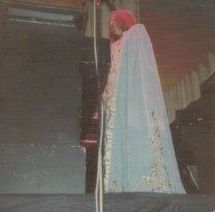
Thanks to Mitch for the photo which he took at this concert, and which shows Rick Wakeman resplendent in his cape (this was the ’70s). The tour programme was a spoof football programme, with a tankard on the cover, illustrating Wakeman’s extra-mural interests of the time. It tells me that “tonight’s programme will be taken form some of the following pieces: Catherine Parr, The Spaceman, The Battle, Lancelot & The Black Night, The Journey, The Recollection, Catherine Howard, Arthur, Listz’s Hungarian Rhapsody No. 13, The Forest, Merlin the Magician, Anne Boleyn, The Warning, The Prisoner, The Realisation. Aaah, the joys of the ’70s, and progrock excess 🙂
19 Dec
Van Der Graaf Generator live 1971 to 1977
Van Der Graaf Generator live 1971 to 1977
 I always found Van Der Graaf Generator to be a tricky and complex band. They come from the dark and deep side of prog which they inhabit with King Crimson. I totally loved some of their songs, but found others too dark, strange, jerky and lengthy for my liking. My favourites were, and remain, “Killer”, “Refugees” and “Darkness”. “Killer” is an epic prog classic, which was played again and again at my local Locarno ballroom in the early ’70s. Its narrative tells the story of a lonely killer whale: “So you live in the bottom of the sea, and you kill all that come near you ….but you are very lonely, because all the other fish, fear you …..”. I would group “Refugees” and “Darkness”‘ together; both are beautiful, slow ballads. “Refugees” tells a poignant story of hope, and of Mike and Susie who are “refugees, walking away from the life that we’ve known and loved”; they “walked alone, sometimes hand in hand……smiling very peacefully” and ends “Now we are alone….” “Darkness”, as its title suggests is a moody, fascinating piece: “Day dawns dark, it now numbers infinity. Life crawls from the past, watching in wonder. I trace its patterns in me. Tomorrow’s tomorrow is birth again.” Deep, heavy stuff. VDGG live were equally dark, complex and intense. I found their performances fascinating, uplifting, yet also frustrating and troubling; sometimes even slightly scary. The focus was always the intense and passionate performance of Peter Hammill, swirling organ, and lengthy (sometimes too lengthy in my view) sax solos. The classic line-up, which I saw twice in the period between 1971 and 1972 was Peter Hammill (vocals, piano), Hugh Banton (organ), Guy Evans (drums) and David Jackson (sax, flute). The first time I saw VDGG was at a concert at Newcastle City Hall, where they were supported by Lindisfarne and Genesis (a great triple bill 🙂 ). It was a Charisma package tour, and the tickets were all of 30p, but we had vouchers from Northern Arts which entitled us to half price entry. That was a great evening, and a bargain at 15p! I blogged of that concert some time ago. I next saw them at Sunderland Locarno on 3rd March 1972. Another great gig. The band then split for a period, reforming a couple of years later. I remember going to one of the shows on their “comeback” tour at Newcastle Polytechnic on 24th October 1975. I saw them again the following year at the Reading Festival on 28th August 1976, where they played a short festival set of Masks, Childlike Faith in Childhood’s End, Still Life, The Sleepwalkers and closed with Killer. By 1977 the line-up had changed. David Jackson and Hugh Banton had left and Nic Potter had joined on bass, along with Graham Smith, formerly of the excellent String Driven Thing on violin (check out String Driven Thing’s great song “Its a Game” which was covered by none other than the Bay City Rollers). I saw that line-up at a gig at Redcar Coatham Bowl on 30th October 1977. VDGG reformed a few years ago, and I have blogged on a performance I attended in Manchester a couple of years ago.
Van Der Graaf Generator are, without question, one of the most important and influential bands to come out of the prog rock genre.
14 Dec
Uriah Heep Carlisle Sands Centre 30th October 2004
Uriah Heep Carlisle Sands Centre 30th October 2004
 Support from Doogie White’s White Noise
Thanks for sticking with my during my week of ramblings on Uriah Heep. This will be my last post on that mighty, great band (at least until I see them again).
It was 2004 and I was suffering Heep withdrawal. I had foolishly lost touch with the band and it had been 19 years since I last saw them perform at a gig at Newcastle Mayfair. I read that they were touring the UK, and saw the nearest concert to me was at Carlisle Sands Centre, so I decided to go along. Carlisle is a 60 or so mile drive, and the Sands Centre is a leisure centre cum concert venue just outside the city centre. I arrived in time to catch support act Doogie White and White Noise. The ticket lists Manfred Mann’s Eartband as support, but this wasn’t the case. Doogie White was the singer in a later line-up of Blackmore’s Rainbow, and his set contained quite a few Rainbow favourites.
The 2004 line-up of Uriah Heep was Mick Box (guitar), Lee Kerslake (drums), Trevor Bolder (bass), Phil Lanzon (keyboards) and Bernie Shaw (vocals). Shaw and Lanzon both joined the band in 1986, and Shaw is now their longest serving vocalist. It was really great to see Uriah Heep again. I wasn’t sure how many old songs they would play, and whether I would know many, but I need not have worried. They started with Easy Livin’, and also played Stealin’, Gypsy, The Wizard and July Morning. The encores were Bird of Prey and Lady in Black. Shaw is an excellent front man with a great voice, and does justice to those classic Heep songs. It all came back to me, and I was once again a big fan. I’ve seen Uriah Heep on four further occasions since then, in Stockton, Workington, Newcastle and Holmfirth, and have already blogged about those shows. During that period Trevor Bolder has sadly passed away, and Lee Kerslake has retired from the band. Mick Box continues to lead the band. Long may they continue to rock.
Setlist: Easy Livin’; Shadows of Grief; Pilgrim; The Other Side of Midnight; Stealin’; Wise Man; The Wizard; Devil’s Daughter; Sunrise; Gypsy; July Morning; Look at Yourself
Encore: Bird of Prey; Lady in Black
9 Dec
Uriah Heep Newcastle City Hall 4th March 1979
Uriah Heep Newcastle City Hall 4th March 1979
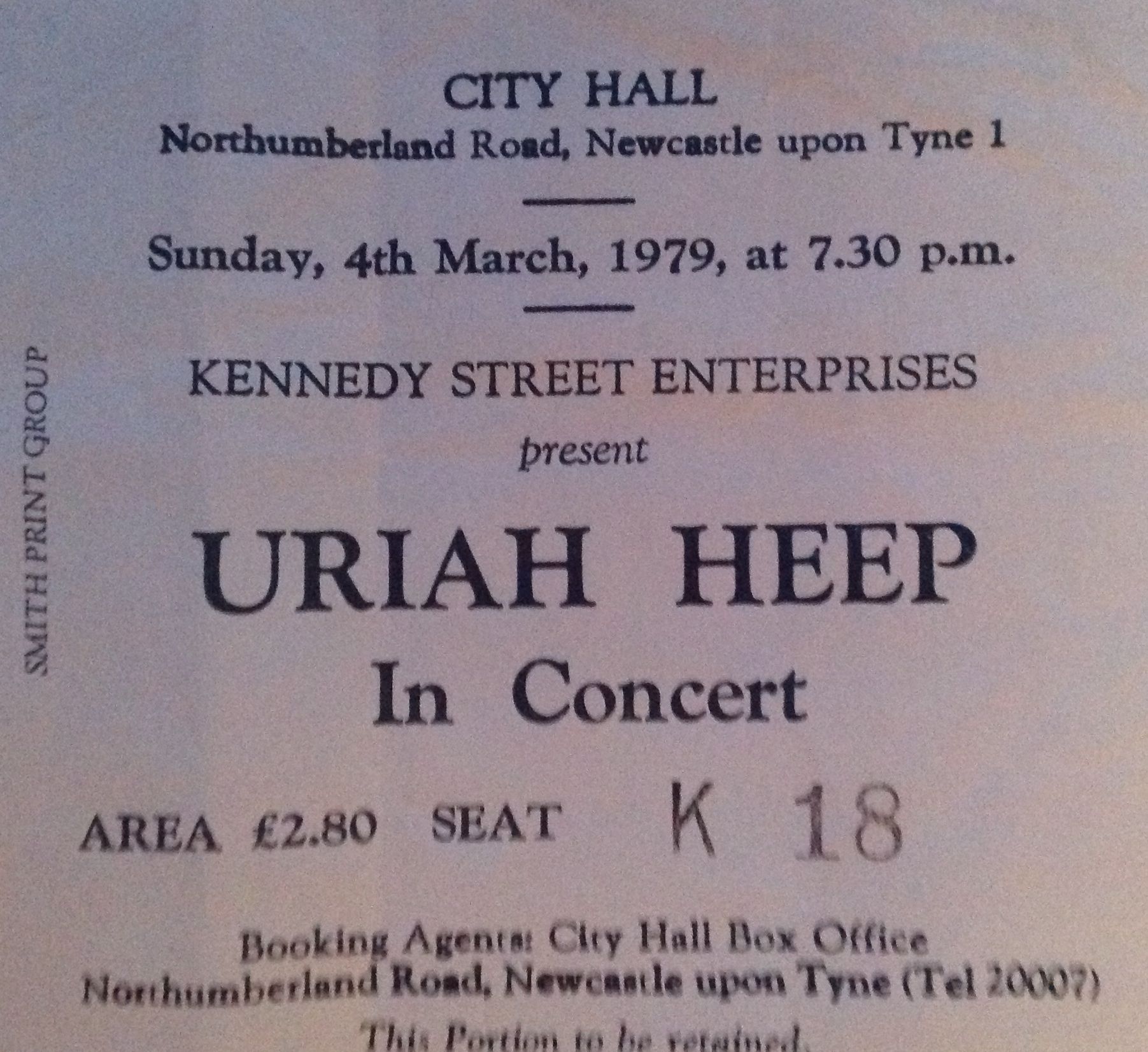 Support from Bram Tchaikovsky
I saw the John Lawton era Uriah Heep once more, at a concert in 1979 at Newcastle City Hall. At the end of 1978 Heep released Fallen Angel, their third studio album with this lineup lineup. The album was well received although it did not chart and Mick Box said that he thought it was “Too poppy.” Uriah Heep continued to tour and were as always, great in concert, but behind the scenes there was unrest. Ken Hensley was writing most of the material and as a result he was earning much more than his colleagues. Box is quoted as saying: “Everything he wrote, he had to use… And if you insist in using everything you end up with substandard albums.” But the relationship between Hensley and new singer John Lawton was the worst problem within the band. There was apparently “constant friction between the two, resulting in the nearest thing to violence the group had seen” and Lawton was eventually sacked in August 1979 after a festival in Belgium. Long time drummer Lee Kerslake also left the band shortly afterwards, after a row with the management, over the constant apparent insistence on the use of Ken Hensley’s songs.
 The replacements were ex Lone Star front man John Sloman on vocals, a young rock singer, and drummer Chris Slade from Manfred Mann’s Earth Band. However, Ken Hensley was soon unhappy with the new singer…but more of that tomorrow. It must have been fun to be a member of Uriah Heep at the time 🙂
Support for the 1979 tour, including the City Hall show, was guitarist/singer Bram Tchaikovsky who was at the time fronting his new power pop band, having recently left the successful punk/pub rock band, The Motors (Airport!)
Typical Uriah Heep setlist from 1979: Look at Yourself; Easy Livin’; Stealin’; Falling In Love; Woman Of The Night; Lady In Black; The Wizard; July Morning; Free Me; One More Night; I’m Alive; Who Needs Me; Sweet Lorraine; Free ‘N’ Easy; Gypsy
8 Dec
Uriah Heep Newcastle City Hall 30th Nov 1977
Uriah Heep Newcastle City Hall 30th Nov 1977
 Support from Fury.
Uriah Heep were on a roll, and released their next “Innocent Victim” shortly after “Firefly”. 1977 was a very successful year for the band. The single “Free Me” was a big international hit (making it to No. 1 in New Zealand), and in Germany “Innocent Victim” sold over a million copies and became Uriah Heep’s most successful, and the rereleased single “Lady in Black” was a big hit. Although “Lady in Black” originates from the early days of the band, having originally been released in 1971, it didn’t feature regularly in their live set until 1977. Written by Ken Hensley, and featuring him on vocals and acoustic guitar, it’s a classic Heep song, with its tale of the mysterious lady and of battles of old. 
I saw Uriah Heep for the third time in November 1977 at Newcastle City Hall. Support came from rock band Fury. It was another great gig. Uriah Heep remained an excellent live act throughout this period, and would play many of their classic tracks.
A typical Uriah Heep concert in late 1977 would probably contain the following songs: Do You Know; Stealin’; Look At Yourself; Lady In Black; The Wizard; July Morning; Sympathy; Who Needs Me; Easy Livin’; Gypsy; Sweet Lorraine)
“She came to me one morning, one lonely Sunday morning,
Her long hair flowing in the mid-winter wind.
I know not how she found me, for in darkness I was walking,
And destruction lay around me from a fight I could not win.”
(Lady in Black, Ken Hensley, 1971)
6 Dec
Uriah Heep Newcastle City Hall 9th March 1977
Uriah Heep Newcastle City Hall 9th March 1977
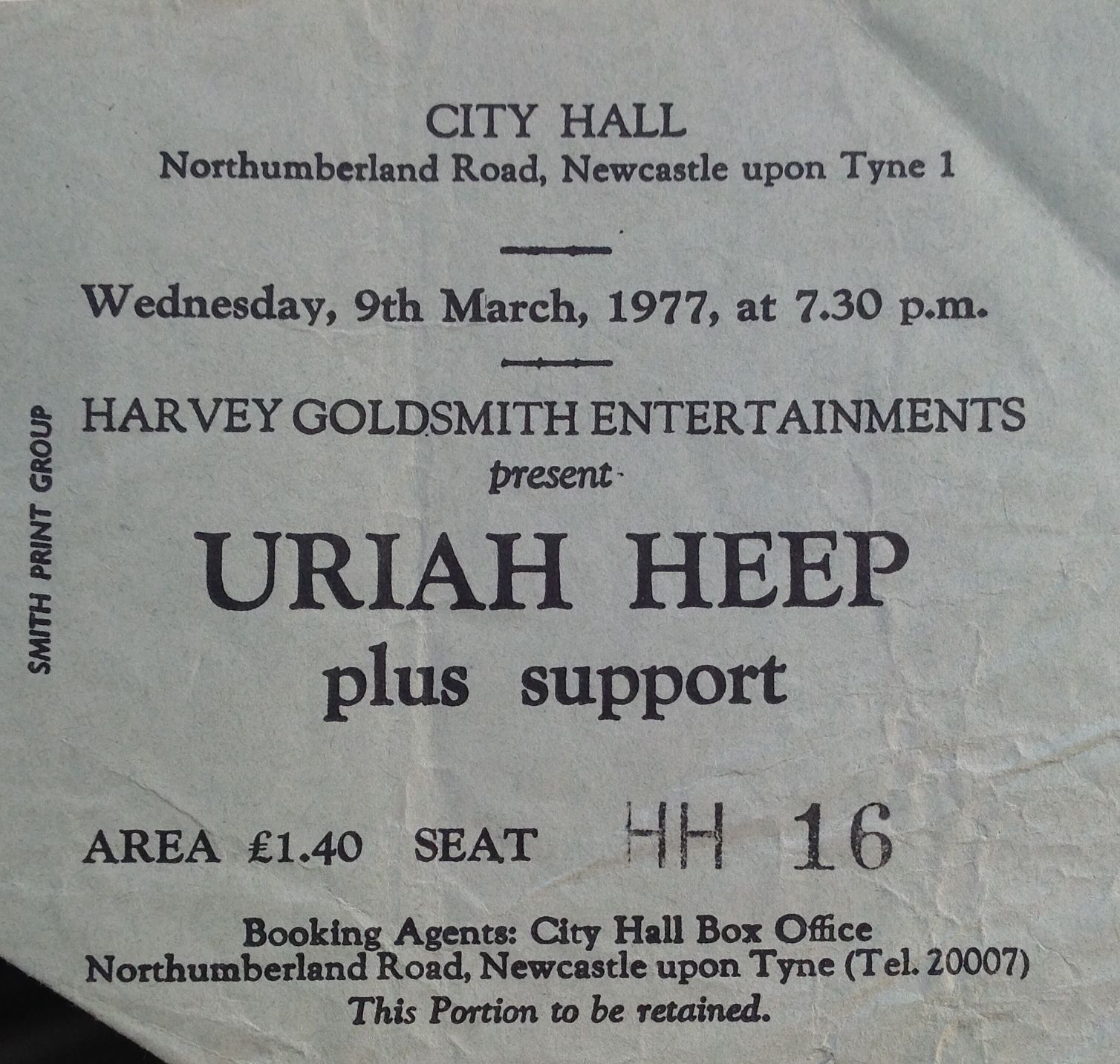 Support Woody Woodmansey’s U Boat
1977 saw a new revitalised Uriah Heep and the release of their 10th album “Firefly”. David Byron had been sacked from the band, and John Wetton also left, their replacements being John Lawton and Trevor Bolder (ex David Bowie and the Spiders from Mars) respectively. My mates and I couldn’t wait to see how the new line-up shaped up, so we went along to see them at the first opportunity we got, which was at Newcastle City Hall in March 1977. The tour programme has a pretty honest account of how Ken Hensley (who seemed to take the role of leader at the time) recognised the need for change in the band, and without explicitly naming names, how he instigated the necessary changes. Major changes like this in the line-up are interesting, and risky times for a band. Sometimes it works, sometimes not. Sometimes it gives a band such a boost, such a refresh, and a need to come back fighting, that it transforms them. I saw that happen with Purple when they exploded back with Coverdale, and Genesis when they came back strong post-Gabriel. And it isn’t just about how well the new guy can sing. It’s about the whole package, the image, the look, the performance, and how well the new guy gets on with the rest of the band, and whether they “fit”. Well something (almost) like that happened with Uriah Heep. They knew that the fans and critics were watching them and that the new tour could make or break the band, and they pulled out all the stops. In some John Lawton didn’t look quite right. He looked like a cross between a club singer and a straight rocker, with his open neck shirt and leather trousers. Mick Box: “Image-wise he wasn’t quite what we were looking for, but his pipes were perfect and so we went for the music end of it.” Ken Hensley: “He had a voice that I thought would give a new dimension.” Lawton had a great voice, which suited Heep. And Trevor Bolder was already known and also seemed to fit the band live. All seemed good. “Firefly” isn’t their greatest album, but it is ok, and their live set contained all the classics, including Lady in Black and the Wizard, both of which weren’t often played in the early 70s. Great stuff. Heep were back.
Support came from Trevor Bolder’s fellow ex-Spider, and Bowie sideman, Woody Woodmansey and his new band U Boat.
SetList (something like): Do You Know; Stealin’; Look At Yourself; Lady In Black; The Wizard; July Morning; Firefly; Sympathy; Who Needs Me; Easy Livin’; Gypsy; Sweet Lorraine
The next time I saw Uriah Heep was at the Reading Festival in August 1977, when they played third on the Friday night bill before Eddie and the Hot Rods and Golden Earring. They were then back at the City Hall again in November 1977, so I got hree helpings of Heep in one year; happy days.
5 Dec
Peter Gabriel Newcastle Arena 4th Dec 2014
Peter Gabriel Newcastle Arena 4th Dec 2014
 Peter Gabriel is currently on tour to celebrate the 25th anniversary of his album “So”. The show sees Gabriel reuniting with members of his old band line-up, and last night it called at Newcastle Arena. The show started with Peter walking on stage unannounced to introduce the opening act Jennie Abrahamson and Linnea Olsson who played a few songs to an attentive audience. Jennie plays keyboard and Linnea cello, and they each sang one or two of their own songs, which were all pretty good. They both also featured as vocalists in Gabriel’s band. After a very short break, Peter Gabriel and band took to the stage, Peter seated at a piano. He explained that the concert would be in three parts: an acoustic “starter”, followed by a more electronic and adventurous “main course” and followed by the desert, which would be “So” in its entirety.
For the short acoustic set the house lights were left on, and the set included a great version of “Shock the Monkey”. The “main course” was much darker in presentation and content. The house lights dropped and tall robotic lighting rigs were wheeled around the stage, on what looked like a small train line which encircled the band, sending white beams across the crowd. The songs were much rockier, with sharp riffs and electronic funk, and Gabriel parading around the stage, side-stepping in a jerky dance.  I’d almost forgotten what a showman this guy is. Peter and the band must have had cameras fixed to their instruments, and in Peter’s case to his mike, as scary, huge, close-up black and white images of the band’s faces were displayed on the screens around the stage. It was great to hear Gabriel’s 1977 hit “Solsbury Hill” again, reminding me of when he first went solo, and his magnificent shows at the City Hall during that period.
The desert of “So” was delivered next, starting with bright scarlet lights enveloping the stage for “Red Rain”. Highlights of this set for me were the well known songs: “Sledgehammer” and “Don’t Give Up”, which featured Jennie Abrahamson taking Kate Bush’s vocal part, and doing an excellent job. It seems to be the “thing” for bands to perform one of their albums in their entirety. At first I thought this was a goo idea, but now I’m beginning to wonder. Even the best albums have a few tracks that either aren’t so good or have been forgotten. I am beginning to think I would prefer to see a band play a set which draws from the best songs across a spread of albums. Having said that; it was really good to see Peter Gabriel again, it has been a good few years since he last played in Newcastle; an enjoyable concert.
Starter: What Lies Ahead; Come Talk to Me; Shock the Monkey; Family Snapshot
Main course; Digging in the Dirt; Secret World; Darkness; No Self Control; Solsbury Hill; Why Don’t You Show Yourself
Dessert (So): Red Rain; Sledgehammer; Don’t Give Up; That Voice Again; Mercy Street; Big Time; We Do What We’re Told (Milgram’s 37); This Is the Picture (Excellent Birds); In Your Eyes
Encore: The Tower That Ate People; Biko
Band line-up: Peter Gabriel: vocals, keyboards; Tony Levin: bass; David Rhodes: guitars; David Sancious: keyboards; Manu Katché: drums; Jennie Abrahamson: vocals; Linnea Olsson: vocals.
2 Dec
Uriah Heep Newcastle City Hall 19th Jan 1973
Uriah Heep Newcastle City Hall 19th Jan 1973
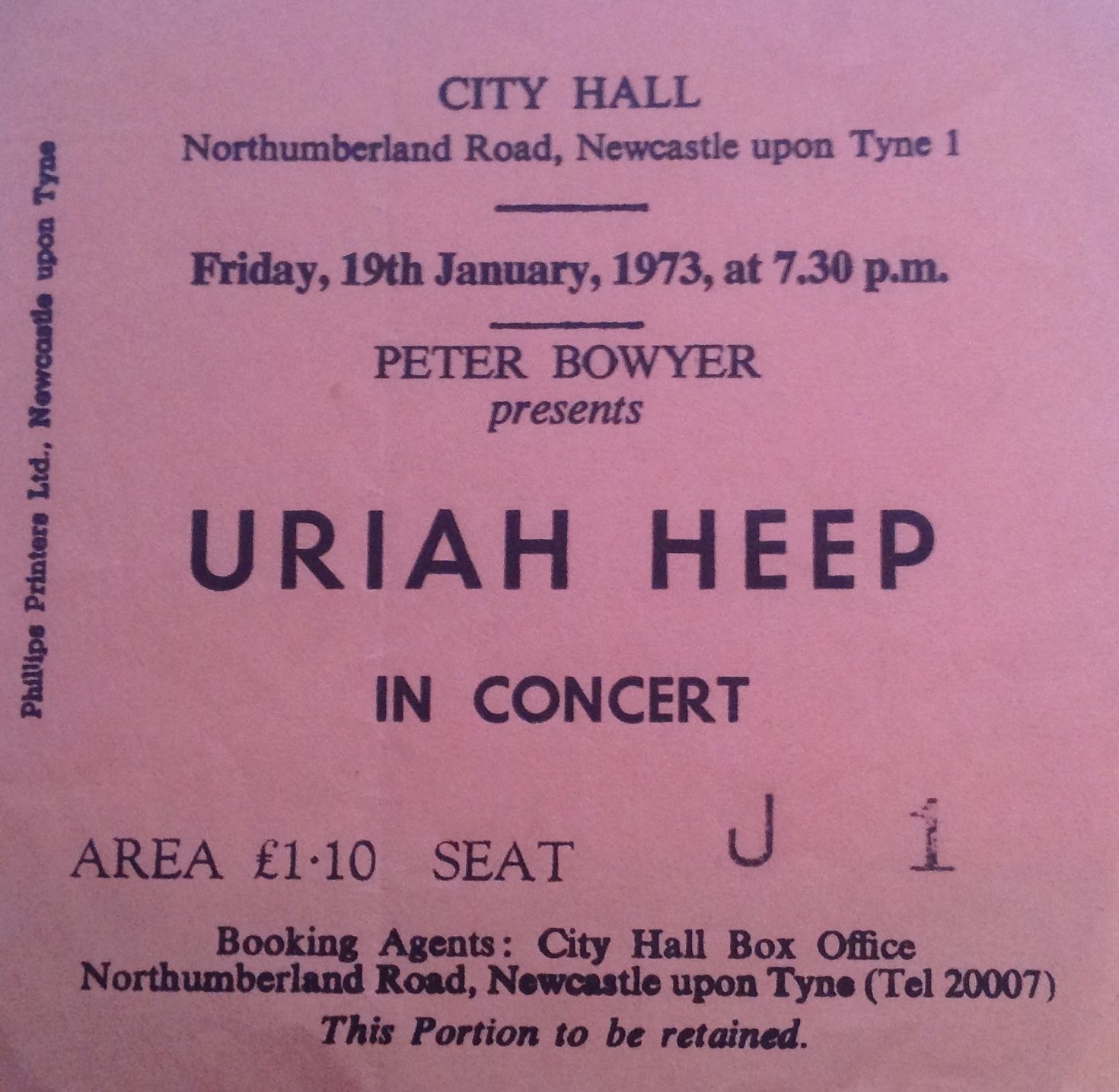 Support was from Nick Pickett, who was a folk singer on the Vertigo label.
They started out as the band the critics loved to hate. A reviewer for Rolling Stone magazine even promised to commit suicide “if this band makes it” (bet he didn’t 🙂 ). But those of us who were fans understood. We knew that Uriah Heep were one of the classic rock acts of the 70s. Easily up there with Zeppelin, Purple and Sabbath.
The classic Heep line-up existed between 1972 and 1975 and was Mick Box (guitar), David Byron (vocals), Ken Hensley (keyboards), Lee Kerslake (drums) and Gary Thain (bass).
One of my mates had their first album “..Very ‘Eavy …Very ‘Umble” and we would gather in his house listening to the raw primitive riff of Gypsy and the spooky twisting tale of Come Away Melinda (which was my favourite). “Play ‘Gypsy again’.” Onto the turntable it would go, volume on full, needle down, again and again and again. And at the local Mecca, when “Gypsy” came screaming out of the speakers, the dance floor would fill with people playing air guitar and shaking their long hair around and around. “When I was only seventeen, I fell in love with a gypsy queen.” There remains something basic and primeval about that song; so simple and yet so powerful. But there was so much more to Uriah Heep; the imagery of “Demons and Wizards” (“he was the wizard of a thousand kings”), the dark folklore narrative of “Lady in Black”, the thundering, rock’n’roll of “Easy Livin'”, the majestic “Sunrise”, and that classic mirror lp cover of “Look At Yourself”. Then there was “July Morning”, Uriah Heep’s own “Stairway to Heaven”, which used dynamics, orchestral arrangements and narrative to take us to a different world; I could visualise Dave Byron standing on a warm summer morning, the sun breaking through; simply classic.
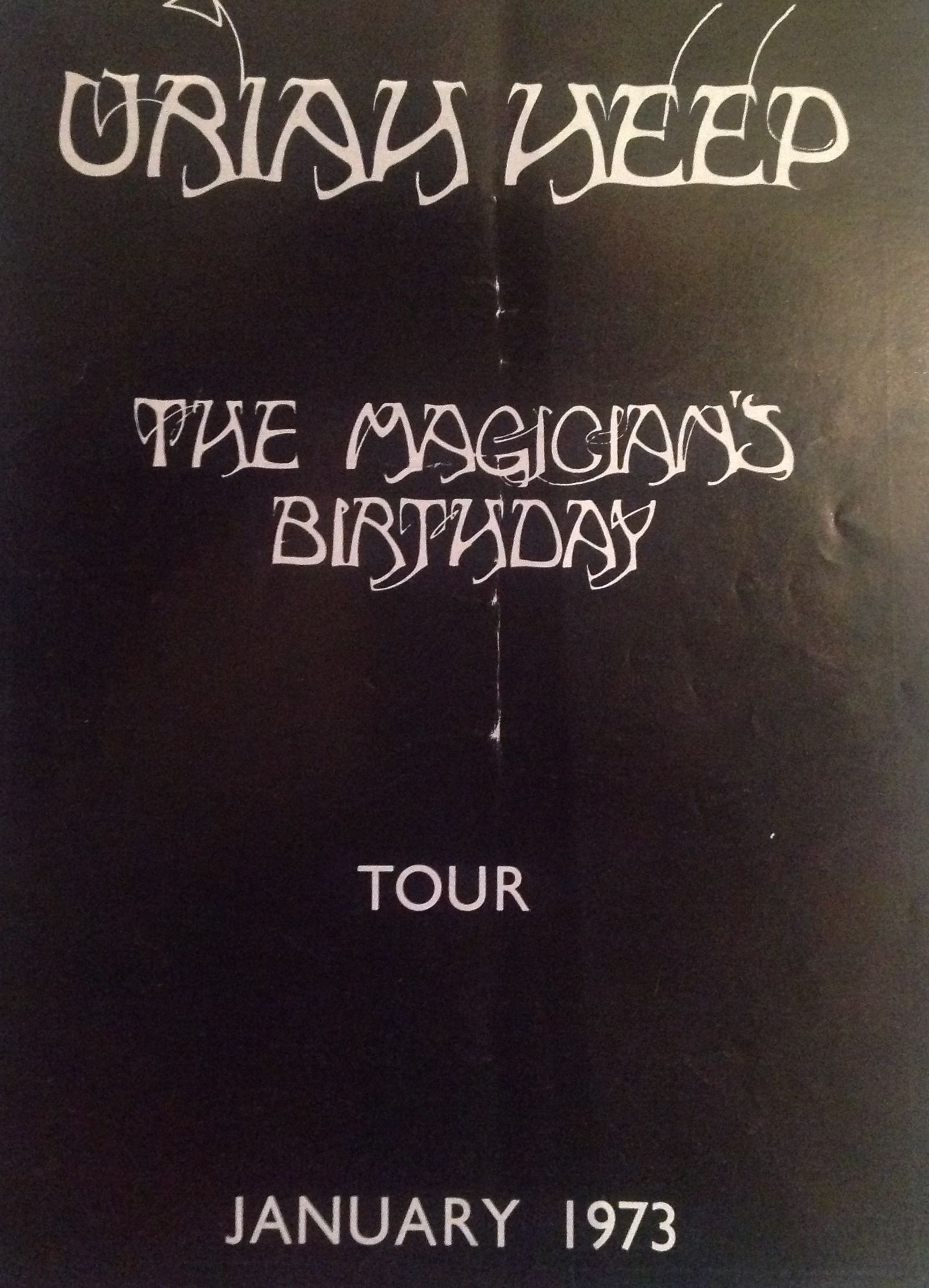 I got to see Uriah Heep for the first time in January 1973 on the “Magician’s Birthday” tour. I went along a semi-interested fan and came away 100% a convert. The performance was so powerful, the music so loud, and the songs so great, in every way. Dave Byron was the perfect rock vocalist, possessing an operatic voice with an incredible range, and had tremendous stage presence, commanding the audience to join in and become part of the show. Mick Box was, and remains, the unsung guitar hero, long hair and a massive grin stretching from ear to ear. Ken Hensley would rock back and forth pulling at his Hammond, a long mane of hair swaying behind him, creating sounds that blended 60s R’n’B swirl with deep Bach chords. Gary Thain was the silent, solid bass man, and Lee Kerslake was constant at the back, crashing away on the drums. And the volume. Uriah Heep understood that rock had to be LOUD, that feeling the music was just as important as hearing it. When they played ‘Easy Livin'”; the volume went up a notch, the bass notes hit me hard right in the chest, and I honestly feared I would never be able to hear again (can I sue a band for the state of my hearing today ?) The other important, distinctive and vital element of Uriah Heep in concert was the screaming harmonies. They were simply stunning live. Ok, I get that it’s not cool to say so (and I guess it’s not cool to use the word “cool” but who cares), but to a teenage kid in the stalls of the City Hall in 1973 Uriah Heep were just as good as Purple or Zeppelin or Sabbath.
I came out of the City Hall that night a big fan of Uriah Heep. I went to school the next day and bored everyone about how great they were. Oh and my ears were ringing for days after, but that was part of the fun, it reminded me that I had experienced a proper rock gig.
I’ve seen Uriah Heep another 17 or so times since. I’ve lost faith in them now and then, particularly as the line-ups changed over the years, and I’ve missed some of their tours, but I’ve always returned to them. I’m going to spend the next few days writing about Uriah Heep live (don’t worry, I’ll combine some gigs and have already reviewed some recent shows, so it won’t take me 17 days) and I will try to remind myself what made (and still makes) them so great and mighty.
Set List in Jan 1973: Sunrise; Sweet Lorraine; Traveller In Time; Easy Livin’; July Morning; Gypsy; Tears In My Eyes; Circle Of Hands; Look At Yourself; The Magician’s Birthday; Love Machine; Rock ‘n’ Roll Medley.
The above setlist is from the Birmingham gig of the tour, which was recorded for the classic Uriah Heep Live double lp. I also think they played Bird of Prey at Newcastle. I particularly remember Dave Byron announcing it as “Here is an old one, probably the last time we will play this” (it wasn’t 🙂 ) The rock’n’roll medley typically contained songs like: Roll Over Beethoven; Blue Suede Shoes; Mean Woman Blues; Hound Dog; At The Hop; Whole Lotta Shakin’ Goin’ On. And we all sang along. Happy happy days.
25 Nov
Procol Harum Dominion Theatre London 24 November 2014
Procol Harum Dominion Theatre London 24 November 2014
Friday Night is Music Night (for BBC Radio 2)
 Last night Procol Harum performed for ‘Friday Night Is Music Night’. The performance will be broadcast shortly on Radio 2. This special event took place at the Dominion Theatre in London, and Procol Harum were accompanied by the sixty piece BBC Concert Orchestra conducted by David Firman and the forty voice Crouch End Festival Chorus.
The current line-up of the band is founder member, singer/pianist and composer Gary Brooker, Matt Pegg on bass, Geoff Dunn on drums, and Josh Phillips on keyboards and Hammond organ. Their usual guitarist Geoff Whitehorn had been taken unwell a few days ago and was replaced at very short notice by Dave Colquhoun of Rick Wakeman’s band who did exceptionally well, having learnt the set in two days, and who was himself suffering from a broken ankle and walking on crutches. Procol Harum dont play in their home country very often these days, and it is many years since they have performed a symphonic set in the UK.
The venue for this unique concert was the Dominion theatre, a beautiful 2,000 seater hall, which sits at the end of Oxford Street in Tottenham Court Road, and has for the past 12 years been the home of Queen’s We Will Rock You musical. The concert was sold out, with Procol Harum fans travelling from around the world to experience this performance.
 The orchestra and choir filled the entire stage, and a small stage had been constructed for the band, just above the orchestra pit. The concert started at 7.30pm sharp, with the familiar chords of Homburg and the opening line “Your multilingual business friend, Has packed her bags and fled” filling the theatre and sending shivers down our spines. Songs like these were written to be performed with orchestral accompaniment, and Gary Brooker’s voice rang strong and clear above the majesty of the music. A perfect opening song. This was followed by Simple Sister from 1971’s Broken Barricades, and Grand Hotel from the 1973 album of the same name. Gary explained how, at the of the album’s release the band would stay in the best hotels, eat in the best restaurant, and travel in limousines, and joked that for this concert he came on the tube, ate a takeaway burger, and that they had to finish the show on time so that he could catch the last train home. This was followed by Fires (Which Burnt Brightly) which is also from Grand Hotel. Next was Misssing Person, which is a Brooker solo track, and was performed by the band only, sans orchestra . Broken Barricades was then followed by Sympathy for the Hard of Hearing, which Gary dedicated to those who have fought for their country. The first set closed with an epic version of A Salty Dog which Gary dedicated to Alvin Stardust, Jack Bruce, and also to Geoff Whitehorn who was apparently texting his best wishes to the band from his hospital bed, and was surely there in spirit.
After a short interval the concert resumed. The second half started with a second attempt of the opening section of A Salty Dog, to remedy ‘a technical fault’ for the purposes of the recording for radio, although I am sure none of us had noticed any technical fault the first time round. This was followed by Wall Street Blues (band only), Something Magic, Nothing But the Truth and Into the Flood. The Gary announced the song that “started it all for us in 1967” which sounded just great, with a strong passionate vocal performance by Gary and Josh on Hammond, recreating the texture and sound of the Hammond solos to perfection. The song received an amazing reception from the audience with applause which seemed to go for ever and a standing ovation with the who,e theatre on their feet. Amazing.  The concert closed with An Old English Dream, and The Blink of an Eye (Gary explained how the song was written about 9/11, how the band would often talk to the New York fireman as they passed by the fore station, and how many of those men lost their lives). The encore was Conquistador. A truly epic concert. It’s a shame that Procol Harum don’t play more often in this country. Gary joked at one point that he “wasn’t sure if the band would make their 50th”. I’m sure they will, and based on this performance they continue to go from strength to strength.
Setlist: Homburg; Simple Sister; Grand Hotel; Fires (Which Burnt Brightly); Missing Person; Broken Barricades; Sympathy for the Hard of Hearing; A Salty Dog
Interval
A Salty Dog opening; Wall Street Blues; Something Magic; Nothing But the Truth; Into the Flood; A Whiter Shade of Pale; An Old English Dream; The Blink of an Eye; Grand Finale
Encore: Conquistador
Stayed at David and Shauna’s and I’m typing this on the train back home.
 Vintagerock's Weblog.