Sinead O’Connor The Sage Gateshead 22nd July 2008
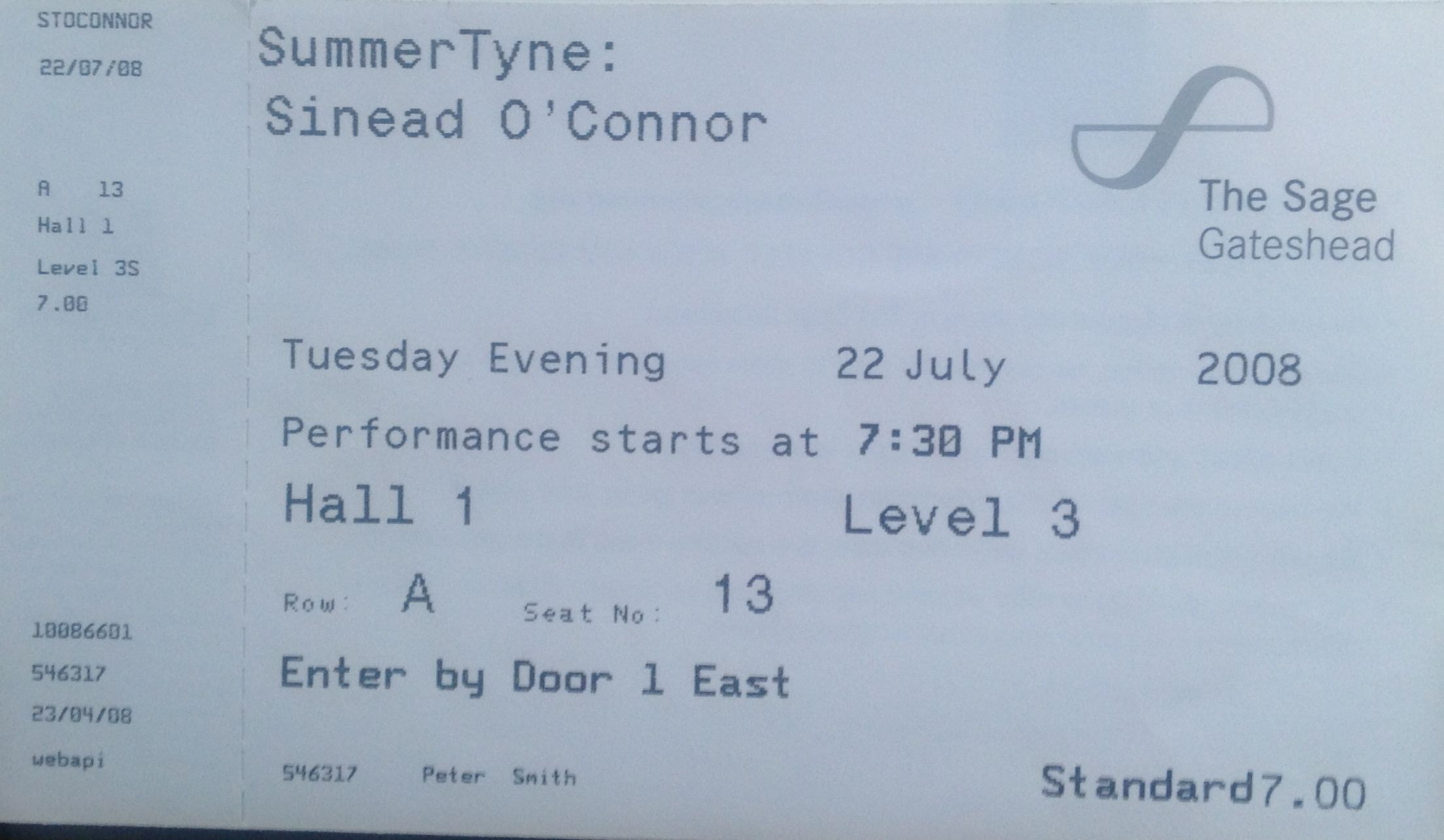
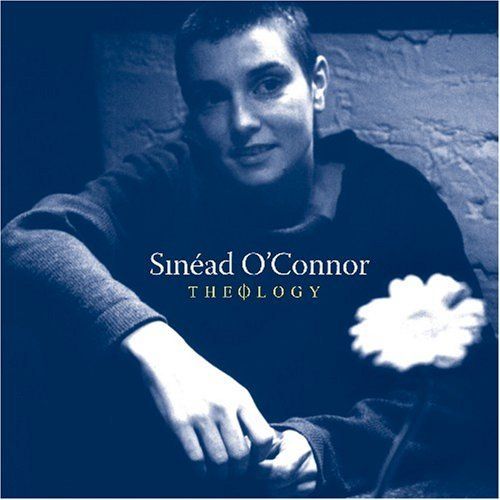 Dressed simply in jeans and a shirt, Sinead O’Connor walked on to the stage of the Sage Gateshead to deliver an acoustic performance. She was joined on stage by guitarist Steve Cooney, who played on, and co-produced, the Dublin Sessions of her two disc ‘Theology’ album; and multi-instrumentalist Kieran Kiely from her touring band on keyboards, accordion, and whistles. “Theology”, which was Sinead’s 8th album, was released one year earlier. As the name suggests, Siobhan was heavily into religion at the time and the songs on the album reflect this. The concert drew heavily from “Theology” and a selection of older numbers, including of course “Nothing Compares 2 U”, which sounded good in this stripped-down form. The acoustic setting demonstrated the incredible range of Sinead’s voice; she sang with great passion and intensity. The concert was part of the 2007 SummerTyne festival. At the time the Sage had a practice of offering discounted £7 seats for certain performances. The seats were in the upper level, above the stage, almost looking down on the top of the performers heads. This gave the opportunity to catch performances by world class acts at a bargain price; I was seated in one of these seats for Sinead’s concert.
 Sinead is a difficult artist to categorise, and often gains headlines for the more controversial aspects of her life rather than for her music. This concert at the Sage showed just how powerful her voice and her performance can be, and how talented Sinead is. I can’t pretend to be a big fan, and I’m not familiar with much of her music, but I really admire her voice, passion, attitude and the authentic and honest manner in which she seems to approach life and her art.
Setlist (something like this; based on setlists of the time): Something Beautiful; If You Had a Vineyard; Whomsoever Dwells; Watcher of Men; Dark I Am Yet Lovely; The Healing Room; All Babies; Black Boys on Mopeds; Big Bunch of Junkie Lies; Never Get Old; Nothing Compares 2 U; I Am Stretched on Your Grave; The Last Day of Our Acquaintance; Thank You for Hearing Me; 33; Rivers of Babylon
Posts Tagged ‘music’
10 Jan
Sinead O’Connor The Sage Gateshead 22nd July 2008
9 Jan
Osibisa: criss-cross rhythms live in the early to mid 1970s
Osibisa: criss-cross rhythms live in the early to mid 1970s
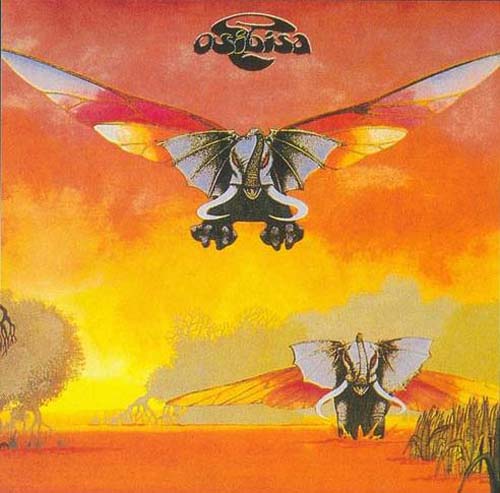 Osibisa is Ghanian for…’criss-cross rhythms that explode with happiness’. Good choice of name. Osibisa were ahead of their time. Formed in 1971 their unique fusion of African, Caribbean, Rock, Jazz, Latin and R‘n’B paved the way for world music, disco, reggae and Bob Marley and the emergence of African music in the 80s. A night in the company of Osibisa was guaranteed to be good fun, high energy, and very different from the progressive rock I was going to see at the time, and the punk music that lay just around the corner for me. David Hughes wrote (Disc and Music Echo, 1971): “….criss-cross rhythms are exploding with happiness right across the country, and if ever you want to get high – but naturally – all you have to do is see them play, hear their music or simply be in their presence!” Osibisa are one of those bands that I saw several times, but can’t recall exactly where or when. It was in the early to mid 70s, and probably at Sunderland Locarno or Newcastle Mayfair. I definitely remember seeing them at Newcastle Poly Students Union one night. Marie and I were in the habit of going along to the Poly dances on Friday nights in the mid 70s. Most of the time we didn’t know who was performing until we arrived, which had to be before 10.30pm (no entry after that point, to dissuade the locals turning up when the pubs closed). Once or twice we got there to find Osibisa playing, which was a great surprise. In his memoirs “Broken Music” Sting refers to his band Last Exit supporting Osibisa at a Poly gig in the mid 70s. Well; I don’t recall seeing Last Exit that night (they had probably finished their set by the time we arrived) but I do recall Osibisa going down a storm. Crazy beats, happy vibes, wonderful Roger Dean graphics on their album covers and the late great founder member Sparticus R (actually he left in the early days of the band). They would explode into the hall; pounding congas, driving bass, chants; the crowd were up and with them from the start, dancing along with the African highlife rhythms. “Sunshine Day” was out at the time; which must place it around 1975. Think I also saw them at Bede College Durham (or that could have been Assagai who were another African rock band of the time) and at Reading festival when they were a special guest band, closing the 1976 festival. Osibisa are still playing today. Robin Denselow reviewed a 2010 gig at the Festival Hall London: “Osibisa have played a unique role in the history of African music. No other band achieved such extraordinary success, in terms of hit singles and albums in the UK and US, and yet no other band fell so dramatically from fashion…….But Osibisa kept going and, 40 years on, they were back in London to show that they have refused to change their approach, and are still populist mavericks” (the Guardian, 3rd March 2010). Time for me to see them again methinks.
Sting (2005), Broken Music: A Memoir, Dial Press.
Osibisa website: http://www.osibisa.co.uk/
8 Jan
Mike Oldfield Newcastle City Hall 22nd May 1980 and 11th September 1982
Mike Oldfield Newcastle City Hall 22nd May 1980 and 11th September 1982
 “Tubular Bells” was a massively popular album in the mid 70s, and a big favourite of mine. It is an important and groundbreaking album which broke new ground for progressive/classical rock music, helped to establish Virgins records, and received further recognition when the opening was used in the 1973 film The Exorcist (I still have the nightmares about Regan :)), introducing the work to a broader audience. The nearest I got to seeing a live performance of Oldfield’s magnum opus was a concert at Newcastle City Hall which featured a film of Mike and friends performing “Tubular Bells”, accompanied by live performances by Gong and Hatfield and the North; a concert which I have already blogged on. Mike Oldfield was quite reclusive at the time and didn’t tour until the late 70s.
  By 1980, when his “In Concert” tour called at Newcastle City, Mike was moving to a more pop-oriented style and was including covers and songs on his albums. He had also hit the singles chart with “Portsmouth”. The tour was in promotion of the “Platinum” album, which is the fifth album by Oldfield, and was released in 1979 on Virgin Records. His earlier albums were, of course, “Tubular Bells” (1973), “Hergest Ridge” (1974), “Ommadawn” (1975) and “Incantations” (1978). The tour featured the whole of the “Platinum” album and selections from his previous releases, including “Tubular Bells”, which is what we all wanted to hear.
 Setlist: Platinum Parts 1 to 4; I Got Rhythm; Punkadiddle; Incantations Parts 1 to 4; Tubular Bells Parts 1 and 2; Guilty; Ommadawn Part 1; Blue Peter; Portsmouth; Polka; Radetzky Marsch; Blaydon Races.
Musicians: Mike Oldfield (guitar, keyboards, vocals), Peter Naphtali Lemer (synths and keyboards), Mike Frye (percussion), Tim Cross (keyboards), Pete “Bimbo” Acock (saxes), Nico Ramsden (guitar), Hansford Rowe (bass), Benoit Moerleb (vibrophone), Wendy Robert (vocals), Pierre Moerlen (drums and percussion).
A couple of years later Mike was back on tour again, this time to promote the “Five Miles Out” album (1982). In the interim he had also released “QE2” (1981).
 Setlist: Tubular Bells Part 1; In High Places; Etude/Recuerdos De La Alhambra; Platinum Parts 1 and 2; Conflict; Ommadawn Part 1; Incantations Part 4; Hergest Ridge Part 2; Taurus II; Five Miles Out; Mount Teidi; Orabidoo.
Mike’s band was more compact this time: Mike Oldfield (guitar, keyboards, vocals), Tim Cross (keyboards), Tim Renwick (guitars and bass), Pierre Moerlen (drums and percussion), Maggie Reilly (vocals), Devra Robitaille (keyboards, guitar and vocals).
This was before the release of the great “Moonlight Shadow” which is a classic track. Both concerts were excellent, featuring perfect renditions of Oldfield’s intricate music, much credit for which must go to his backing musicians.
6 Jan
The night we danced with Yoko : Yoko Ono, The Bluecoat, Liverpool, 4th April 2008
The night we danced with Yoko
Yoko Ono, The Bluecoat, Liverpool, 4th April 2008
 I next saw Yoko Ono with Marie at a performance at the Bluecoat Arts Centre in Liverpool. Yoko Ono gave her first paid performance at the Bluecoat in 1967, around the time that she met John Lennon. When the Bluecoat was refurbished in 2008, Yoko returned to the new performance space to celebrate the reopening of the venue. Tickets for the one hour live event sold out in minutes and Yoko agreed to a live feed going into the Bluecoat hub and a big screen in the city centre.
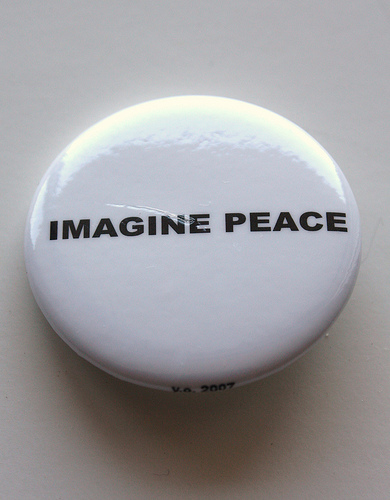
 Marie and I arrived in plenty of time for the event, and joined the queue to enter the performance space, which has a capacity of 116. It was clear from discussions in the queue that Yoko fans had travelled from all over the world for the chance to attend. We were each handed an “Imagine Peace” badge and a small Onochord torch as we entered. The white torch was marked “Onochord Liverpool y.o. 2008”. Marie and I sat in the front row and waited for Yoko to arrive. Soon she entered the room, and stood in front of a large screen showing footage of her 1967 Bluecoat performance where she requested the audience wrap her from head to foot in bandages. “I’m 75 and I’m alive and very thankful to be here every day, and to still be in love with life, and with you” she told us. Yoko then left the room for a short period and returned wrapped in bandages, picking up from where she left off in 1967. She sat in a chair and invited us to unwrap the bandages. A few of us did so; I still have the bandages that Marie and I removed from her legs 🙂
At one point during the performance she sat at the chair and silently crocheted.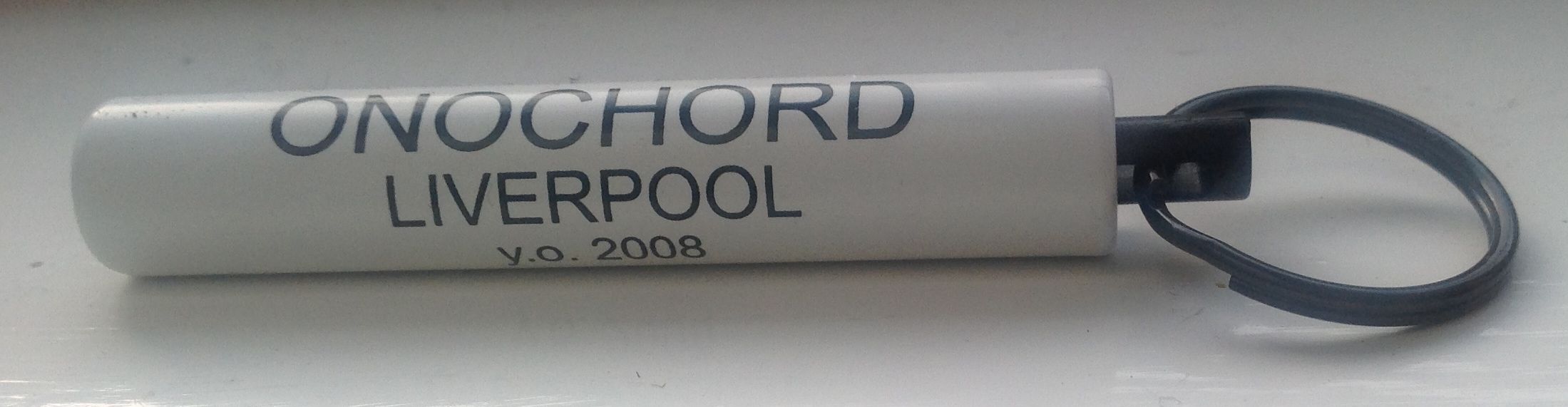 Footage of John and Yoko from the “bed-in” days followed; she later danced and rolled on the floor wailing to the video for her song Walking on Thin Ice, and showed a short documentary on her 2004 work Onochord. At that point we got to use the small torches, that we had been given when we came in. We were instructed to flash the torch towards Yoko three times to signify the three words “I LOVE YOU”. To close the performance she put on a top hat and asked us all to come down to the front and dance with her to a remix of Give Peace a Chance.” At one point Marie was holding hands with Yoko, dancing and twirling round.
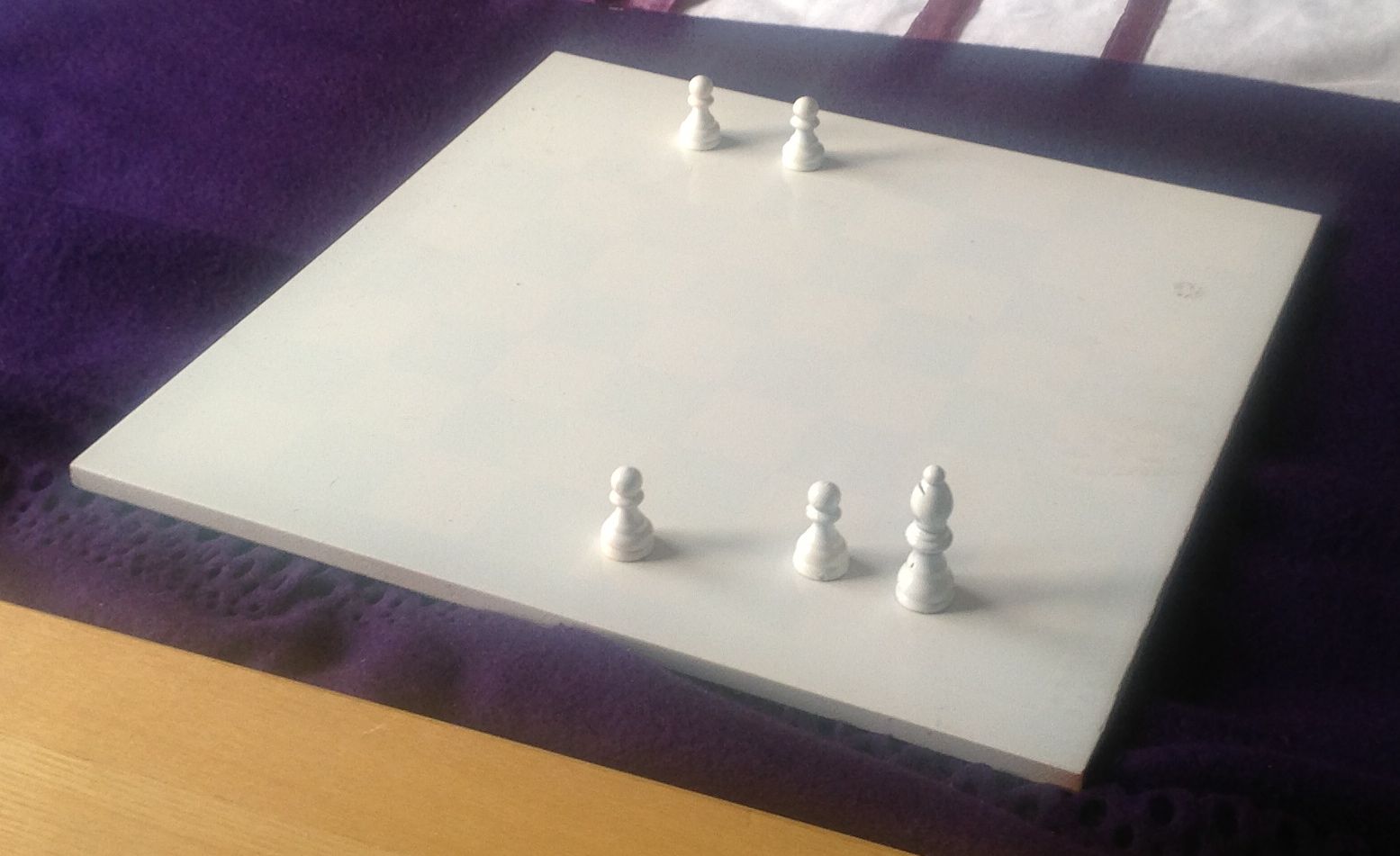 Yoko had one of her famous white chess sets beside her throughout the performance. This anti-war statement features white chess pieces on a totally white board; it was originally made for Ono’s exhibition at Indica Gallery, London, in 1966. “Yoko Ono’s White Chess Set, in which the opponents’ pieces, all white, sit on each side of an all-white board, [make] the warring factions indistinguishable from one another” (Wikipedia). At one point in the performance she threw the board to the ground, scattering the pieces all over the floor. When we started to dance with her, she said we could take the pieces and gave Marie the board. We also managed to pick up a few of the pieces. It makes a great reminder of the event, along with the bandages.
 On our way out, we were handed a booklet entitled “13 days do-it-yourself dance festival” which is a series of instructions and pictures as to how we might perform our own personal dance in our “mind” and that “each member of the dance, thus, will communicate with the other members by mental telepathy”. An incredible, amazing performance, which we will remember for ever.
Yoko Ono at the Bluecoat: http://www.a-i-u.net/bluecoat.html
The Bluecoat: http://www.thebluecoat.org.uk
.
5 Jan
Yoko Ono ‘In the time of shaking’ The Irish Museum of Modern Art 7th May 2004
Yoko Ono ‘In the time of shaking’ The Irish Museum of Modern Art 7th May 2004
 I’ve been a fan of Yoko Ono for some time. I think her influence on the music of John Lennon and the Beatles, and music in general, is often underplayed and, at worst, completely overlooked. I saw that Yoko had been invited by Amnesty, along with The Edge from U2, to open the exhibition ‘In the time of shaking’ at the Irish Museum of Modern Art. Yoko is a long time Amnesty supporter and in 2002 she gave them the rights to use John Lennon’s song “Imagine” in a campaign for human rights. At the time I was visiting Dublin once a month through work, so I fixed my next visit to coincide with the event. There was one remaining problem; the event was a private view with entry by invitation only. I emailed the Museum, asking for an invitation, and to my delight, a couple of days later I got a reply, inviting me to the event 🙂 .
The press release: “Yoko Ono will attend the Irish Museum of Modern Art and officially open one of the most exciting exhibitions of contemporary new Irish art to go on show in recent years. ‘In the time of shaking’ is a sale, exhibition and book involving over 100 of Ireland’s leading artists in support of human rights and the work of Amnesty International.. has been conceived and selected by Professor Ciarán Benson of University College Dublin, and members of the ‘Artists for Amnesty International 2004’ Committee… Ciarán Benson explains the title to the show as follows: “I take the show’s title – In the time of shaking – from a phrase I remembered and liked in an old translation of Psalm 27. ‘Shaking’ is a metaphor for ‘trouble’. http://artdaily.com/index.asp?int_sec=2&int_new=10215#.UshJ9ssgGSM
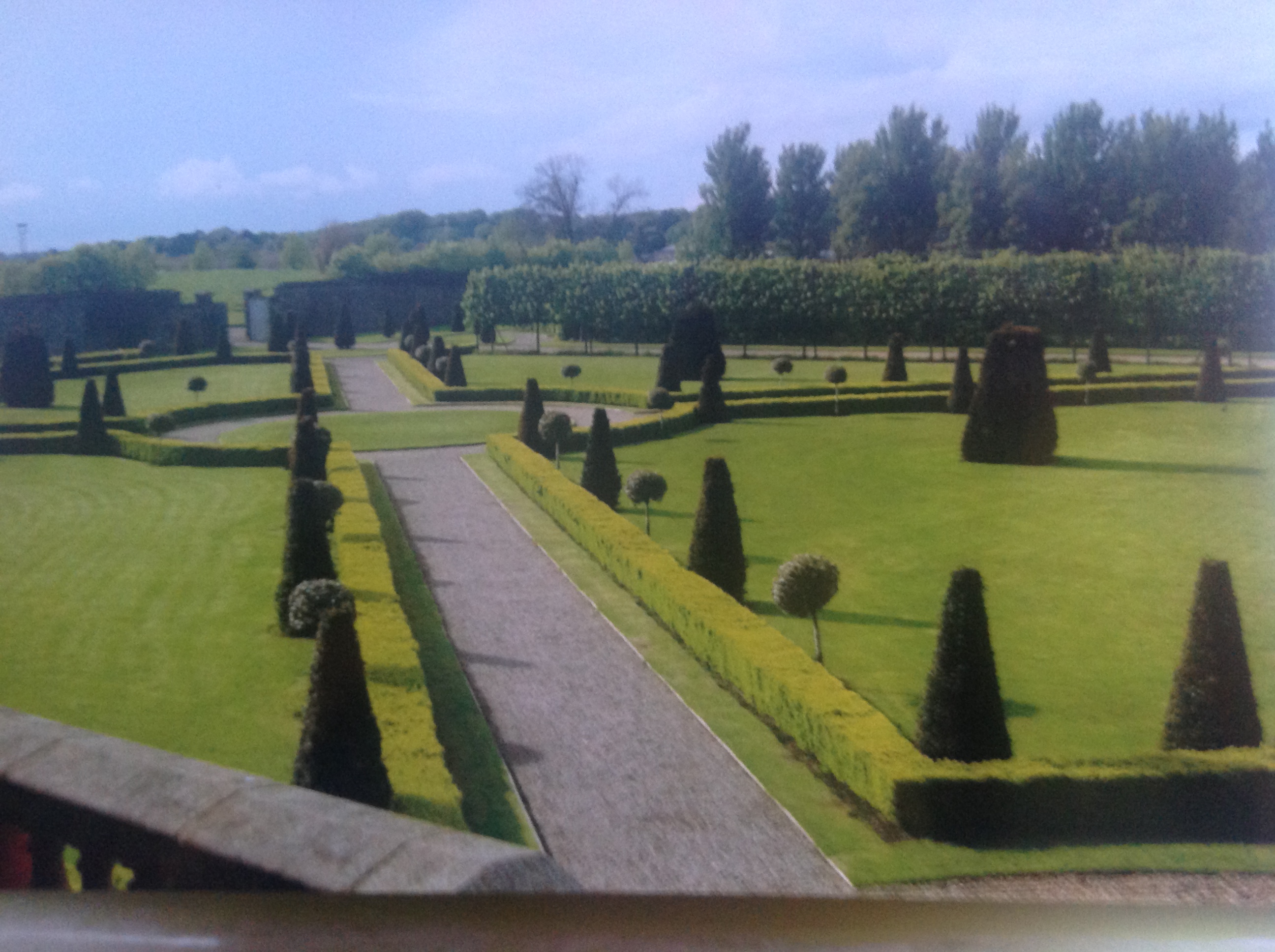 I know Dublin quite well, but this was the first time I had been to the Museum of Modern Art. I took a bus and soon found the venue, which is set in beautiful gardens. People were already arriving; the opening of the exhibition was attended by 1,000 people. I had a couple of drinks and a few nibbles and wandered around the gardens and the exhibition, taking in some of the work, which was very impressive. Soon Bill Shipsey, chairman of Art for Amnesty, introduced The Edge. U2 have supported Amnesty for more than 20 years, and the Edge recalled attending the opening of the first Amnesty Irish offices in Dublin in 1984. ‘I’m proud of the way Ireland and Irish people have supported Amnesty ever since then.’ he said, ‘I’m also particularly pleased that this Irish initiative is spear-heading what will hopefully become a series of similar art exhibitions around the world that will raise money for Amnesty.’ Edge then gave a synopsis of Yoko Ono’s life, closing with “Yoko comes to Dublin. Yoko likes Dublin and Dublin likes Yoko”. He then asked Yoko Ono to officially open the exhibition. Wearing a black trouser suit, she emerged smiling (Irish Times, 2004).
 Yoko said “I am proud, pleased and happy to be here in Dublin today to open this wonderful exhibition which not only helps generate the support Amnesty needs but is providing a fund-raising model which we can use around the world. ‘John was very conscious of his Irish background. He was extremely proud of being Liverpool Irish, which gave him a sense of rebellion and inspired his poetry. I really think that his poetry definitely came from his Liverpool Irish heritage – tradition, beauty, sense of humour and word play all being strong Irish qualities.’ http://www.u2.com/news/article/405
The crowd was a mix of those from the Irish art community, journalists and a sprinkling of fans of Yoko. One guy was right at the front of the crowd with his copy of “Grapefruit”, no doubt hoping for a signature. But there was no opportunity for autographs; as soon as Yoko had finished speaking she was ushered away, apparently to take a tour of U2’s studio.
It was great to see Yoko, albeit fleetingly. She spoke well, looked great, and came over as a charming lady. I even managed to take a few (not very good) photos, a couple of which I’ve included here , along with an image of the “In the time of shaking” book. I was so impressed that I wished I could see her in a performance setting, something which Marie and I did a couple of years later at the Bluecoat Gallery in Liverpool, and which I’ll blog on tomorrow.
Yoko Ono Imagine Peace site: http://imaginepeace.com/
Amnesty: http://www.amnesty.org.uk/
Irish Museum of Modern Art: http://www.imma.ie/en/index.htm
.
28 Dec
New Order Sunderland Mayfair 1984, Newcastle Mayfair 1986 & Newcastle Academy 2006
New Order Sunderland Mayfair 15th August 1984
 I have a theory that, during the 80s, you could judge the success of New Order by how low Hookie was carrying his bass. Each time I saw the band that bass seemed to slip further down his leg, reaching a point around his knees, where I guess it couldn’t get any lower. I spent the night at the Sunderland gig staring in wonder at Peter Hook and that bass. I swear he was wrestling and fighting with his guitar, as if it had a life of its own, and was trying to escape his clutches. He was definitely becoming a fully fledged rock star; indeed the entire band seemed to exude a level of confidence way above that which I had witnessed on the previous two occasions I saw them. They were riding on a wave of success; Blue Monday had propelled them to another place, and the Mayfair was packed. The ticket it pretty impressive too :). Setlist: Face Up; Thieves Like Us; Age of Consent; Your Silent Face; Sooner Than You Think; ICB; The Village; 5 8 6; Sunrise; The Perfect Kiss; Blue Monday (cue for major dancing).
New Order Newcastle Mayfair 10th September 1986. 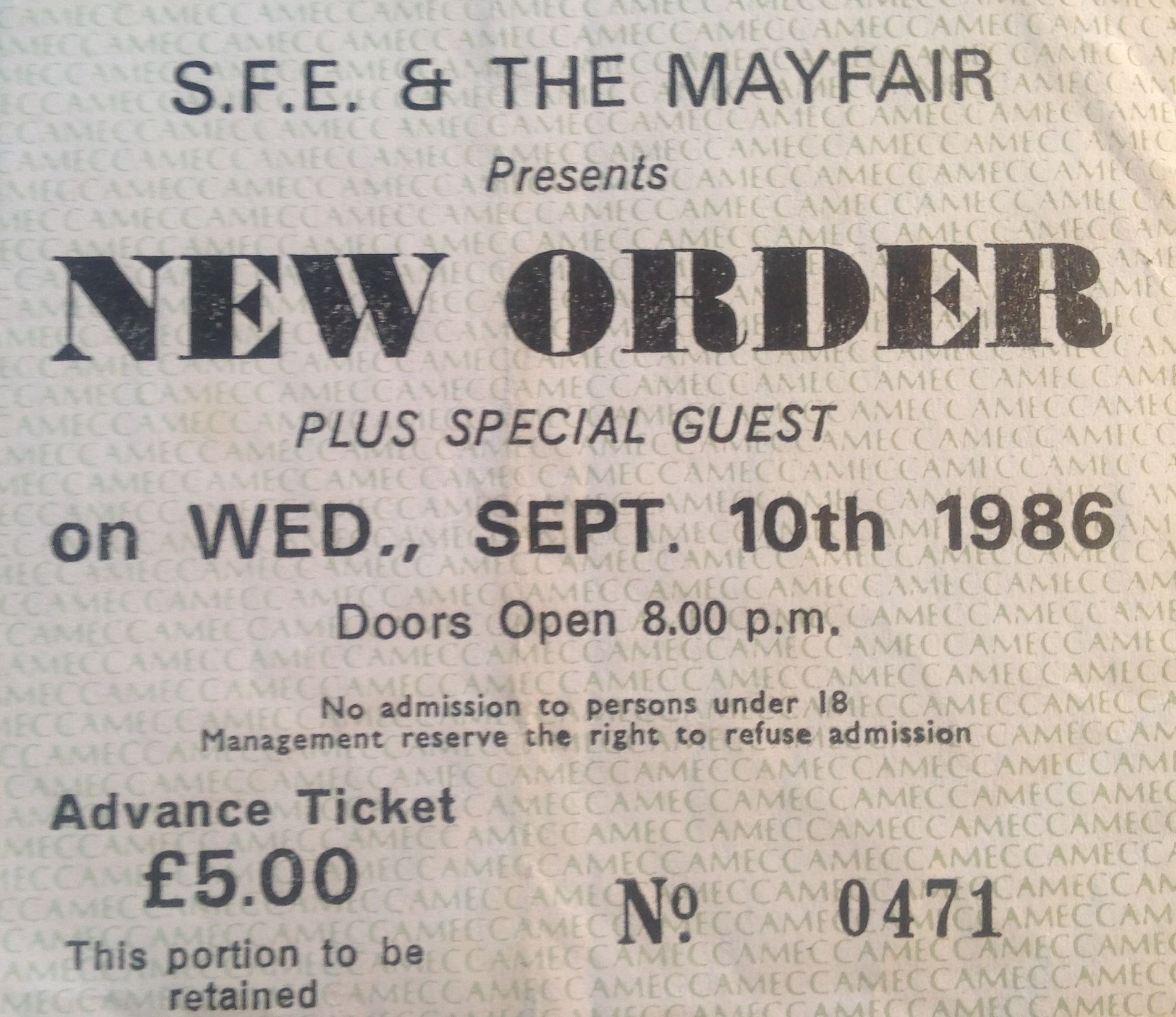 New Order released two albums before I saw them again; these were Low-Life (1985) and Brotherhood (1986). Their set at Newcastle Mayfair in 1986 drew heavily from their most recent release. I recall being disappointed, largely because they didn’t play Blue Monday, and because there were few songs that I recognised at all. This gig certainly wasn’t one of the best times that I have seen New Order, and to be honest I remember little about the gig. I think Hookie’s bass remained at knee height. It was 20 years until I saw them again. Setlist: State of the Nation; Everything’s Gone Green; Way of Life; Angel Dust; Paradise; Weirdo; Confusion; Subculture; Age of Consent; Bizarre Love Triangle; The Perfect Kiss.
Newcastle Academy 11th Oct 2006. 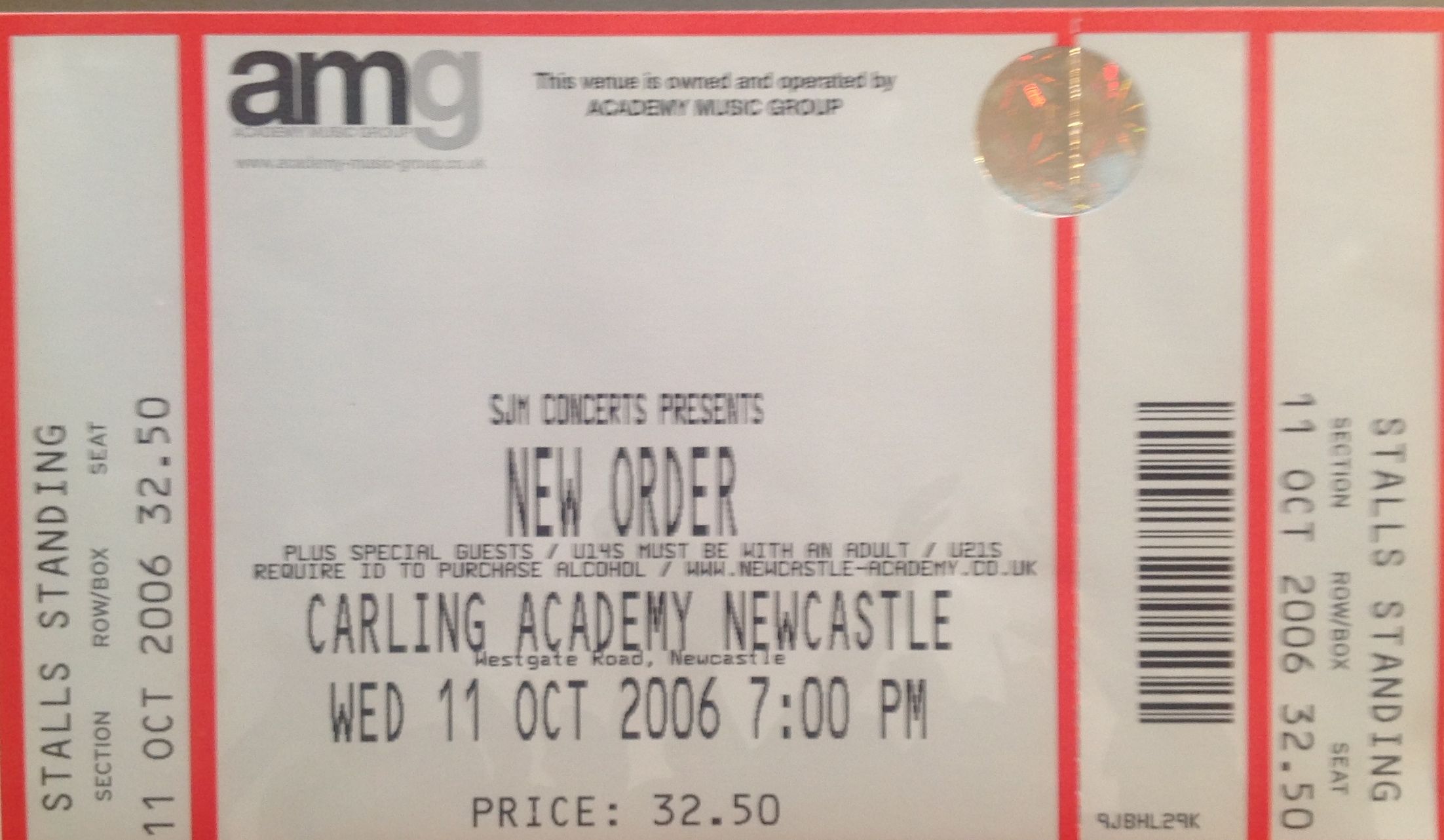 Roll on 20 years and David and I were in Newcastle Academy to see New Order. This was their first visit to the North East since the Mayfair concert of 1986. In the interim the band had released 4 albums including the highly successful Waiting for the Sirens’ Call, which came out in 2005, and was generally recognised as a return to form. Gillian Gilbert left the band in 2001, and was replaced by Phil Cunningham. The rest of the line-up (Bernard Sumner, Peter Hook and Stephen Morris) remained unchanged. Over the 20 year period, there had been long gaps between releases and concerts, with New Order spending a lot of time in America. Their UK shows were mainly restricted to appearances at festivals, a small number of shows in Manchester and some arena concerts elsewhere. As a result, this Newcastle return was hugely anticipated, and tickets sold out immediately they went on sale. The Academy was completely packed; we were on the floor close to the stage and couldn’t move, and the band didn’t let the crowd down. New Order played a long set drawn from across their career, including a handful of Joy Division songs. That night they played with a passion, and seemed to be in a good mood. A great concert. Hookie’s bass still remained at knee height, which was comforting. The ticket price had risen from £5 in 1986 to £32.50 in 2006, which was less comforting. Setlist at Newcastle Academy in 2006: Crystal Regret; Ceremony; Who’s Joe?; These Days (Joy Division); Transmission (Joy Division); Krafty; Waiting for the Sirens’ Call; Your Silent Face; Guilt Is a Useless Emotion; Bizarre Love Triangle; Temptation; The Perfect Kiss; Blue Monday. Encore: Shadowplay (Joy Division); Love Will Tear Us Apart (Joy Division).
Sadly New Order split in 2008, the other members fell out with Peter Hook in a very public manner, and ultimately regrouped without him. Laura and saw their Newcastle Academy concert in 2012, which I blogged about at the time.
27 Dec
New Order Middlesbrough Rock Garden 17th Feb 1981 & Newcastle Mayfair 11th March 1982
New Order Middlesbrough Rock Garden 17th Feb 1981 & Newcastle Mayfair 11th March 1982
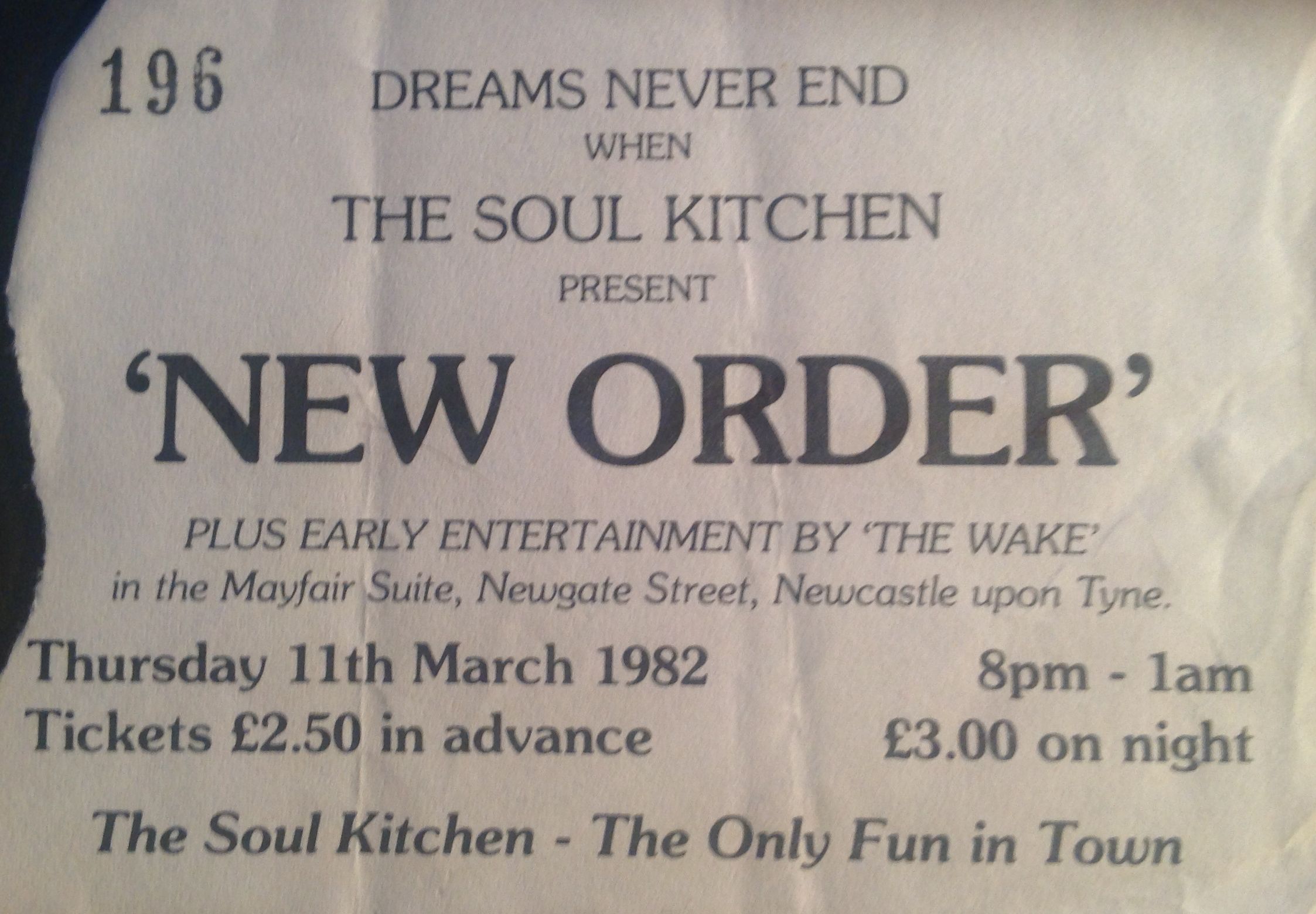 On May 17,1980, Ian Curtis committed suicide at his parents home in Macclesfield, leaving the remaining members Bernard Sumner, Peter Hook and Stephen Morris shocked, and with an uncertain musical future. Ultimately they decided to carry on, initially as a three piece and under a new name: New Order. By late 1980 New Order was playing gigs at small venues in their home town Manchester. Their repertoire consisted of new songs, other than “Ceremony” (an unreleased Joy Division song which was played live before Curtis’ death) and “In a Lonely Place” (demoed in the studio). Guitarist Bernard Sumner took on the role of main vocalist and Gillian Gilbert, Stephen Morris’s girlfriend, joined on keyboards. New Order played a couple of concerts in the USA, and started to venture further afield in the UK. I first saw them at a gig at Middlesbrough Rock Garden in early 1981. The concert was reasonably well attended, although by no means sold out. I remember being struck by how different their music was from Joy Division; much more electronic, less dark, few vocals. There was a sense that we were witnessing something very special, and very different from the direction that other new wave bands were going at the time. This was a universe away from the thrash of Warsaw that I had witnessed only a few years earlier. The songs came from their yet to be released first album “Movement”. A bootleg exists of a concert in Glasgow from the same period, which suggests the set at the Rock Garden was probably something like this: In A Lonely Place; Dreams Never End; Truth; Mesh; Procession; ICB; The Him; Cries & Whispers; Senses; Ceremony. My memory (which sadly, is quite often wrong these days) tells me that they also played an instrumental version of Love Will Tear Us Apart, towards the end of their set, possibly as an encore. However, this also seems unlikely, as the song doesn’t feature in any other published 1981 setlists. Having said that, they would sometimes play the old Joy Division classic during the sound check; so who knows?
A year later local promoters The Soul Kitchen (“The Only Fun In Town” 🙂 ) booked New Order (“Dreams Never End”) for a concert at Newcastle Mayfair. By now they were playing several new songs which would appear on their 1983 second album “Power, Corruption & Lies”. The Mayfair was quite full, and I saw a big difference in New Order, compared to their performance at the Rock Garden. This was a much more confident band, more dance, more electronica. Blue Monday and massive success were yet to come, but you could sense that this was an important band. Bernard Sumner was much more of a front man, and Hookie’s bass was slipping further and further down to his knees; they were both forming their own rock star personas. Support (or “Early Entertainment” as the ticket says) came from Scottish band The Wake, who featured a young Bobby Gillespie.
Setlist from Newcastle Mayfair, 1982: In A Lonely Place, Chosen Time, Denial, Ultraviolence, Senses, Leave Me Alone, Hurt, Procession, Temptation.
New Order line-up: Bernard Sumner – vocals, guitar, Peter Hook – bass, Stephen Morris – drums, Gillian Gilbert – synthesizers.
26 Dec
Nine Below Zero Redcar Coatham Bowl 4th April 1982
Nine Below Zero Redcar Coatham Bowl 4th April 1982.
 Nine Below Zero were formed at the end of the ’70s, playing fine slices of bLues and R&B around the pubs and clubs of London. The band was led by guitarist and lead vocalist Dennis Greaves, and also featured vocalist and excellent harmonica player Mark Feltham. In fact, Dennis and Mark remain in the band to this day. Nine Below Zero were originally called Stan’s Blues Band, and for two years they played constantly, building up a loyal local following in London clubs, before changing their name to Nine Below Zero in 1979. In 1980 they signed to A&M Records and released their first album, Live At The Marquee. By this time they had built up such a sizable and strong following in the capital, that they headlined and sold out Hammersmith Odeon. Their second (and first studio) album Don’t Point Your Finger, was released in 1981; followed by Third Degree in 1982. So by the time I saw them at this concert at Redcar Coatham Bowl, they were well established, with a set of their own songs and a wealth of classic R&B tracks to draw from. Nine Below Zero are an excellent R&B / blues band, who continue to play up and down the country. At the time of the Redcar gig they were playing a lot of songs from the Third Degree album, self-penned by Dennis Greaves, alongside a selection of old blues classics. I recall that they were all dressed very neatly, very much the ace face mods in sharp suits and ties, and that they played a blistering set of new wave tinged R&B.
25 Dec
Ted Nugent in concert 1976, 1977 and 1980
Ted Nugent in concert 1976, 1977 and 1980
 Ted Nugent is, to say the least, outspoken and holds some strong views. When I first went to see him he was proclaiming: “It ain’t Rock’n’Roll if it ain’t loud” and “If its too loud you’re too old!” and indeed, loud he was. This was at the time of his “Free For All” and “Cat Sratch Fever” albums. He arrived in the UK just as punk was breaking. Now if Ted Nugent is anything, he sure ain’t punk rock. Ted plays straight ahead rock’n’roll and some pretty neat guitar. I first saw him at the Reading Festival in 1976, and then at Newcastle City Hall in 1977 and Newcastle Mayfair in 1980. Ted was wild and crazy on stage, with a massive mane of hair. One memory from the Mayfair gig, that my mate Norm reminded me of. Remember this was at the time of punk rock, when certain elements of the crowd would spit at the band. Well for some crazy reason a guy in the Mayfair crowd tried spitting at Ted. Ted didn’t take too kindly to this and had it out with the culprit, threatening to come down onto the dancefloor and sort him out. Ted played a big Gibson guitar, and wore lots of leather. Ted also had a big ego and would say some quite outrageous things, and continues to do so today.
  Some Ted quotes from the 1977 tour programme: “The sounds I make are all power, you’ve got to feel it when you’re blowing your rocks off. People think I’m deranged but it’s all about sex and audible, physical and visual recreation.” “There’s a ringing in my ears and I think that’s it the call of the wild. I got ears, I can hear it. The kids are going crazy, foamin’ at the mouth, ready to tear the legs off the security guards…and I should be modest?” “I can play real tasty too, all the time in fact. Sure I’m a show man, I’m the best entertainer of them all but listen to the classy way I do it”. “People were writing all kinds of shit about me. How I’d raped too women – one of them a nun. How I ate raw meat. It was vindictive. The only people I ever beat up were journalists.” and there’s more…”There’s no one to overshadow me, there ain’t nobody who can outdo me at my own game. I mean have you ever heard anyone who sounds like me?”.
 And a few more I found on the internet: “Vegetarians are cool. All I eat are vegetarians – except for the occasional mountain lion steak.” “Americans have the right to choose to be unarmed and helpless. Be my guest.” “I am the Great White Buffalo and I play an American-made Gibson guitar that can blow your head clean off at 100 paces.” “Gibson has been making the finest electric guitars the world has ever witnessed for over 70 years. They are as American as God, guns and rock and roll.”
Read more at http://www.brainyquote.com/quotes/authors/t/ted_nugent.html
Typical Ted Nugent setlist from 1977: Stranglehold; Just What The Doctor Ordered; Free for All; Snakeskin Cowboys; Cat Scratch Fever; Wang Dang Sweet Poontang; A Thousand Knives; Dog Eat Dog / Stormtroopin’; Hey Baby; Great White Buffalo; Hibernation; Motor City Madhouse.
The late Mick Farren reviewed Ted’s Hammersmith Odeon show for the NME, 12 March 1977, and said: “We’ve heard a great deal lately about how Ted Nugent abjures drugs and alcohol. Perhaps that’s his mistake. The occasional soul searching high might have produced some kind of sensitivity in him. Sensitive this boy is not. Compared to him, Lemmy and Motorhead seem positively pre-Raphaelite.”
I found a flyer for the Steve Gibbons band in my programme for the 1977 gig, so I guess they must have been the support act that night.
24 Dec
The Nice & Yes Sunderland Empire 1st February 1970
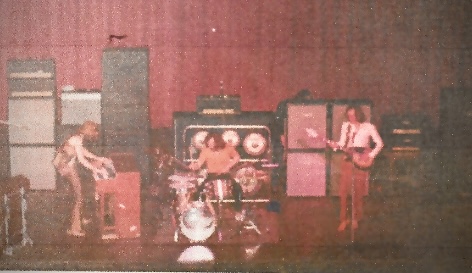
The Nice & Yes Sunderland Empire 1st February 1970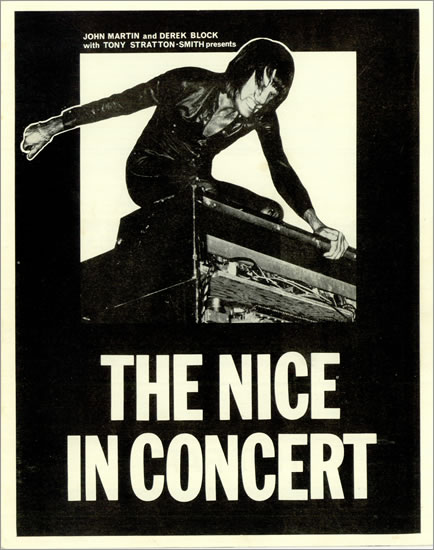 This was one of the first concerts that I attended, and as a thirteen year old who was just getting into music, it was a pretty big deal for me. This was the second time I had seen Yes, the first time being as support for the Bonzo Dog Doo Dah Band at the same venue the year before. I think there may have been two shows that evening, as was often the case back in those days. If that was the case, being a young kid, I would have attended the early show. The Yes line-up at the time was Jon Anderson: vocals, Peter Banks: guitar, Chris Squire: bass, Tony Kaye: organ, and Bill Bruford: drums. They playing material from their second album “Time and a Word” and the set included the excellent “No Opportunity Necessary, No Experience Needed” (a cover of a Richie Havens song, with a swirling Hammond organ intro taken from the film “The Big Country”), “Then”, “Sweet Dreams” (which was an early single and has featured in their set off and on to this day), “Astral Traveller”. There was an acoustic part to their set which featured the track “Time and a Word”. Yes were one of my favourite bands at the time, largely as a result of seeing these performances at the Empire, which seemed so fresh, sharp and exciting at the time.
 The Nice were virtuoso Keith Emerson: organ, Brian Davison: drums, and Lee Jackson: vocals, and bass. They had just released the album “Five Bridges Suite” and played the Suite in its entirety. The work was commissioned for the Newcastle Arts Festival in 1969, and refers to the city’s five bridges over the River Tyne. I recall Lee Jackson, himself a Geordie, making great play of the local aspects of the work. The album cover features a picture of the Tyne Bridge, and the five movements, which the Nice played that night are: Fantasia, Second Bridge, Chorale, High Level Fugue and Finale. I think they also played their moving interpretation of Tim Hardin’s “Hang onto a Dream”, “Rondo”, and “America”; the latter two songs being showcased for Emerson’s organ playing. Keith Emerson was sensational, pulling his Hammond organ about the stage, stabbing it with daggers, and generally being an amazing showman. The picture on the front of my programme, shown above, sort of sums it up. A great gig by two important and influential bands, which sticks in my mind to this day.
Many thanks to Gerry Rogerson for allowing me to use his photograph which brings back happy memories!
 Vintagerock's Weblog.