Thin Lizzy live 1972 – 1975
 Apologies if you have read some of this story before. I’ll be spending the next few days with my memories of Thin Lizzy in concert, and I though I’d start by recalling when I first saw the band in 1972, which I have written about before, as part of a post about a concert by the recent Thin Lizzy line-up.
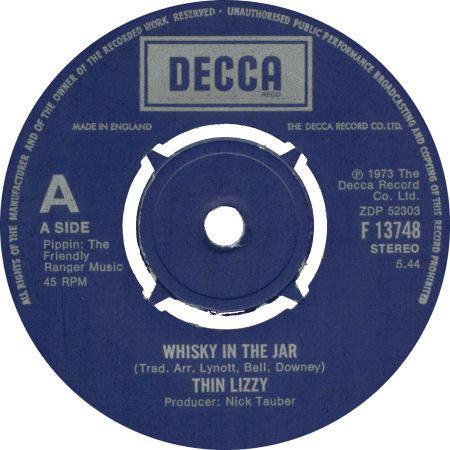
Anyway back to 1972. It’s a Friday night and I’m in the upstairs bar of Sunderland Locarno (“the Mecca”). There’s a tall black guy standing next to me. He’s chatting away to everyone in a strong but soft Irish accent. He seems a friendly guy; looks like he could be in a band. An hour or so later the night’s group take to the stage. They are called Thin Lizzy, and the guy from the bar is the front man. None of us have heard of them; someone tells me that John Peel plays them quite a bit and that they have an album out called “Shades of a Blue Orphanage”. They play pretty well; the front man has great presence, the guitarist is pretty good and the drummer’s impressive. I find out later that the tall guy is called Phil Lynott and the other members are Eric Bell on guitar, and Brian Downey on drums. Roll on a year. I’m watching Top of the Pops and Thin Lizzy are on my TV playing an Irish-folk sounding tune “Whiskey in the Jar” which has a great guitar riff. Next day I go out and buy the record. My journey with Lizzy was beginning. Over the next few years Thin Lizzy play Sunderland a few more times, hitting the stages of the Mecca and the Rink. They appear down the bill at the Reading festival a couple of times. Each time I see them they get stronger and tighter, but they also seem to miss out on that “big break”. I must have seen them 5 or 6 times during the period 1972 to 1975.
 The next time I saw Thin Lizzy will have been on 22nd June 1973, again at Sunderland Mecca. By now they had released “Vagabonds of the Western World” which featured live favourite “The Rocker”. Support came from local band Beckett: “Thin Lizzy and their cover of Rosalie. Back in early ‘73, my band Beckett…..most of us hadn’t heard any Bob Seger, so his album [Back in ’72] was played incessantly…..On June 22nd..we were booked to play our local Mecca in support of Thin Lizzy who were riding the success of Whiskey in the Jar. While our crew were loading our gear into the lift under the venue, Lizzy turned up and we all stood around in the sunshine chewing the fat … while playing in the background was our tape of Back in ‘72. Phil was much taken with Rosalie and they decided, there-and-then, that they would cover it in their live show. Bob Seger and Thin Lizzy: two of the most heart-poundingly exciting live rock shows I ever saw.” (Keith Fisher of Beckett, http://www.thinlizzyguide.com/tours/ ).
I next saw Lizzy at the 1974 Reading Festival, half-way down a varied bill which featured Georgie Fame, Procol Harum, Trapeze, and Greenslade, and was headlined by Traffic. By 1974 the classic twin guitar line-up was in place: Philip Lynott, Brian Downey, Scott Gorham, and Brian Robertson, and they had released “Nightlife”. The classic band was now together and was starting to form that classic sound. The attitude and presence were there; some of the songs and the success took a little longer. I saw them back at the Mecca on 25th October 1974 with support from Quicksand.
 In 1975 Thin Lizzy released “Fighting” which features “Rosalie”, as mentioned above. I was back at Reading, and so were Lizzy, this time a little further up a bill headlined by Yes, Wishbone Ash, and Hawkwind. They played: Fighting My Way Back; It’s Only Money; King’s Vengeance; Still in Love With You; Showdown; Suicide; Rosalie; The Rocker; Sha La La. Encore: Baby Drives Me Crazy.
I may have seen them once or twice more. I have vague memories of a gig at Sunderland Top Rank (the “Rink”), perhaps with Status Quo. Or maybe I remember Quo playing the Mecca, while Thin Lizzy played the Rink on the same night (or vice versa)…who knows….the gigs all sort of blend into one now. I know that Lizzy toured in ’73 supporting Slade and played Sunderland Rink, but I missed that gig as I was seeing Santana at the City Hall on the same night. What I also know is that Lizzy were gigging constantly throughout those years and played in the North East many times. There were a great live band and I guess I took them for granted. I was lucky enough to be able to see the band honing their craft and developing into the class rock act that we all know and love.
In 1976 everything changed for Thin Lizzy. They released “Jailbreak”, the single “Boys are back in town” was played everywhere and massive success followed. For some crazy reason I missed them on the Jailbreak tour (I still regret such things today), and remember kicking myself for doing so at the time. I made up for it by catching most of their tours from then on, which I’ll write about this week, starting tomorrow with Autumn 1976 and the “Johnny the Fox” tour.
Many thanks to Mitch for his action shot of Phil Lynott which he took at Newcastle City Hall on 1st Nov 1976 (I’ll write about that gig tomorrow) and to the great site http://www.thinlizzyguide.com/tours/ which catalogues Lizzy tour dates.
Posts Tagged ‘concert’
19 Oct
Thin Lizzy live 1972 – 1975
18 Oct
Traffic Newcastle City Hall 24th April 1974
Traffic Newcastle City Hall 24th April 1974
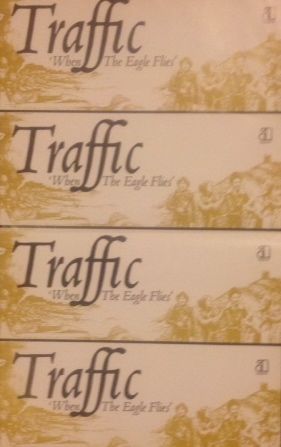 Concert going was a much less expensive hobby in the 70s. I saw lots of great bands, and it didn’t cost me the fortune it does these days. For £2 I had my train fare, a good seat, a pint or two and a programme. John and I went to see Traffic at Newcastle City Hall on 24th April 1974, and the tickets cost £1 each, and well worth it too 🙂 Traffic were just about to release their ninth, and final (for then, anyway) album “When the Eagle Flies”, and the line-up of the band was Steve Winwood (vocals, guitar, keyboards), Chris Wood (flute, sax), Jim Capaldi (drums, percussion), Rosko Gee (bass) and Rebop (percussion and crazy bongos). Support came from husband and wife duo Richard and Linda Thompson. My enduring memory is of a long-haired Stevie Winwood singing “John Barleycorn”, accompanying himself on acoustic guitar. It remains one of my favourite songs. My other memory is of an incredible performance by Rebop, as he hopped from bongo to bongo, beating out crazy rhythms, dazzling us with lightning-fast percussion work. John’s comments on the gig: “I only saw Traffic once and it was towards the end of the bands career when the band when they were struggling to keep it all together and perhaps were not at there very best. That said, I have great and very happy memories of the show. The tour was to promote the album “When the Eagle Flies” and I believe the support was Richard and Linda Thompson (who closed their set with I Want to See the Bright Lights Tonight, which was the title track of their current, and best, album).
  The City Hall was not full and we had great seats pretty near the front and to one side of the stage. A set list is shown from the Rainbow show and I can recall a number of the songs – John Barleycorn was just great, followed by 40,000 Headman, Empty Pages, Pearly Queen and the outstanding Dear Mr Fantasy, which is one of the best extended jams of the period and a favorite of mine to this day. They played a number of tracks from the new album, as was the standard practice for the time, but I can only recall the title track. While the setlist from the Rainbow differs, I thought they closed with Low Spark of High Heeled Boys but I may be getting this mixed up. [My memory is of an encore of Feelin’ Alright?, but that could be my imagination]. A great band whose contribution to 70’s music is often overlooked and I am grateful to have caught them (almost) at their prime.”
Traffic setlist from London Rainbow May 1974: Heaven Is in Your Mind; John Barleycorn; Forty Thousand Headmen; Graveyard People; Empty Pages; Pearly Queen; Vulcan ?; Dear Mr. Fantasy; When the Eagle Flies; Walking in the Wind; Dream Gerrard; Memories of a Rock ‘n’ Rolla.
I saw Traffic once more, when they headlined the Reading festival a few months later in August 1974. It was another great set with some lengthy but nver boring jams (thanks in great part to Rebop’s antics), and exactly the right sort of music for a dark summer evening at a rock festival, the music drifting across the riverside fields, as the cool breeze made us all shiver a little.
Reading setlist: Empty Pages; Graveyard People; Who Knows What Tomorrow May Bring; John Barleycorn; Forty Thousand Headmen; Love
When the Eagle Flies; Walking in the Wind; Dream Gerrard
Thanks to John for the image of his poster.
17 Oct
Ten Years After Newcastle Mayfair 5th Oct 1973 & Newcastle City Hall 21st April 1974
Ten Years After Newcastle Mayfair 5th Oct 1973 & Newcastle City Hall 21st April 1974
 Friday night at the Mayfair, 1973, and Ten Years After were playing! There was a special buzz about this gig. It wasn’t that often that we got the chance to see Alvin Lee and Co. in a ballroom setting. We went through early and joined the queue which curled right down the length of Newgate Street. Once inside we wandered around the balcony, visited the many bars and then tried to get a good spot on the dance floor, ready for when TYA came on stage. To say the place was packed was an understatement. You could hardly move. The band rocked that night, and the Mayfair crowd gave them a hero’s welcome. A great gig. Support came from a band called Ruby (?) We emerged hot and sweaty into the cold night air sometime after midnight and walked the 15 miles home. We got home in the early hours, exhausted. Well worth it; those were the days.
Come 1974 and TYA released their eighth album Positive Vibrations. It wasn’t their best and reviews weren’t very positive. Rolling Stone said of the lp: “TYA have changed musical directions so often in the past that they’ve never been able to develop a comfortable sound within any field, so now they sound as though they’re merely dabbling in various styles. …. Alvin Lee & Co. have stuck their fingers into so many musical pies that they’re now as confused as anyone attempting to follow their music. ”
 Things weren’t so good in the TYA camp. Alvin was launching a solo career, and live reviews of TYA were not so hot. Reviewing a London Rainbow gig in the NME, Tony Stewart wrote: : “Competent musicians TYA may be, entertainers they certainly are not. Their stage presence was as flat as a Woolworth’s portrait reproduction. Alvin Lee’s delivery of notes at an immense speed resembled a production line worker knocking rivets into a car body: precise motions, but without any other purpose than holding something together until it’s time to go home (I’m Going Home that is). Sorry, but it was a relief when it was.”
I think Alvin was just tired of playing Going Home and of an audience who just wanted to relive Woodstock. “The stopping point came when I felt I’d written every song I could think of with Ten Years After and played every solo…all I was doing was pinching bits from this and that and putting them together differently and it was starting to get repetitive….Ten Years After aren’t functioning at the moment.” (Alvin Lee speaking to Lorna Read, Beat Instrumental Magazine, 1974).
I saw Ten Years After once more at the City Hall in April 1974. In my eyes they were still great. But it was almost over. The following night, Ten Years After played their last UK gig in Manchester. Officially the band was resting, mothballed, but there were no more TYA appearances for 10 years or so when the band reunited for some shows. Alvin focused on his solo career from then on.
Ten Years After setlist at the time was something like: Rock & Roll Music To The World, Nowhere To Run, Good Morning Little School Girl, It’s Getting Harder, Hobbit, Love Like A Man, Slow Blues In C, Look Me Straight Into The Eyes, Classical Thing, Scat Thing, I Can’t Keep From Crying Sometimes, I’m Going Home, Sweet Little Sixteen, Choo Choo Mama
Thanks to John for the poster image.
I saw Alvin Lee several times over the years. He remained an amazing guitarist, powerful performer, and I always enjoyed seeing him play. But there was a magic about Ten Years After in the early 70s that could never be recreated. Never the most fashionable band, and often the victim of some unfair press, on a good night (and they mostly were good nights) Alvin Lee was incredible, and Ten Years After were one of the best rock’n’roll and blues bands in the world.
RIP Alvin Lee.
16 Oct
Ten Years After Newcastle City Hall 29th October 1972
Ten Years After Newcastle City Hall 29th October 1972
 “Who is the best guitarist?”
We would have endless discussions like that at school, debating about our personal favourites and almost coming to blows with friends. The music press wasn’t much better, with the Melody Maker polls, and articles which discussed in great detail the technique of all our idols. It was, of course, accepted that Hendrix was the master, but then what was the ranking after that? Eric Clapton was the blues “god”, the standard by which we measured blues guitar; Jimmy Page was pure rock and riffs, Peter Green was all emotional blues and “feel”, Jeff Beck was the elusive genius, and Alvin Lee? Alvin was fast, speed, technique, flash, and rock’n’roll. Alvin wasn’t into any sort of show. He strapped on his red Gibson, walked on that stage, and played. And boy how he played.
“Who is the best guitarist?”
It was silly really. All of those guys had their own style, their own brand, and they were all so different and so excellent in their own way. The debate was ill-founded, futile, and only caused arguments and bad feeling.
I saw Ten Years After again on 29th October 1972 at Newcastle City Hall. Support came from the excellent Frankie Miller who was backed by Brinsley Schwartz. 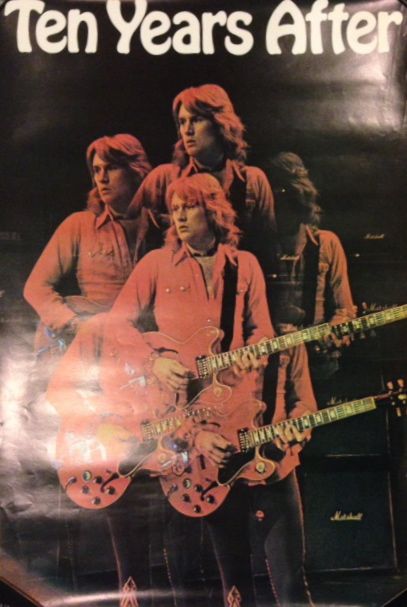 This was another great gig. John reminds me that loads of us went. Everyone I knew from school who was into rock was at this gig, we ran into loads of mates; there must have been 20 or 30 of us. Ten Years After were once again, great. The setlist was probably something like this: One of These Days; You Give Me Loving; Good Morning, Little Schoolgirl; Rock & Roll Music to the World; Turned Off TV Blues; Standing at the Station; I Can’t Keep from Crying; I’m Going Home; Choo Choo Mama; Baby Won’t You Let Me Rock ‘n’ Roll You, and will likely also have included a classical guitar piece and a scat guitar jam.
I do remember several encores that night, and us all rushing right down to the front, cramming the area near the stage. When it looked like it was all over, they would come on again, while we nervously looked at our watches, in fear of missing the last train, which I think we did, incidentally. However, all was not lost, there was a later bus, which took us all over the place. We then had to walk a few miles, arriving home in the early hours.
“Who is the best guitarist?”
If you had asked me that night, I would, of course, have said “Alvin Lee”. 100% and no contest 🙂 Happy Days.
Thanks to John for the image of his poster.
15 Oct
Ten Years After Newcastle City Hall 16th September 1971
Ten Years After Newcastle City Hall 16th September 1971  Back in the late ’60s we carried our lp sleeves almost as badges of honour. I looked up to the sixth formers who would come to school wearing their great coats or afghans, proudly clutching their latest albums under their arm for all to see. It was a way of showing everyone exactly what sort of music you were into. The coolest of the sixth formers would walk around carrying Cream’s Wheels of Fire, Tyrannosaurus Rex’s Beard of Stars, Led Zeppelin 1 or 2, The Mothers’ We’re Only in it for the Money or Lumpy Gravy (very cool), or Beefheart’s Trout Mask Replica (even more cool). Two other albums which featured were Ten Year’s Afters’ Stonedhenge and Ssssh (which had a great red fuzzy blurred semi-psychedelic picture of Alvin Lee on its front cover). The sixth former’ had a record club where they played these lps on an old Dansette player. As a younger student, I wasn’t allowed to bring my own lps, but they did let me sit in once or twice. They all sat cross-legged, listening intently, nodding their heads, looking knowingly at each other. I was totally in awe of them and of the magic sounds which came out of their old record machine. Some of that music was the sound of Alvin Lee’s guitar, and it just blew me away.
  One of the first times that I heard Ten Years After was the track Speed Kills which appears on a sampler album The World of Blues Power Volume 2. The track, as the title suggests, features some amazingly fast fretwork from Lee. I was trying desperately to master the guitar at the time, and Alvin Lee was one of my idols. I tried, usually without success, to learn those licks. I would play the lp at slow speed and try to work out what Alvin was playing and how he did it. I then had to transpose the key because of the difference in speed; it hardly every worked, much to my frustration. I guess it was never really meant to be. I ended up going to see my guitar heroes, always secretly wishing I could have been one of them. My other early experience of Ten Years After was the hit single Love Like a Man, which was a big favourite of all my friends. The other event which sticks in my mind when thinking of Ten Years After, and which I have to mention, is of course the Woodstock film. We all trooped down to Studio 1 cinema to see Woodstock on the first day that it was shown in town, wearing our best weekend hippy gear. Now the film has many great moments, but the one that had the greatest impact on me was Alvin Lee performing I’m Going Home, which was simply breath taking. The performance, the speed, the energy, the crowd reaction, the way the images cleverly flashed from one view of Alvin to another; to a young teenager sitting in the third row of the cinema it was mind blowing. That was the moment that confirmed me as a big fan of Ten Years After, and in particular, of Alvin Lee.
  The first time I got to see Ten Years After in concert was in September 1971. Support came from (pre massive fame) Supertramp (the cover of their album seemed very rude to a young guy) and folk singer Keith Christmas. Both supports were excellent. Those were the days before I discovered the temptations of the bar, and watched ever minute of the support acts. But I was there to see the man who had amazed me in Woodstock; Alvin Lee. And he, and Ten Years After, rose to the occasion and gave us a blistering performance. TYA had just released their sixth album (they had been busy guys) A Space In Time. I think they started with One of These Days, which was also the opening track of the album, and a very powerful song. One Of These Days starts with the sound of Alvin’s guitar gradually increasing in volume, he then cuts the chord, and his lone voice launches straight into the first line “One of these Days Boy!”, Leo Lyon’s bass thunders in and away we go, Ric Lee gently touching his cymbals, and the song takes off, Chick Churchill’s swirling Hammond provides a backdrop for Lee’s guitar, which is quite restrained compared to some other songs. Great! And on stage in front of me was Alvin Lee, playing his famous red Gibson 335; yes it was the same one he played at Woodstock.
  I don’t remember exactly what they played; I think it included the moody, lurching and doomy I Can’t Keep From Crying, Sometimes, their great cover of Good Morning Little Schoolgirl, and of course they played Going Home; I watched Alvin’s fingers intently, trying to pick up some tips. But there was more to Alvin Lee than speed and technical guitar flash, the guy understood the blues, was a master of light and shade, used dynamics of sound and speed to great effect, and could play rock’n’roll just like Chuck. And he had a perfect rock voice. One song, I don’t know which, featured Alvin scat singing along with his guitar, showing his jazz influences. And Ten Years After weren’t just Alvin Lee. Lee Lyons pounded away at his bass, head hung over his instrument, speeding along with Lee. Chick Chruchill provided that classic ’60s swirling Hammond sound, and drummer Ric Lee understood the light and shade of blues drumming. I next saw Ten Years After when they headlined the Sunday night of the 1972 Reading Festival. I stood in that field, as close to the stage as I could get. They played Going Home and I thought I was at Woodstock 🙂 Happy days. We will never ever see the like again. I saw Ten Years After a few more times and I’ll spend the next few days reflecting on just how great they were, and how sadly missed the great Alvin Lee is. Many thanks to John and Mitch for their images of posters from the City Hall gig.
14 Oct
The Tourists Newcastle City Hall 19th September 1980
The Tourists Newcastle City Hall 19th September 1980
 The Tourists Luminous tour of Great Britain called at Newcastle City Hall on 19th September 1980. The tour was to promote their third and final album “Luminous Basement”, which wasn’t as successful as the previous two releases, making No. 75 in the chart. The single from the album “Don’t Say I Told You So” made No. 40 in the singles chart. Support came from the Barracudas a surf/garage/psych/pop band who had a summer 1980 hit single “Summer Fun” and were great fun. The Tourists star was starting to wane, and although this was a fun show, the City Hall was far from full, and things weren’t going so well in the Tourists camp. The band split later in 1980, with Anne Lenox and Dave Stewart forming a liaison which would soon yield much greater success as the duo Eurythmics. The end of the Tourists came in Bangkok, when an airline strike stranded the band. The rift came with Stewart and Lennox disagreeing with the band’s main singer-songwriter Peet Coombes.
  Annie said in NME at the time: “Now Peet can be his own spokesperson…It was always part of Dave’s and my dilemma that we were acting as spokespersons for someone else’s work within a pop context, yet we weren’t able to put across how removed he was from that whole scene….We were on a funny boat, The Tourists….A strange craft… When we did that song [I Only Want to be With You] it was purely for fun. But after that it became bizarre. The things that happened to us were so wild, yet everyone got the impression of nice, clean poppy people. Dave Stewart: “The publicity thing just became like a bigger and bigger black cloud, until the only way we probably could have continued to exist with any dignity as people was to step aside and say, ‘Look this just doesn’t exist anymore. Let’s do something else’.” And that’s exactly what they did.
13 Oct
The Tourists Newcastle City Hall 23rd February 1980
The Tourists Newcastle City Hall 23rd February 1980  The Tourists were, of course, the pre-Eurythmics band of Annie Lenox and Dave Stewart. I’d seen Stewart perform with local Sunderland folk-rock band Longdancer a number of times, and was a little surprised to see him pop up in a post-punk pop band. However this particular post-punk band had its roots in folk and 60s pop. Harry Doherty, writing in Melody Maker, drew comparisons with Fairport Convention (not sure that I quite see that) and the Mamas and the Papas (I don’t quite see Annie or Dave as Mama Cass either 🙂 ). The first time I saw the Tourists live was on 10th May 1979 when they supported Roxy Music at Newcastle City Hall. They put in a good performance, warmed the crowd up well, and won a few friends that night. I saw them again a few months later on 24th August 1979 at the Reading Festival, sandwiched between performances by Motorhead and Friday night headliners the Police. I remember the Reading performance well; the Tourists had some great songs, particularly the Peet Combes compositions “Blind Among The Flowers” and “The Loneliest Man In The World”, which both featured in their performance that night and came over well on a cool summer evening. Both songs were released as singles. The Tourists went down quite well with the Reading crowd, particularly considering that most people who were there had come to see Motorhead; hardly the sort of crowd to appreciate a new punky pop band. They had some problems with the sound that night: “The only thing that freaks me about touring, is the equipment…It’s right out of your hands if it goes wrong. That’s what happened when we did the Reading Festival. It was mayhem onstage, really frightening.” (Annie Lenox, Record Mirror, 1980). Peet was the main songwriter in the band at the time, and wrote all of the songs on their first album. I saw them again on 19th October 1979 at Newcastle Polytechnic, by which time they had made No. 4 in the UK singles chart with their cover of Dusty Springfield’s “I Only Want to Be with You”. A drunken Friday night student crowd danced and sang along with Annie. I thought at the time that “I Only Want to Be with You” was a strange, and for me somewhat disappointing, choice for a single; given the strength of their original material. However, it worked for them, and gave them their first big chart success, helped by Annie’s great performance on Top of the Pops.
  By the time the Tourists went out on their first headline “Last Laugh” tour they had released a new single “So Good to Be Back Home Again”. I saw them at Newcastle City Hall on 23rd February 1980. A great performance; good fun straight-on pop. Support came form Edinburgh band the Solos. From the programme: “A short story from a short person. I can’t understand what I’m doing in this group when I’m such a brilliant footballer, but life takes strange twists and I twisted my knee, which ruined my chances of captaining England back in ’69” (Dave Stewart); “Pigtailed and precocious, the envy of all the potential Shirley Temples of Abderdeen, I started to learn the flute and went to play in military bands, symphony orchestras, chamber ensembles, etc….” (Annie Lennnox); “I was setting up my kit at 10 in the morning in a studio in London when in walked in Dave Stewart. Now, Dave and I had met in a hotel in Amsterdam when he was playing in Longdancer and I was with Colin Blunstone. We had hit it off really well together and as I remember I got very drunk.” (drummer Jim Toomey); “No great history – the only bands I ever played in were Peculiar Star (in Sunderland an experimental toy instrument idea…) and the Tourists.” (Peet Combes); “Q. Edward, do you really come from outer space? A. YES! I’m from the Orion!” (bassist Eddie Chin).
12 Oct
The Teardrop Explodes Newcastle Mayfair 25th June 1981 & Newcastle City Hall 2nd February 1982
The Teardrop Explodes Newcastle Mayfair 25th June 1981 & Newcastle City Hall 2nd February 1982
 The Teardrop Explodes were a great pop group. Although they emerged as part of the post-punk / new wave scene of the late 1970s, their music was very clearly influenced by ’60s psychedelia, and was labelled “bubblegum psych” or “bubblegum trance” by the music press. Led by charismatic, and fascinating, front man Julian Cope they exploded out of the Liverpool scene; friends of Wah! and the Bunnymen. I loved the singles “Treason” and “Reward” which remain classics of the genre and continue to influence bands today. I saw The Teardrop Explodes on three occasions, at Newcastle Mayfair on 25th June 1981, at Newcastle City Hall on 2nd February 1982, and supporting Queen at Elland Road on 29th May 1982. I have strongest memories of the Mayfair gig. The Teardrop Explodes had been high in the charts with “Reward” and the band, and Julian Cope in particular, were on top form. Julian was on the brink of becoming a major pop star. He was his usual exuberant, fearless, unashamed, “little boy lost” blonde bob self. And why wouldn’t he be; after all he was on the verge of becoming his hero Scott Walker. “The whole idea of the Teardrops to me is nice, nice melodies and lyrics that, while they’re always sung hopefully, have dark secrets in them when you start listening to them.” (Julian in Record Mirror, 1981).
  A packed Mayfair crowd gave the band a crazy reception; it was a great night; swirling, whirling waves of sound and colour lifted us all and taking us along for the ride. The 1981 programme proclaims the tour “Out of the Culture Bunker”. Julian explained what this was about in Record Mirror (1981): “I have a new song called ‘Culture Bunker’ that’s about the way we all reacted to other people trying to make it in Liverpool. We’d say we really want you to make it but we don’t, the whole thing is so smiley, smiley, stab you in the back. David Balfe is always slagging me off for smiling at people, and saying hello when I’m not interested in them but it’s just the way I’ve been brought up. I’m not one of, those people who declare ‘I’m honest, I’m frank, I tell people that they’re shits’.”
By the time I saw the band again at the City Hall things didn’t seem quite the same. Don’t get me wrong, it was still a great, enjoyable gig, but it lacked the edge and power, and joy, of the Mayfair concert the previous year. This was due, in part, to the lack of craziness which results when moving from a ballroom to a concert hall, but also I suspect because things weren’t too good in the band; there had been several line-up changes, and there was ill-feeling between Julian and some of the other members. The music was changing as well, and according to reports Julian was experimenting heavily with LSD. Julian’s mood felt darker; he was no longer Scott Walker, and was becoming a moody Jim Morrison. The evening before in Edinburgh the gig had ended on a dark note: “What I do recall very clearly is the interminable nonsense of the final encore: Sleeping Gas. Never a tune I have ever had much time for, the piece degenerated into an embarrassing ten minute Cope rant. The singer ended up on the floor towards the end burbling on about savaging the audience, and I am sure I was not the only one in the place thinking “Julian! For F**’s Sake. Behave yourself” (from http://therockandrollknife.blogspot.co.uk/2012/04/teardrop-explodes-edinburgh-1982.html ). Such was Julian Cope at the time. 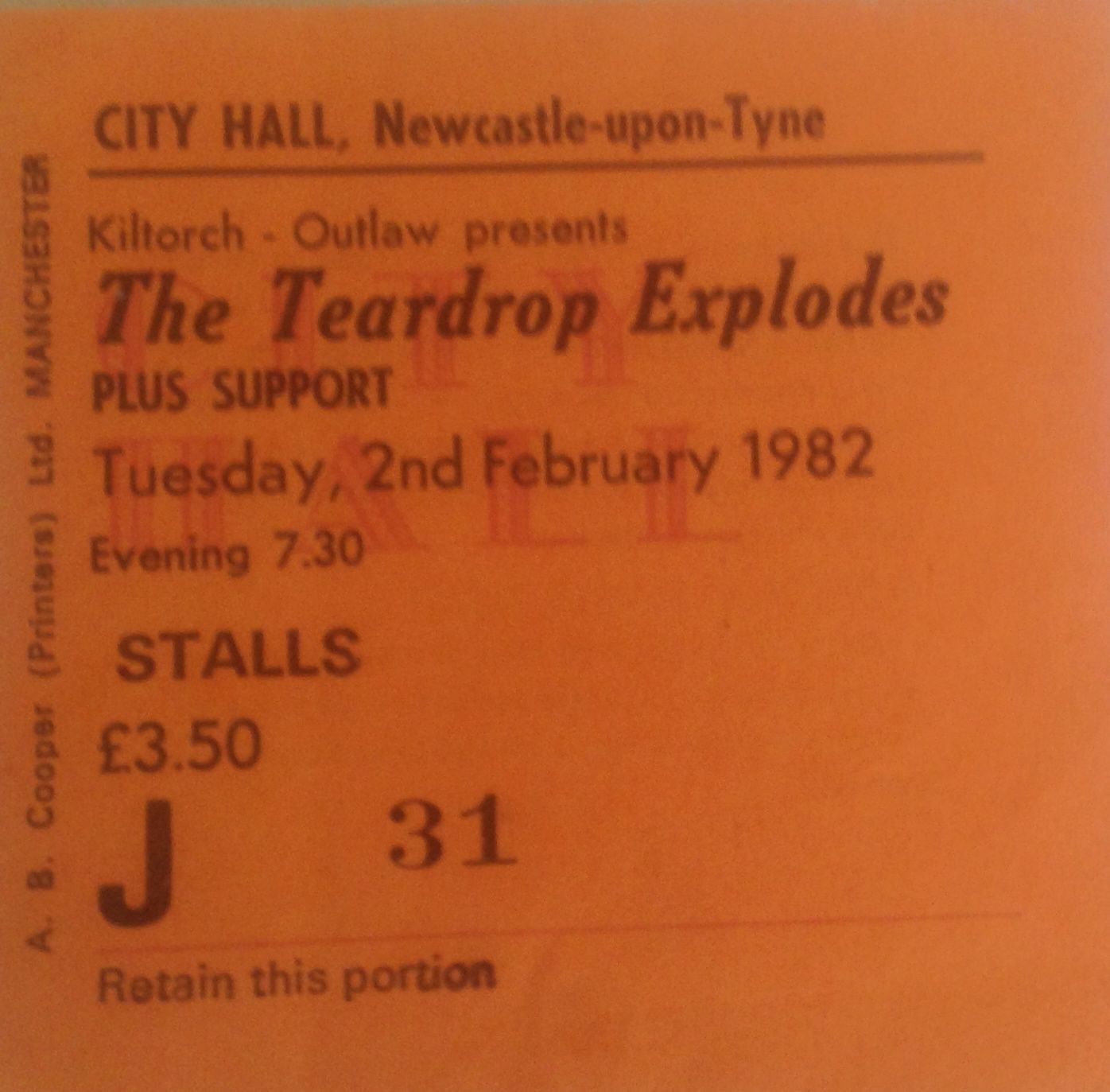 The last time I saw The Teardrop Explodes they supported Queen at Elland Road. It wasn’t a great day for them. The crowd started hurling bottles and cans at Julian and he spent a lot of time arguing with everyone. “Not sure who was first on, probably Teardrop Explodes, Julian Cope, I remember while they were throwing bottles at him, picked one up and started hitting himself with it and stretching his arms out saying he was an Argentinian bomber or something. It was during the Falklands war, remember.” (from a Queen fan forum). It was like watching a band self destruct in front of your eyes.
I like to remember The Teardrop Explodes as they were that night at the Mayfair; joyous, uplifting; a celebration of a young guy from Liverpool who was living out his dreams, and let us come along for the ride.
Julian Cope continues to perform and remains a unique, highly creative, individual.
11 Oct
Tangerine Dream Newcastle City Hall 23rd March 1978 and 2nd November 1980
Tangerine Dream Newcastle City Hall 23rd March 1978 and 2nd November 1980
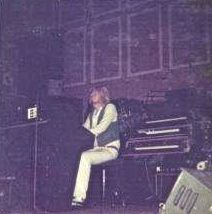 I saw Tangerine Dream on two more occasions. It is difficult to describe the concerts, as each time the band performed it was so different. In 1978 the line-up was Edgar Froese (keyboards), Christopher Franke (keyboards), Steve Jolliffe (saxophone, flute) and Klaus Krüger (drums, percussion). By the time I saw them in 1980 the line-up had changed again and had reverted back to a three piece, keyboard based, ensemble featuring Froese, Franke and Johannes Schmoelling. Their concerts continued to feature unique improvised soundscapes, loud and swirling music; psychedelic, spacey, rhythmic, sometimes dark and moody. They sometimes performed in cathedrals, I can imagine that the space and surroundings fitted the music well. One of those performances was in York Minster; I recall considering going and didn’t, which I regret to this day; I would imagine that it will have been an unforgettable experience.
The 1978 tour featured the Laserium light show which were produced live by a “laserist”. The Laserium projector (from the tour programme) “uses a one-watt Krypton gas laser as its light source, and refracts the tiny beam into four primary colors which travel through a series of optics to emerge as laser snowflakes or cloud formations suspended in space. This Laserium projector was especially designed for Tangerine Dream, and the custom made rear projection screen enables the live laser images to appear three-dimensional.” I was, and remain, intrigued by the band.  I found their concerts fascinating, challenging, interesting at times uplifting, and yet at other times tedious and tiring. Looking back they were, and remain, a unique and hugely important and influential band. Edgar Froese drew his influences from the Rolling Stones: ”The first time I heard The Rolling Stones was in the middle of a rehearsal with a rock ‘n’ roll group. I was first of all attracted by their looks. Their faces were absolutely damaged. They were the absolute opposite of The Beatles… ” and the surrealist painter Salvador Dali, who he met also played in his villa: ”This was the biggest change I ever had in music…..By seeing the way he was working, talking and thinking, I found that everything was possible. I thought that I would do the same as he did in painting in music.” He explained his approach to Paul Morley in the NME (1978): “We never do anything just for success….We could do all the Donna Summer things, and make a lot of money. But what do you do in the end? If you’re interested in being rich, the record industry is very much part of the world’s commercial activity, and it’s very easy to be successful by doing your own thing, without compromise.”
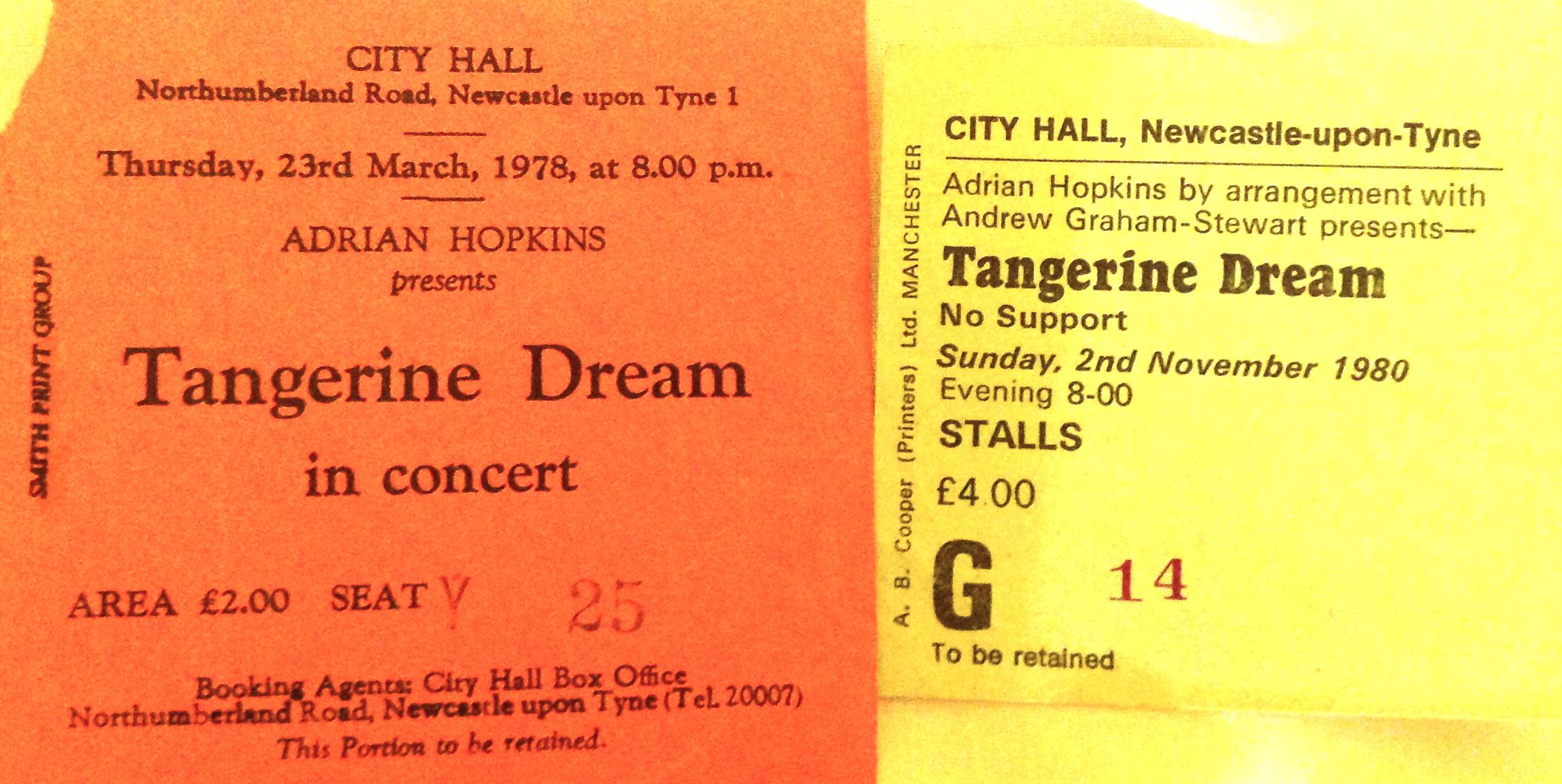 I remember for one of the performances I attended the band played the entire concert from behind a new curtain. There was never any set numbers, no “act”, no props other than the light shows. Everything was improvised directly on stage, in the moment. The performance was fed by the musicians, how they were feeling that day, but also by the venue, the acoustics, and the audience and their reaction. The musicians would walk on stage, tune, explore and calibrate their synths and then sit behind their futuristic consoles in the dark and create sounds and music. They would be no interaction with the audience. Each piece would last an hour or so, and a concert would feature a couple of such pieces, followed by, if it felt right to do so, an encore of 20 minutes or so. Then they would leave the astounded, bewildered, fascinated, perplexed audience until next time. Because of the uniqueness of the events many were bootlegged. I’ve just listened to a recording on YouTube which was made from a 1978 live show in Berlin. Fascinating stuff, and it reminded me of what the experience was like. The music from that show includes some scary screaming vocals., which isn’t something I can remember from the gigs I attended. Tangerine Dream continue to perform to this day.
Thanks to Mitch for his picture of Edgar Froese taken at Newcastle City Hall on 23rd March 1978.
9 Oct
Tangerine Dream Newcastle City Hall 4th December 1974
Tangerine Dream Newcastle City Hall 4th December 1974
Or “Is This The End Of Rock As We Know It?” (Max Bell, NME, 1974)
 Or “Is This The End Of Rock As We Know It?” (Max Bell, NME, 1974)
Tangerine Dream were formed in Berlin in 1965 by Edgar Froese. Fascinated by technology, and influenced by rock, pop and classical music, he formed a psychedelia band which would prove to be hugely important in the development of Krautrock, electronica, and trance music. Tangerine Dream’s haunting and transcendental soundscapes paved the way for many other bands to follow. By 1974 Tangerine Dream consisted of Edgar Froese (keyboards, guitars), Christopher Franke (keyboards, drums) and Peter Baumann (keyboards). They had signed to the new Virgin label, and released the highly acclaimed album “Phaedra” which was “an amazing record, the most effective mating of the mellotron and synthesizer to date, and its lush employment of rich sonic textures makes it an immensely enjoyable experience.” (Gordon Fletcher, Rolling Stone).
Tangerine Dream set out on their first UK tour in autumn 1974. The 20 date tour started in London at the Rainbow Theatre on 26th October, and closed at Newcastle City Hall on 4th December. The music was visually supported by a “Video Synthesizer” which controlled the visuals in synch to the music, so that the sounds made by the band determined the images and patterns which were displayed on the screen at the back of the stage.  The concerts were hailed unique and “fascinating experiences” (Melody Maker). Tangerine Dream gigs (were they “gigs”?) were unlike any other rock (and were they “rock”?) concerts I had seen, and consisted mainly of lengthy improvisations with zero interaction between the band and the audience. The band set themselves a challenge of never playing the same piece twice, and the concerts were often performed in complete darkness.
From the tour programme: “Tangerine Dream do not play conventional instruments. Their mass of synthesisers and electronic keyboards are probably the most sophisticated in the world…..their commitment to total improvisation moulds their concerts into an unusual form: at the beginning there has to be a period of attunement – musicians to each other, and then musicians to the audience. Finally the band tries to sensitize itself to the particular acoustics of the auditorium.” The tour also featured a quadrophonic sound system, all of which promised a very different and interesting experience.
 “Don’t categorise us. We’re influenced by everything; sound, pictures, a walk in the woods, looking at clouds from a plane even. Without Debussy, Presley, Beatles, Pink Floyd, Tangerine Dream would be impossible. Our music is the end result of these things in that we become a filter, our instruments, the keyboards, moogs and VCS3’s are just the ones with which we can best express our sensations” (Pete Baumann) “Because we never repeat a concert it’s hard to define whether we get excitement or satisfaction from it. After a good presentation, we may not do an encore – there’s nothing left to give.” (Edgar Froese).
I found the City Hall concert interesting, very different and, to be honest, simply strange. The stage was set with banks of synthesisers, and there was, as described in the programme, a period at the start of the evening where the three band members seemed to be setting up their instruments. I think the analogue equipment that they used at the time needed to warm up. Once the music got started it filled the City Hall with swirling rhythmic soundscapes, and the visuals, although quite basic compared to today’s effects, flashed and swirled in sequence with the music. I found the lack of audience interaction and the length of the pieces challenging, to say the least.
An experience like no other, at least until I saw them again, back at the City Hall four years later.
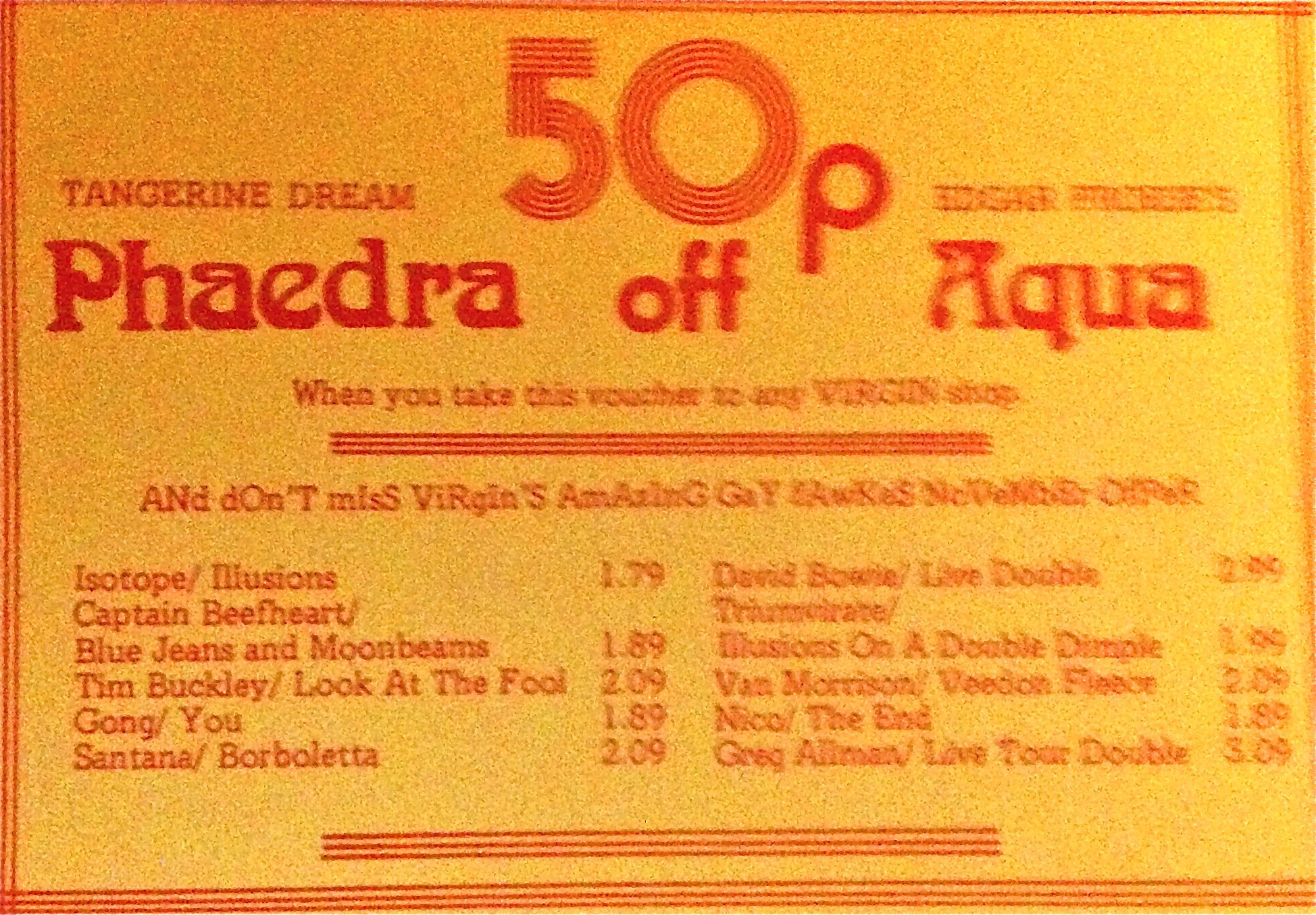
PS I found a voucher (above) which entitles me to 50p off the price of “Phaedra” at my local friendly Virgin store. Is it still valid ? 🙂
 Vintagerock's Weblog.