“5 – 4 – 3 – 2 – 1…… It was the Manfreds”
 A night of nostalgia. The Manfreds are basically the 1960s Manfred Mann band without Manfred Mann; that is before he left and eventually ended up fronting the Earth Band which he does to this day. The ManfredS take two forms: one with both singers Paul Jones and Mike D’abo fronting and the other with Paul Jones alone fronting the band. Tonight it is the latter of the two formations, which is more of a hits/jazz/blues combo as you might expect from the great man Paul Jones who is now in his early 80s and still on great form.
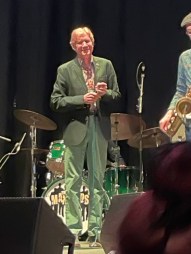 So tonight’s concert, which is in two parts with a short interval consists of a mix of old (pre-Mike D’abo; that is Paul Jones) era Manfred Mann hits, plenty of vintage blues, and some Paul Jones new solo album material mixed in. The first set is mostly blues with some great vocals and mouth harp from Paul Jones who looks good, sounds good and twists some great blues licks from his large collection of different key mouth blues harps which perch on the mic stand. Interspersed with that is the Bob Dylan cover (one of several which were a hit for Manfred Mann) “Just like a Woman” and the McGuinness Flint hit “Malt and Barley Blues”. Tom McGuinness is a member of the band (he was in Manfred Mann before forming McGuinness Flint) and turns out to be one of the stars of the evening with some great guitar work. They also sing Burt Bacharach’s “My Little Red Book” which was covered by Manfred Mann in the 1960s. Somewhere along the way there are plenty of blues songs including classics such as “Smokestack Lightning”. The closing song on the first set is one of Manfred Mann’s massive hits the wonderful “Pretty Flamingo”. Just great.
 During the interval I catch a drink and purchase a couple of Paul Jones CDs which the man himself autographs for me; one for myself and one for my friend John in the USA. I am careful not to drink too much as I am still suffering from my misbehaviour the evening before at the Martin Carthy concert (see previous blog entry to read of my misbehaviour). The second set opens with another big chart hit “5 – 4 – 3 – 2 – 1”. We are soon treated to another classic song “Oh no! Not my Baby”, this one written by Carole King. Then Tom McGuinness comes up front for the McGuinness Flint hit “When I’m Dead and Gone” which, he reminds me was written by Gallagher and Lyle who were in the band alongside Tom McGuinness and Hughie Flint, before they went on to have many solo hits. I last saw McGuinness Flint supporting Humble Pie (or was it Wishbone Ash) at Newcastle Odeon in the early 70s. Then the band complete the show with “The Mighty Quinn” (another Dylan song, and sung originally by Mike D’abo, as I recall) and “Do Wah Diddy Diddy”. The encore is (most appropriately) “If You Gotta Go Go Now” (yet another Dylan song). And so it is over. A great night of classic 60s hits, and some great blues. At the end of a busy week of three concerts: Graham Gouldman, Martin Carthy and the Manfreds.
Thanks to Jackie for taking the photographs.
Set list.
Set 1: Tengo Tango; The One in the Middle; Sha La La; Malt and Barley Blues; Just Like a Woman; Choose or Cop Out; My Little Red Book; People Get Ready; I’m Your Kingpin; Smokestack Lightning; Losing You to the Blues in Me; Pretty Flamingo.
Set 2: 5-4-3-2-1; Watermelon Man; How Lucky Can One Man Be; Oh No! Not My Baby; Diamond in the Sand; Got to Be the Blues; Put It Where You Want It; When I’m Dead and Gone; Quinn the Eskimo (The Mighty Quinn); Do Wah Diddy Diddy.
Encore: If You Gotta Go, Go Now.
 A night of memories and reminiscences once again. This time I am in the lovely new local venue the Sunderland Fire Station for an evening of music with none other than
 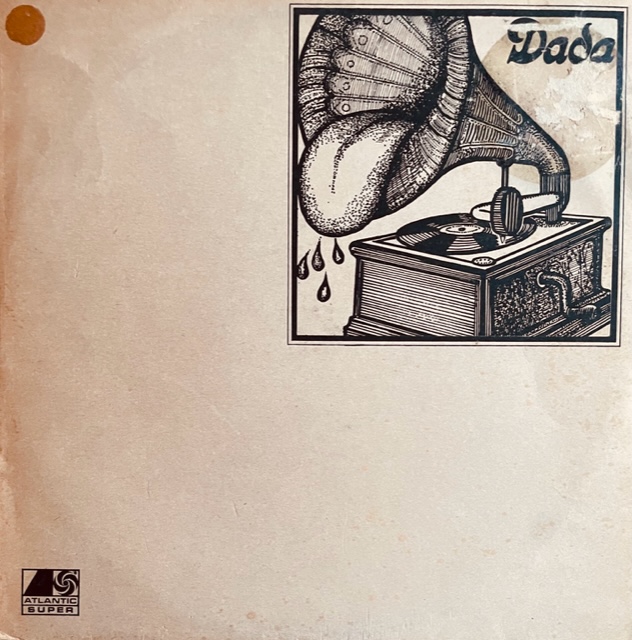 Dada were first on the bill below Yes and headliners Iron Butterfly. I decided to treat myself to a copy of their album (see image) to remind myself of their music. They were a large band (I think around 10 piece) with a brass section and Elkie singing as front person, alongside ultracool soul man Robert Palmer.I remember being very impressed by the overall power of the band and, in particular, by Elkie’s raucous blues/jazz vocals. I was very much a young gig goer of 14 and sat in awe, by myself, feeling I was part of a big adventurous journey into the realm and world of live music which was just beginning.
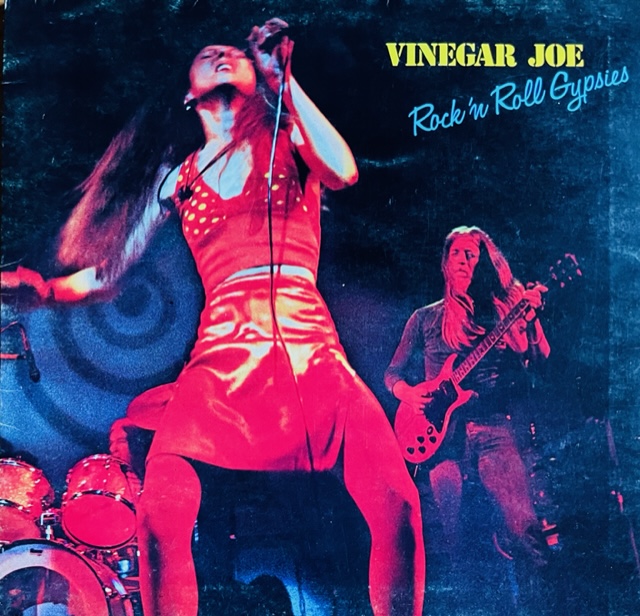 The next time I ran into Elkie was in the band Vinegar Joe. She had become the wild, gypsy front person, again alongside Robert Palmer on vocals and her husband of the time Peter Gage on guitar (that is him, standing to the right of Elkie on the front cover of the album. Pretty cool guy, with great long hair and who played some wonderful slide guitar, as I recall). I was lucky enough to see Vinegar Joe several times during the early 70s at the Lincoln Festival, the Reading Festival, and local venues including (I think) Sunderland Locarno, Newcastle Mayfair and most notably supporting the legendary Free at Sunderland Top Rank. Vinegar Joe were quite a while raucous rock/blues band and we all sat in awe of the force of nature that was Elkie. Again, I bought a copy of one of their albums to remind myself of these Rock ‘n’ Roll Gypsies and their music. “They were an electrifying live act and quickly became a staple of the UK’s then-thriving university circuit.” (
 The next time I saw Elkie was headlining as a solo artist at Sunderland Empire Theatre. This was in the late 70s and Elkie had become more of a middle of the road (and very successful) rhythm and blues singer hitting the charts with “Pearl’s a Singer”, “Sunshine after the Rain” and many other successful singles.
 This is also another night of renewing friendships, through something of a coincidence. I was just telling my carer for the evening Jackie about when I saw Elkie in Vinegar Joe supporting Free at the aforementioned concert when along comes an old friend Paul, who I have not seen for many years and says “Do you remember seeing her in Vinegar Joe at the Rink? ” We chat about that great concert and how wonderful she was “back in the day”. Great to see him again.
 Both sections of the show are impressive in their own way. The mix of classic soulful chart hits and raucous blues is fantastic. Elkie still has a very powerful voice. Although I can’t recall the entire set list, I do remember thinking how many hits she has had, some of which I had forgotten, such as “Don’t Cry out Loud “and “Lilac Wine”. During the first half she also does an excellent version of the Rod Stewart classic “Gasoline Alley”.
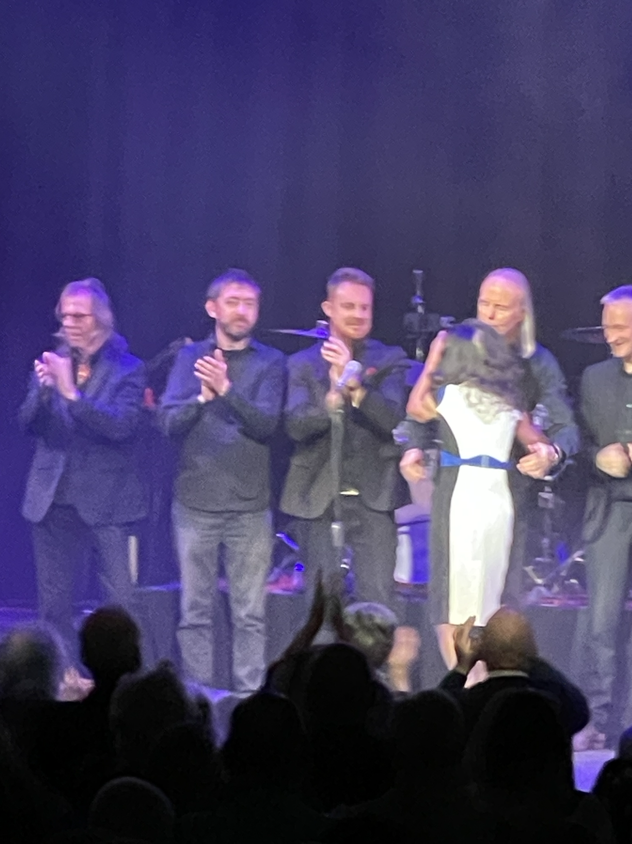 The second half of the concert comprises more hits including the Chris Rea song “Fool If You Think It’s Over” but, rather than finishing with her massive chart success “Pearl’s a Singer” she chooses to give us a great rendition of this song halfway through the second set. She closes the evening with a series of blues classics, belting them out in a powerful voice and showing what her true roots are. By the end everyone is up on their feet, lots of dancing, and a standing ovation for Elkie, which is well deserved. A great night full of many memories. Happy days.
 (later McVie of Fleetwood Mac fame), the man behind Chicken Shack was, is, and always has been the great Stan Webb. Stan is, without question, one of the greatest and most underrated guitarists of all time. For me, he stands up there with the UK greats including Eric Clapton, Jeff Beck, Jimmy Page, Alvin Lee and Peter Green. His use of tone, dynamics and his dexterity on the fretboard is second to none. Stan understands, and feels, the blues just as much as any of the great old black bluesman. His reinterpretations of classics such as “Thrill Is Gone” and “If I Were a Carpenter” are excellent; he starts off quietly; with long, meandering guitars solos which lead into loud, heavy, introductions to the songs accompanied by Stan’s unique vocals.
 Eric Burdon
 Publicity for the concert read: “Despite Eric being the ripe old age of 77, his voice still packs a punch and he and his band put on one hell of a show. Seriously, the guy is North East music royalty; he and his band inspired generations of artists and wrote gritty, working -class tunes about gritty, working-class subjects before it was cool to write gritty, working-class tunes about gritty, working-class subjects. You can expect all the classic Animals’ tracks from a true master of the blues vocal performance – he’s been playing music for more years than many of us have been alive and he sure knows how to do it.” (
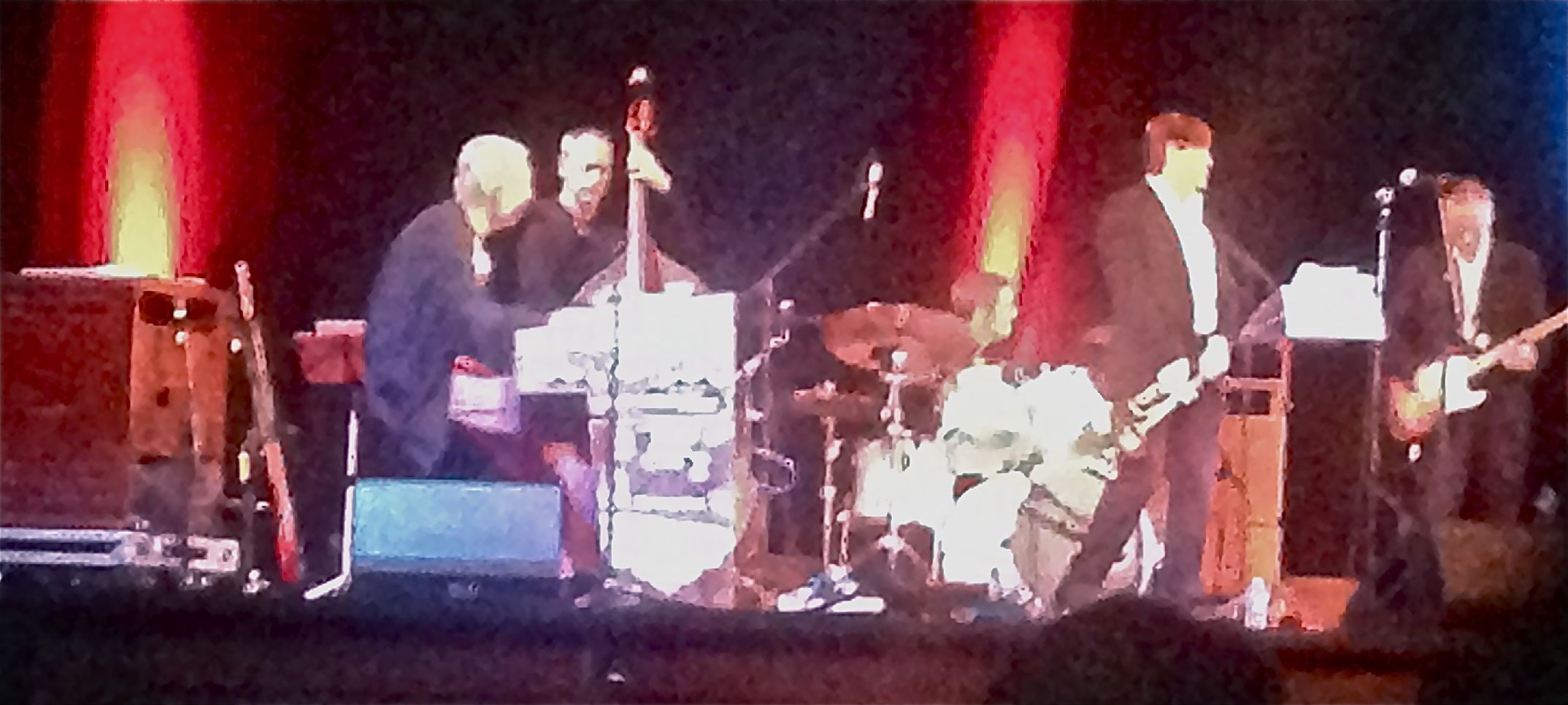
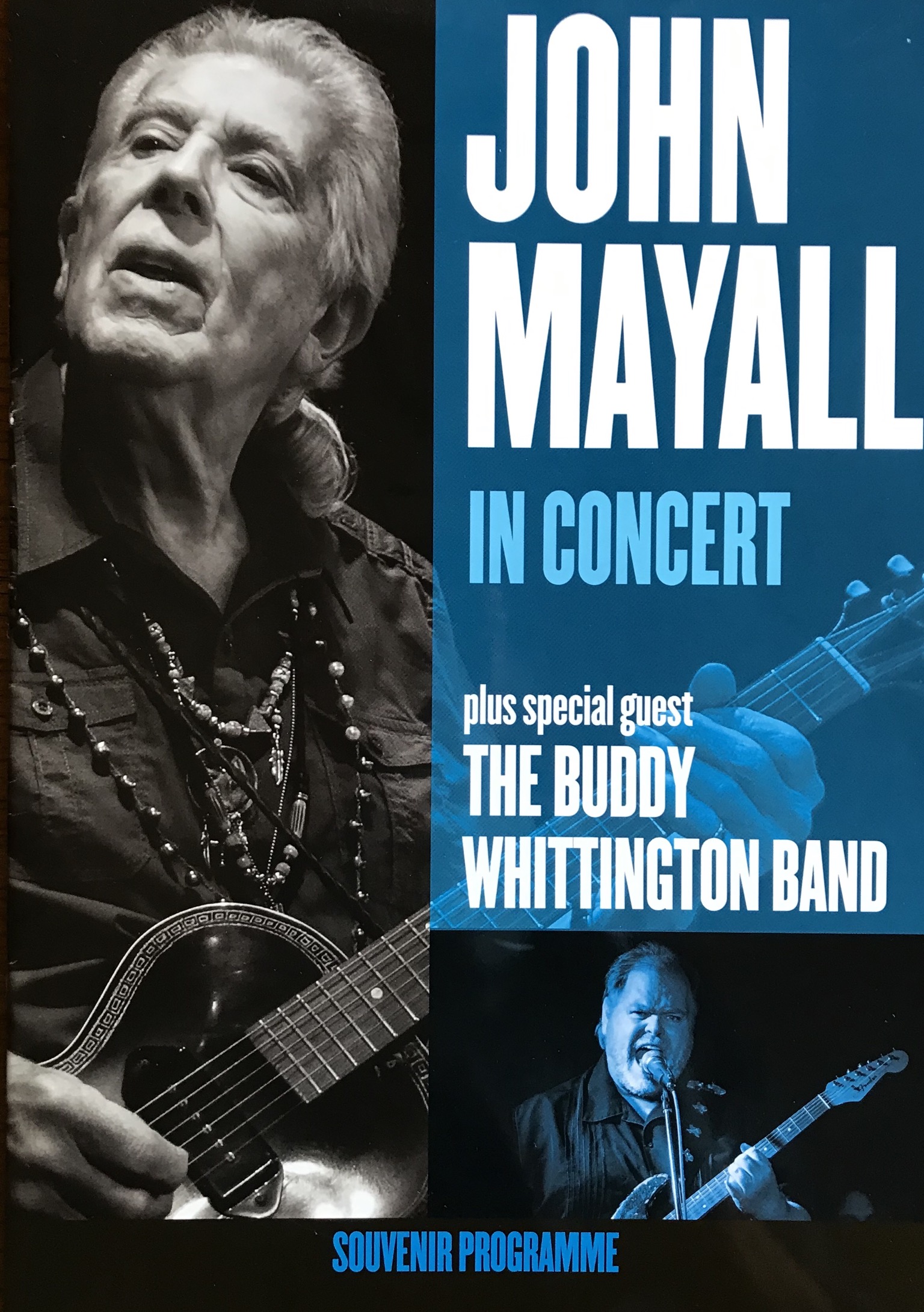 The set comprises several blues standards, and songs from Mayall’s extensive back catalogue. The sound is somewhat laid-back, in the style of a Chicago blues combo with each excellent instrumentalist being given the chance to highlight their skill in an extended solo; including electric piano and harmonica solos by Mayall himself. That is the strength of Mayall. The man comes over as modest, happy and content to allow his band members to flourish, shine and excel and then move on to further their own successful careers; from Clapton onwards and Buddy Whittington himself being a recent example. There are quite a few songs I recognise and several I don’t; nonetheless I enjoyed the set, as did my carer Jackie, and continue to marvel at the legend that is John Mayall. His tiny guitar, which I have seen many times over the years, never ceases to fascinate me. Mayall finished the set with, what else but, his own standard “Room to Move” with much harmonica excellence on display. Long may he continue. Respect. Until the next time.



 Vintagerock's Weblog.