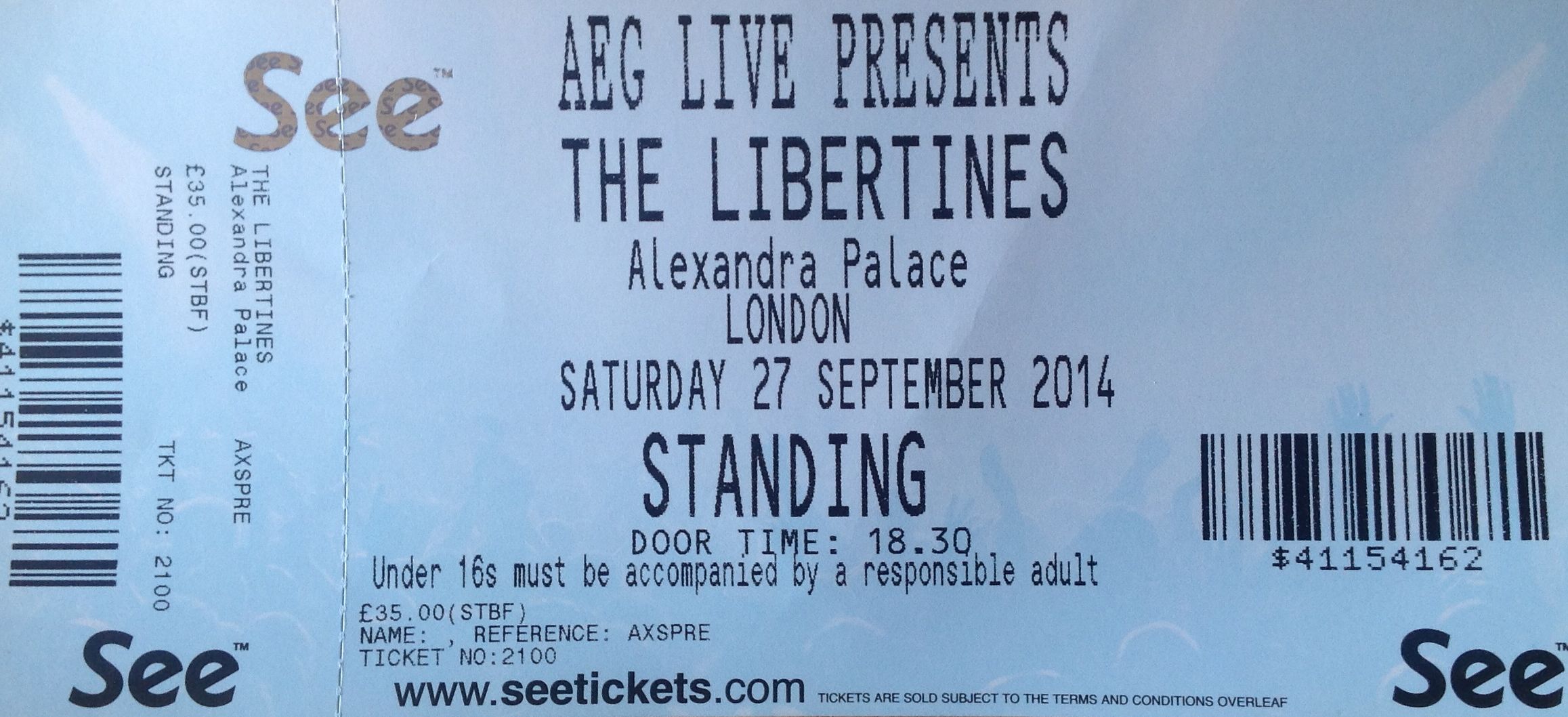
The Libertines Alexandra Palace London 27th Sep 2014
 I finally got to see the Libertines last night at Alexandra Palace with Laura, David and Shauna, who are all fans. I wasn’t sure what to expect, being more familiar with the legend and the Pete Doherty saga, rather than the music. I had in my mind that it might be similar to going to see the Clash or, perhaps more like, Buzzcocks “back in the day”. Whatever my silly comparisons,it actually turned out to be great fun, with Pete, Carl and the band running through just about the entire Libertines catalogue to a packed Ally Pally crowd who danced, cheered, sang (and threw lots of beer) like there was no tomorrow. This was the second of three nights that the Libertines are playing at the massive London venue as part of their reunion tour.
The Alexandra Palace is a grand venue, set up on a hill overlooking the city, but it is hardly ideal for a rock concert. The sound was very murky at the start, but started to improve a few songs in. Pete is looking well, and he and Carl were clearly enjoying themselves. They came onstage just before 9.30pm to a deafening roar from the crowd. Everyone was pleased to see them, this band mean a lot to their fans, and the on/off brotherhood friendship of Pete and Carl is very much on again. The story of the Libertines is as much about two mates, their journey on the good ship Albion, and their attempt to (re)create a time of friendship, fun, and old Englishness, as it is about the poppy songs, the rocky punk riffs, and the slow, moving crowd singalong ballads. For a moment, looking at the grainy black and white images of Pete and Carl sharing the mike, it could be John and Paul up there.
Comments on Twitter this morning: “Pete in pretty good voice”. “Really enjoyed it tonight – they played well, very tight, sound was good, liked the lighting/video screen thing”. “Bloody magnificent”. “Absolutely smashed it”.
Setlist: The Delaney; Campaign of Hate; Vertigo; Time for Heroes; Horrorshow; Begging; The Ha Ha Wall; Music When the Lights Go Out; What Katie Did; The Boy Looked at Johnny; Boys in the Band; Can’t Stand Me Now; Last Post on the Bugle; Don’t Look Back Into the Sun; The Saga; Death on the Stairs; ; Tell the King; The Good Old Days
Encore: You’re My Waterloo; What Became of the Likely Lads; Up the Bracket; What a Waster; I Get Along
 Returning to my comparison, I think musically more Buzzcocks than Clash. Scrub that, I’ll go for more Stones than the Beatles, and change my image of Pete and Carl, from being John and Paul to being Mick and Keef. Enough of my comparisons, which are getting silly. And no spitting these days.
It was fun to join a big party of 10,000 20-something and 30-something year olds, all enjoying a reunion trip on the good ship Albion. After all, it’s a trip they never thought they would make again, and one many of them have dreamed of. Last night two young mates stood on that stage, sang those songs again, and relived days , not so long ago, when the world was, for a short time, a different and happier place.
We joined the queues stumbling out of the venue, passed the crammed buses, walked down the hill and along to Wood Green, where we caught a bus back to David and Shauna’s. I’d bought some badges and we shared them out; David’s had a picture of the band, Shauna’s a skull and crossbones, Laura’s a mod target image, and mine simply said “The Libertines” in a Sex Pistols style font. I’ve just checked my lapel; I’ve already lost mine. So it goes 🙂
Posts Tagged ‘concert’
28 Sep
The Libertines Alexandra Palace London 27th Sep 2014
27 Sep
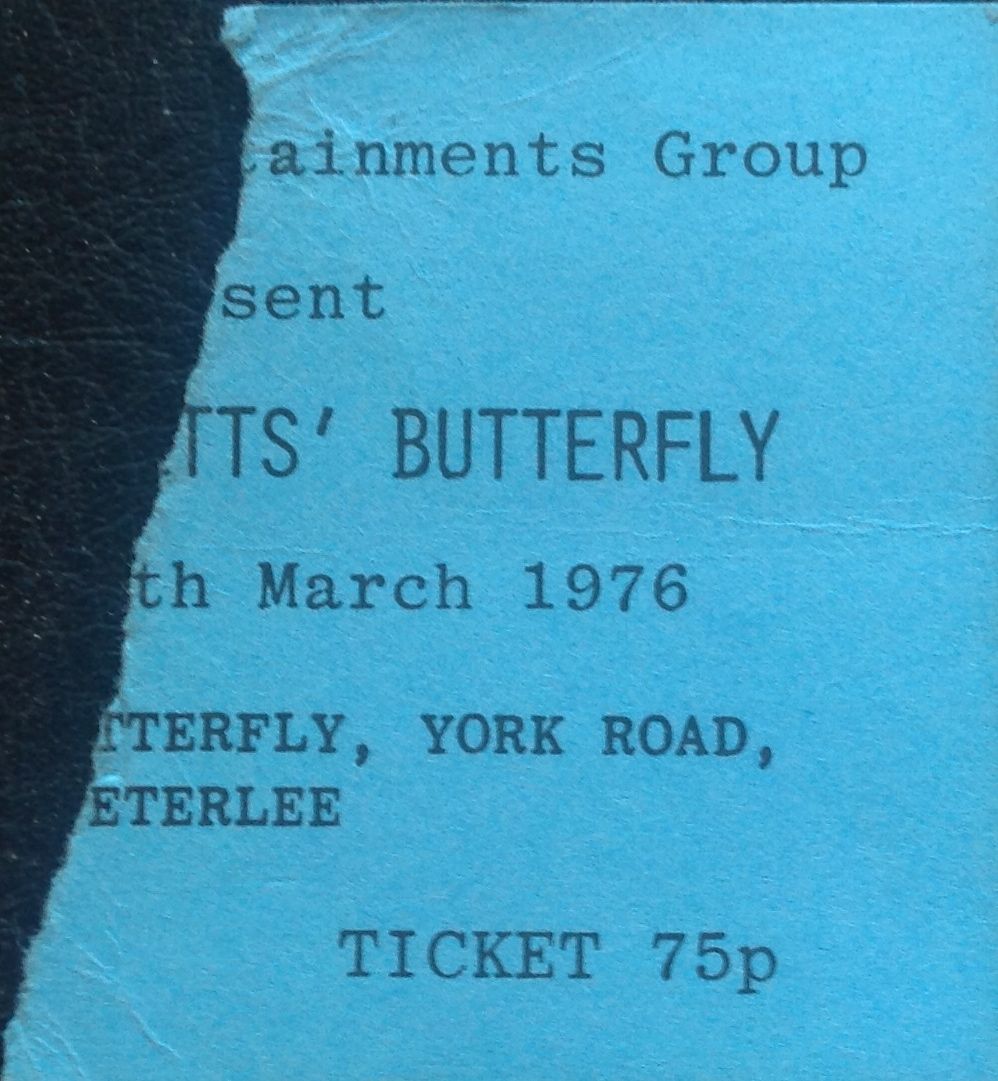
Julie Tippetts (Julie Driscoll) The Argus Butterfly Peterlee March 1976
Julie Tippetts (Julie Driscoll) The Argus Butterfly Peterlee March 1976
 I’m going to start my meander through acts beginning with the letter “T” with a gig that was strange, musically scary, and unique. And it is also one that I am so glad I attended. But first I’ll think back to when I was a kid in the ’60s.
The image of Julie Driscoll on TV, with her wide made-up eyes and scary hair, singing “Wheels on Fire”, remains forever etched in my memory. I would have loved to see her perform during that period; her work with Brian Auger is simply incredible, and I watch her quite often on YouTube. The first chance that I got to see her live was when she came, with her band Butterfly, to perform at the Argus Butterfly pub in Peterlee. By then she had married, become Julie Tippetts, and had undergone a radical change in vocal style and musical direction. The Argus was, of course, a legendary venue (see below for a picture of the pub) having hosted many bands in the late 60s, when it was the home of the Peterlee Jazz and Folk Club, including an early show by Led Zeppelin, and gigs by Family, Jethro Tull, Free, Deep Purple, Man and others. It was a sparse crowd that gathered to see Tippetts that night in 1976, which was a shame, because what we witnessed was something simply astounding. Tippetts had released the album “Sunset Glow” the year before.
Miles explained in the NME (1975): “In 1970 Julie Driscoll married Keith Tippett, the modern composer, and entered the mysterious other world of contemporary music….She began training her voice and got more involved with experimental work”. All Music Guide says: “After her soul, pop, and R&B beginnings, Tippetts redeveloped her voice… began to extend its reach in improvisation, breath control, and uncommon phrasing. She is one of the most compelling and original singers in recorded music’s history. Sunset Glow is a curious recording, one that walks the razor’s edge of composition and improvisation….strange song structures, varying dynamics”.
Her performance that night was truly way out there in left field. This was vocal improvisation and strange curious songs, and timings. 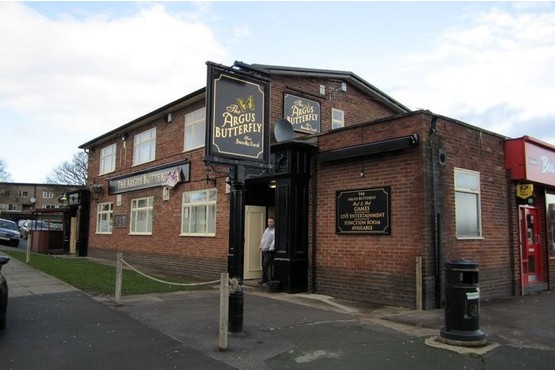 Unlike anything I had heard before. Her band was Brian Godding (guitar), Harry Miller (bass), Mark Charig (cornet) all of who were with Julie in Centipede in 1973, and a “new” guy John Mitchell (percussion) who used to be with Arthur Brown. Julie accompanied herself on piano. One song ‘Mongezi Feza’ consisted entirely of Julie singing the name over and over again, improvising and playing with the sounds. To call the music avant garde jazz does it a disservice; this was experiments in sound, using the voice as an instrument and seeing how far she could take it. It was mind blowing stuff. Sometimes so strange I wanted to laugh, yet compelling and so challenging and moving. Marie and I sat near the front, wondering what on earth we were experiencing.
The gig sticks in my mind today, and I keep promising myself that one day I will go and see Julie perform again. She performs rarely these days, usually with her husband on piano, and in London or the south-west. I really must try and see her again.
26 Sep
Stackridge Live 1972 – 1976
Stackridge Live 1972 – 1976
 Stackridge toured endlessly in the early to mid 70s. I must have seen them at least half a dozen times including performances at the Reading Festival in 1972 and 1973, at the Elton John and Beach Boys show at Wembley Stadium, supporting Lindisfarne at Newcastle City Hall, and headlining at Sunderland Polytechnic Wearmouth Hall. I am sure there will have been other occasions which have slipped my mind. For me it was the original Stackridge line-up which was in place up until 1973, which was the classic band. This was the band which was fronted by Mutter Slater, recorded the album “The Man in the Bowler Hat” (Mutter would always wear a bowler hat on stage), and had great songs which married intricate prog, Beatle-ish tunes, with fascinating storytelling, great hooks, and some west country humour thrown in for good measure. The song “Slark”, from their first album was the highlight of the set. “Slark” tells a somewhat dark, yet poignant story of a (friendly, I think) monster and was an eccentric lengthy prog/folk epic, during which Mutter captivated us all, and lead us in the sing-a-long chorus. I would look forward to seeing them play “Slark” and would go home disappointed if the song wasn’t aired. But there were other classics songs: “Dora the Female Explorer”, “Let there be Lids” (the band would all bang dustbin lids, while we clapped along with them), “Do the Stanley” (the “Stanley” was Stackridge’s very own dance, which the band invented, and encouraged us all to join in with on several drunkens ocassions), and other great Stackridge stories including “Amazingly Agnes”, “Purple Spaceships Over Yatton” and “The Road To Venezuela”.
Stackridge always seemed to be on the verge of bigger success, but it then somehow seemed to allude them. Perhaps the ever-changing line-up didn’t help. At one point, Mutter and a couple of other members left the band, and a new Stackridge went out on tour with a very different line-up to promote their third album “The Man in the Bowler Hat” (and of course the man who actually wore the bowler hat wasn’t there!). The album was produced by George Martin and should have ensured great success. Mutter and the others did return to the fold, and the band were signed to Elton John’s Rocket label. However by 1976 it was all over, and Stackridge split, leaving fanatical followers up and down the country and a bunch of great memories and excellent songs. For me, Stackridge were an important, yet often forgotten, part of the early 70s music scene.
Stackridge reformed ten years or so ago, and are touring again.
“Careering along in my creosote car
From Kebeeble to Kenn I didn’t get very far
The sky turned black and a dark cloud grew
The monster Slark came in to view
I pleaded with Slark to pass me by
“I’ve done nothing wrong, I don’t want to die”
He scooped me up in his huge grey claws
And bore me away without any cause”
(Slark, Stackridge, 1971)
This is absolutely the last (at least for now) of my blog entries on acts beginning with the letter “S”. I will definitely move onto the letter “T” tomorrow 🙂
25 Sep
Soft Machine Live 1974 and 1975
Soft Machine Live 1974 and 1975
 I saw Soft Machine twice; once at a concert at Newcastle Guildhall on 29 June 1974, and again at Reading Festival on August bank holiday weekend 1975. But my first recollections of Soft Machine are much earlier. I recall listening to a Radio 1 in concert by the band in the late 60s or early 70s, and was totally blown away by the experimental free-form improvisation, which was, to a young teenager, simply mind-blowing and unlike anything I had heard; very different from the rock and pop that I was listening to at the time. I held that concert in my mind, but it was a few years until I finally got to see the band. By then they had transformed from the early psych band of the late 60s to a much more jazz-oriented outfit playing purely instrumental concerts, featuring long numbers with extended improvisation. Allan Holdsworth had joined the band and they had become a much more guitar-oriented band. They were promoting their album ‘Bundles’ at the time and the line up at the time was Mike Ratledge – keyboards; John Marshall – drums, percussion; Karl Jenkins – oboe, saxophone, keyboards, synthesisers; Roy Babbington – bass and Allan Holdsworth – guitar. By the time I saw them at Reading Holdsworth had been replaced by John Etheridge.
The 1974 concert that I attended was part of the Newcastle Jazz Festival. I found a review of that concert in Melody Maker, posted on the website of support act the Steve Brown Band: “The Softs began to project their intricate, fluent music to a packed house. Each solo was performed to perfection, especially some stunningly complex drumming from John Marshall. They blended their inborn jazz origin with the essential urgency of rock to full effect and produced a generally rich all-round sound. Allan Holdsworth emerged as one of the all-round stars of the evening with some really fine guitar playing on “Hazard Profile”, “Floating World” and the exceptional “The Man Who Waved At Trains”. If I remember correctly this was a late night concert with doors at 9pm, and Soft Machine coming on stage very late, and sadly we had to leave before the end to catch our train home.
Neil commented on one of my earlier posts on a 1975 City Hall concert by Soft Machine, which I missed: “Soft Machine came on and didn’t speak a word all night to a third full City Hall. Incredible gig – can still picture Mike Ratledge doing a solo bit – as the band were walking off he just played one note that went on forever. Marshall did a lengthy drum solo and Karl Jenkins showed us he had something special and he’s proved it lately with his popular classical works.” (Thanks Neil).
A bootleg exists of the Reading performance I witnessed which records the set as: The Floating World; Ban Ban Caliban; Out of Season; Bundles; Land of Bag Snake; The Man Who Waved At Trains; Peff. Mind-blowing stuff.
An amazing and much missed act, who successfully blended rock, jazz and prog to produce a unique, challenging sound. I notice that John Marshall and John Etheridge sometimes perform these days as Soft Machine Legacy and have been meaning to go and see them.
24 Sep
Silverhead live 1973 and 1974
Silverhead live 1973 and 1974
 Actually….there a couple of more bands who deserve a day’s blogging before I move on to letter “T” (thanks Mitch and Neil). The first is Silverhead. Looking at singer Michael Des Barres gigography site, I reckon that I saw Silverhead three times, once supporting Wizzard at Sunderland Locarno on 13th July 1973, then supporting Nazareth at Newcastle City Hall on 19th October 1973, and then back, this time headlining, at Sunderland Locarno on 7th June 1974. I certainly remember seeing them at the Mecca (aka Locarno) and have my ticket stub for the Nazareth gig. These gigs blur into a glam rock’n’roll mist….
Silverhead were a British rock’n’roll proto-glam-metal band, with a style, sassiness and attitude, that made them stand apart, way out there from other bands of the time. Fronted by the singer and mime artist/actor, Michael Des Barres; the other members of Silverhead were: Robbie Blunt (guitar; went on to play with Robert Plant), Rod Rook Davies (guitar), Nigel Harrison (bass guitar; went on to play with Blondie) and Pete Thompson (drums). Silverhead only existed for two short years, during which period they recorded two albums, “Silverhead” and “16 and Savaged”, and played some crazy gigs which left a mark on anyone who saw them.
Looking back, Silverhead were way ahead of their time. The guys were the model for many sleaze/trash rock who followed. They all wore make-up, and Des Barres was a crazy, OTT frontman. There were hints of glam-rock in their stage show, but Silverhead were one hot rock’n’roll trash band, and Des Barres had a great screeching, raucous rock voice. These guys were fore-runners of punk, and role models for many sleaze/heavy metal rock bands of the 70s and 80s. I’ve just watched some video on YouTube of Silverhead live, and you can see exactly where Ratt, Motley Crue, Guns N’ Roses and even the New York Dolls (this was 1973 and Silverhead did tour the USA) got some of their ideas. Dave Thompson, in a review of their first album on AllMusic, calls Silverhead “the first and positively the greatest metal band ever to dress up like a bunch of weird-looking hookers.” And who influenced Silverhead? Well, you can certainly imagine that they listened to T Rex, and some of their music and attitude is not a million miles away from “BlockBuster” or “HellRaiser”; but they took the glamrock of Sweet and Bolan, coupled it with the loud rock of Slade and a hint of the Stones, and twisted it into something much seedier, rauchier and rockier. Live these guys were explosive with a high energy set which contained rock’n’sass classics, a couple of deep ballads, and the crazy adrenaline-charged screaming mania of Des Barres, posing bare-chested and wearing silver lurex trousers. They may have been playing to small clubs, or supporting more established acts, but you could tell, that in his head, Des Barres was already a big rock star.”Subtle as a flying handbag” (Dave Thompson, AllMusic).
Richard Cromelin reviewed a 1973 concert at the Whisky a Go Go, Los Angeles for Phonograph Record magazine: “Des Barres…loves to pose for the cameras, and like the best rock ‘n’ rollers he feeds off the energy that comes from the crowd in front of the stage…..He has a marvelous face as well, with sunken eyes and hollow cheeks that he uses to project a demonic, stylized sexuality…they make you feel their love of performing, their total involvement in and enthusiasm for what they’re doing.”
23 Sep
Spandau Ballet Whitley Bay Ice Rink 19th December 1984
Spandau Ballet Whitley Bay Ice Rink 19th December 1984
 The next time Spandau Ballet returned to play in the North East, they sold out two nights at the cold and cavernous Whitley Bay Ice Rink. Now very much pop stars, Spandau Ballet released their fourth album, Parade, in June 1984, which featured the hit single “Only When You Leave”. At the end of 1984, they performed on the Band Aid charity single. In a few short years this band had moved from being the darlings of the new romantic scene, playing small, intimate and exclusive events in trend-setting London clubs, to the pop star darling of thousands of screaming fans, headlining massive arenas up and down the UK.
In the tour programme, all of the band wax lyrically about the live experience.  Tony Hadley describes it through a poem: “The dream was so real. The colours so clean. The atmosphere a richness that touched all the human senses. An expectation so overpowering that you no longer felt completely in control. A force greater than anything experienced before was urging you forward eager to tease and be teased. The curtain will rise and at once the party begins….Without any doubt at all, playing live is one of the greatest moments of my life.” Gary Kemp: “This is where ‘Parade’ really exists, in the event that we’ll both create tonight!” Martin Kemp: “…our stomachs ache with anticipation and our hands are clammy, this is by far the best time of any year…Welcome to the Parade.” Steve Norman: “Playing live is what we do best and it’s most certainly what we enjoy doing most.” John Keeble: “At Last! Spandau are back on stage and n-one is more pleased than me. I saw Spandau Ballet once more, in 1985, when they performed at Wembley Stadium as part of Live Aid.
I think that covers my ramblings on the letter “S”. It turned out to be a bit of a marathon. I need to double-check, but tomorrow I should be able to start the letter “T”! The end of my project is getting closer….
22 Sep
Spandau Ballet Newcastle City Hall 19th April 1983
Spandau Ballet Newcastle City Hall 19th April 1983
 “Initially ‘mod’ meant a very small group of young working class boys who, at the height of the trad boom formed a small, totally committed little mutual admiration society totally devoted to clothes…” (George Melly, from his book Revolt Into Style.)
“…although they’ve played only a handful of gigs to invited audiences, every record company in London has been chasing their signatures, some without hearing a note of their music. Already they’ve been the subject of an entire television documentary owing to their large London cult following.” (Betty Page, Sounds, 1980)
Spandau Ballet was as sharp as a dagger, and cool as you could get when they emerged from the new romantic scene of the early 1980s. Their gigs were special, important, exclusive events held at small London club venues like Blitz and Heaven. And their first single “To Cut a Long Story Short” was pretty good. And the clothes were so outrageous, courageous and splendid.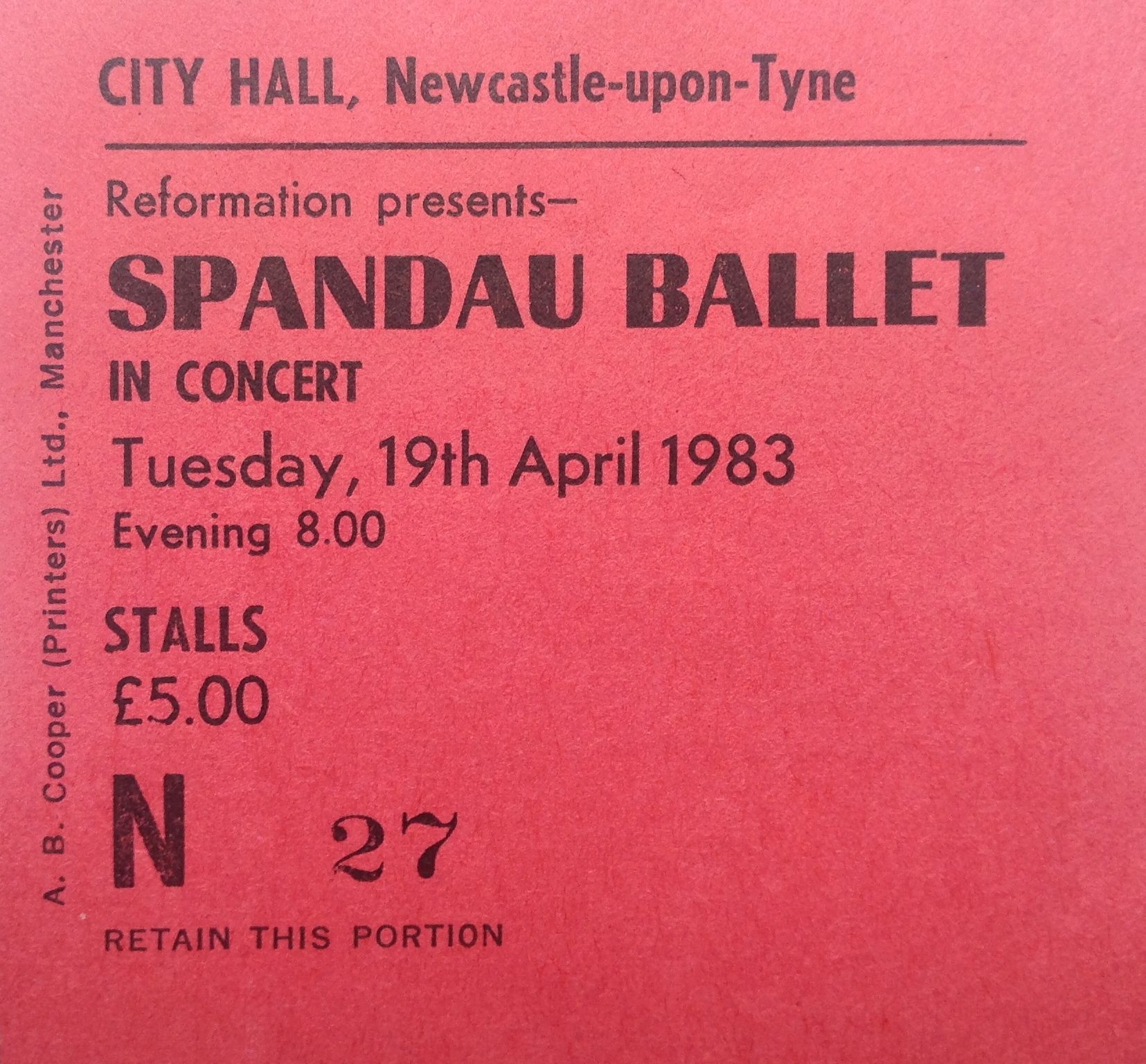
By the time Spandau Ballet appeared at Newcastle City Hall in 1983 they were morphing into a more mainstream pop and blue-eyed soul band. They had just released their third album “True” which features the song of the same name and their other massive hit of 1983, “Gold”. The “True” album topped the charts all around the world, and the band were poised for further success.
Setlist: Foundation; Communication; Pleasure; Code Of Love; Gold; The Freeze; Glow; Lifeline; Heaven Is A Secret; True; Paint Me Down; Instinction; Chant No1; Cut a Long Story Short
Line-up: Tony Hadley (lead vocals), Gary Kemp (guitar), Martin Kemp (bass), Steve Norman (sax), John Keeble (drums)
21 Sep
Sting Newcastle City Hall 9th January 1986 The Dream of the Blue Turtles tour
Sting Newcastle City Hall 9th January 1986
 “The Dream of the Blue Turtles” is the first solo album by Sting, released in 1985, a year after The Police disbanded. The album made No 3 on the UK Albums Chart, and includes Sting’s first post-Police hit “If You Love Somebody Set Them Free” and the well-known tracks “Fortress Around Your Heart”, “Russians”, and “Love Is the Seventh Wave”. The album was a big success in the USA, earning Sting several Grammy nominations including Album of the Year and Best Male Pop Vocal Performance. This is the only time that I have that I’ve seen Sting as a a solo performer, to be honest I much prefer the power, and the classic singles, of his work with the Police. I, like many others, wondered how Sting the soloist would work on record and on stage. In fact, he of course turned out to be as successful as The Police. Sting explains his thinking in the programme, displaying his usual strong self-belief: “I knew I needed to find musicians who complemented me on some level, and I know I’m right in doing this thing. But I’m doing it for reasons I still don’t really understand. This risk is both more logical and more in tune with what my instincts well me…I know I’m right in doing this, it hasn’t taken any personal courage at all. My voices are just saying ‘You’re absolutely right, Sting. Go for it'”.
 The tour was sponsored by Levis 501 and my programme contains a great flyer advertising the jeans: “There are two ways to get a perfect fit – use the washing machine or wear them in the bath!”. Sting is pictured wearing Levi 501s in the programme. Sting was massively popular at this time, and sold out three nights at the City Hall. I attended the first of the three nights. The set was a mix of his solo material and Police tracks. Sting was accompanied by a band of black jazz-oriented musicians, including Daryl Jones who nows plays bass for the Stones.
Setlist: Shadows in the Rain; Driven to Tears; Consider Me Gone; Children’s Crusade; One World (Not Three); Love Is the Seventh Wave; We Work The Black Seam; Bring on the Night; When the World Is Running Down, You Make the Best of What’s Still Around; Another Day; Moon Over Bourbon Street; Fortress Around Your Heart; Low Life; I Burn for You; If You Love Somebody Set Them Free
Encore: Roxanne; Tea in the Sahara; Every Breath You Take; Need Your Love So Bad; The Dream of the Blue Turtles; Demolition Man
Encore 2: Russians; Message in a Bottle
20 Sep
Simply Red Gateshead Stadium 25th July 1992
Simply Red Gateshead Stadium 25th July 1992
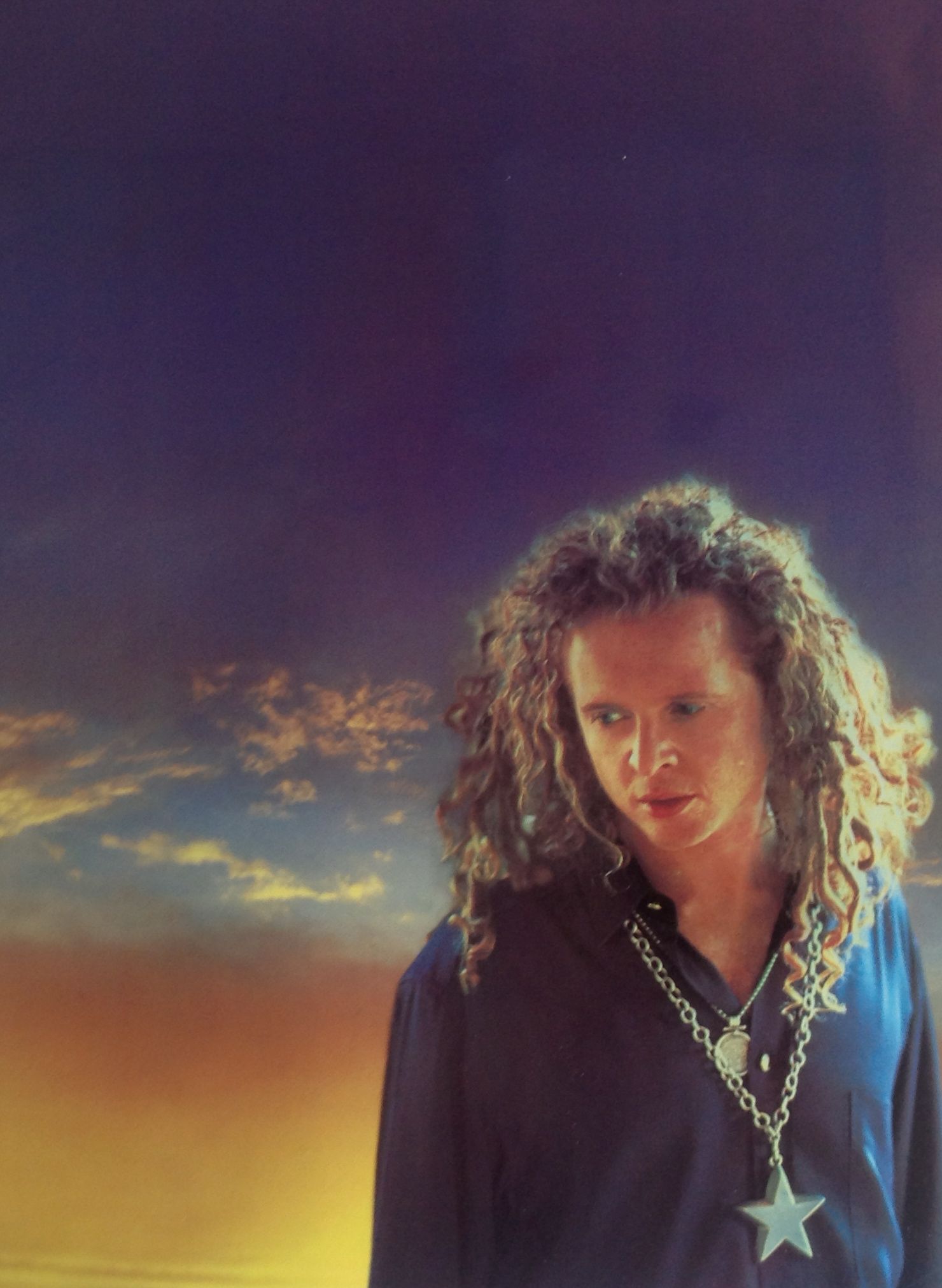 In January 1992 Simply Red set off on a massive world tour. They had just released their 4th album “Stars.” The tour lasted 14 months, taking in 131 shows to 1.5 million people. In the UK Simply Red played concerts in arenas and massive stadiums, including Wembley Stadium. I caught the tour when it called at Gateshead Stadium in 1992. Support came from Des’ree. This is the only time I saw Simply Red.
The programme contains a welcome from Mick Hucknall: “Firstly let me welcome you to this “event”. I can’t call it just a show because the scale of these concerts defies that description. This is a special day for me because these “events” are a celebration of your enjoyment of the music that I and other musicians have made since the debut in 1985″, and discusses the band’s recent success, making it very clear this it had become very much Mick’s show: “Mick Hucknall’s latest album, Stars, has out-sold all the competition, including Michael Jackson’s Dangerous. His current British tour is such a hot ticket that even the touts are said to be out of stock. Simply Red – the band which for seven years has been mainly him plus helpers – is now the most popular group in the land.”  The programme goes on: “Democracy is not a word that crops up when the talk turns to that seven-member organisation known as Simply Red. A fairly benign dictatorship is what it really is…Hucknall “I’m not a control freak..I’m like an old bandleader, providing a springboard for musicians who can come and go…””
This was a very classy show, with Mick performing the hits faultlessly to a crowd of adoring fans.
Setlist (something like): Sad Old Red; More; Jericho; A New Flame; It’s Only Love; Band Introductions; Your Mirror; Holding Back The Years; Enough; Model; I Wish; Let Me Have It All; Freedom; Thrill Me; Come To My Aid; I Won’t Feel Bad; Money’s Too Tight (To Mention); If You Don’t Know Me By Now; Stars; The Right Thing; For Your Babies; Something Got Me Started
19 Sep
Sutherland Brothers & Quiver 1975 and 1976
Sutherland Brothers & Quiver 1975 and 1976
 I was aware of The Sutherland Brothers and Quiver as two separate bands, and saw them both live a few times. I saw The Sutherland Brothers at the Lincoln and Reading festivals in 1972, and Quiver as support for T Rex, and at Sunderland Poly Wearmouth Hall. They were two very different bands. The Sutherland Brothers an acoustic fold duo, who had a great 1972 single “The Pie” and the song “Sailing” which was to become a massive hit when covered by Rod Stewart. Quiver were a folky rock band, led by excellent guitarist Tim Renwick, and did a great version of The Beatles “Saw Her Standing There”.
 In late 1972 the two acts joined forces and became Sutherland Brothers and Quiver. This seemed to me to be a strange move at the time, but proved to be very sensible. They released an album “Dream Kid”, and the excellent title track was released as a single, which should have been a hit but sadly didn’t chart. The new band toured constantly; I saw them at the Reading Festival in 1974 and 1976, and at Sunderland Poly Wearmouth Hall on 5th December 1975.
 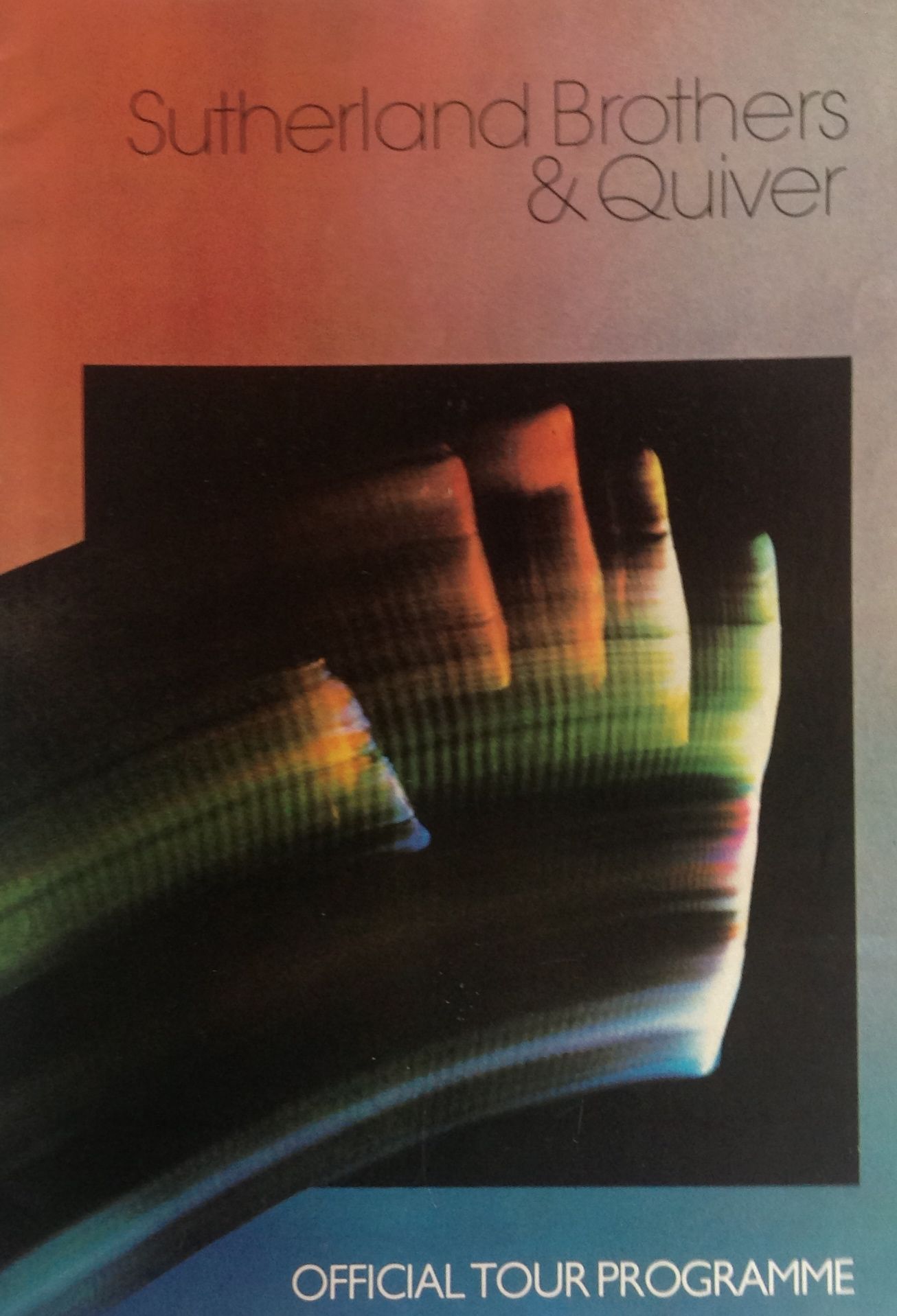 In 1976 they released “Arms of Mary”, their biggest hit, which reached No. 5 in the UK singles chart. They headlined a major tour at the time, calling at Newcastle City Hall on 26th September 1976. Support came from Moon, a successful pub rock band. The success was to be short lived. Tim Renwick left the group in 1977 and by 1979 the Sutherland Brothers had parted company with Quiver, and returned to recording as a duo. Sutherland Brothers & Quiver were a very under-rated band. The combination of the Sutherland Brothers’ great songs, and the guitar-based rock music of Quiver was a powerful mixture. Their live performances were always excellent, and their music crossed and combined genres including pop, country, rock, reggae and folk. There was so much more to them than their rather middle of the road (MOR) hit “Arms of Mary” might suggest. Perhaps that was the problem; a fine band who were difficult to pigeon hole, and landed a MOR hit, which gave them an audience who didn’t fully appreciate the breadth and depth of their music. That, and the advent of punk, probably sealed their fate. Listen to “The Pie” or “Dream Kid”.
 Vintagerock's Weblog.