Rainbow Newcastle City Hall 19th February 1980
 It was now 1980, and Rainbow’s line-up had changed yet again. Blackmore had his eye on the commercial rock market, and wanted to move Rainbow’s music in the direction of more commercial straight ahead rock, away from their traditional “swords and sorcery” thematic. Ronnie James Dio was having none of this, so he was off, soon to join Black Sabbath. So the band morphed yet again. In came singer Graham Bonnet, last seen fronting The Marbles who hit the UK charts in the late ’60s with a Bee Gees penned pop classic “Only One Woman”. Bonnet has a great solid rock voice, with an amazing vocal range; although at the time I found it difficult to imagine anyone other than Dio singing Rainbow classics like “Man on the Silver Mountain”. But sing them Graham did, and he made a pretty good fist of it too. The line-up of Rainbow Mk V was Ritchie Blackmore (guitar), Cozy Powell (drums), returning old Purple mate Roger Glover (bass), Don Airey (keyboards) and Graham Bonnet (vocals).
The changing nature of the band didn’t seem to impact upon their popularity. If anything Rainbow were more popular, and once again sold out two nights at the City Hall. I attended the first night’s concert. Support came from NWOBHM band Samson featuring Bruce Dickinson (or Bruce Bruce as he was then). This concert displayed more shades of classic rock than the mystical dark elements on show during the Dio-era. It was a different type of gig, but no less enjoyable, and Blackmore was as on-fire as ever. The new formula had already paid dividends in the form of a massive hit single “Since You Been Gone”, which was followed by the almost as successful “All Night Long”.
Setlist: Eyes of the World; Love’s No Friend; Man on the Silver Mountain; Catch the Rainbow; Lost in Hollywood; Long Live Rock ‘n’ Roll / Kill the King; All Night Long
Posts Tagged ‘classic rock’
18 Mar
Rainbow Newcastle City Hall 1st November 1977
Rainbow Newcastle City Hall 1st November 1977
 Ritchie Blackmore and Rainbow returned to the City Hall in 1977 to promote their upcoming album “Long Live Rock ‘n’ Roll”. The ever changing line-up had evolved into Rainbow Mk4 and was now Ritchie Blackmore (guitar), Ronnie James Dio (vocals), Bob Daisley (bass), David Stone (keyboards) and Cozy Powell (drums). This time demand to see the band was massively high, resulting in two sold out performances at the City Hall. Support came from Kingfish. Once again, Rainbow put on an amazing show, with guitar pyrotechnics ala Blackmore, soaring vocals from Dio, and an amazing stage and light show. They just don’t make rock bands like this any more.
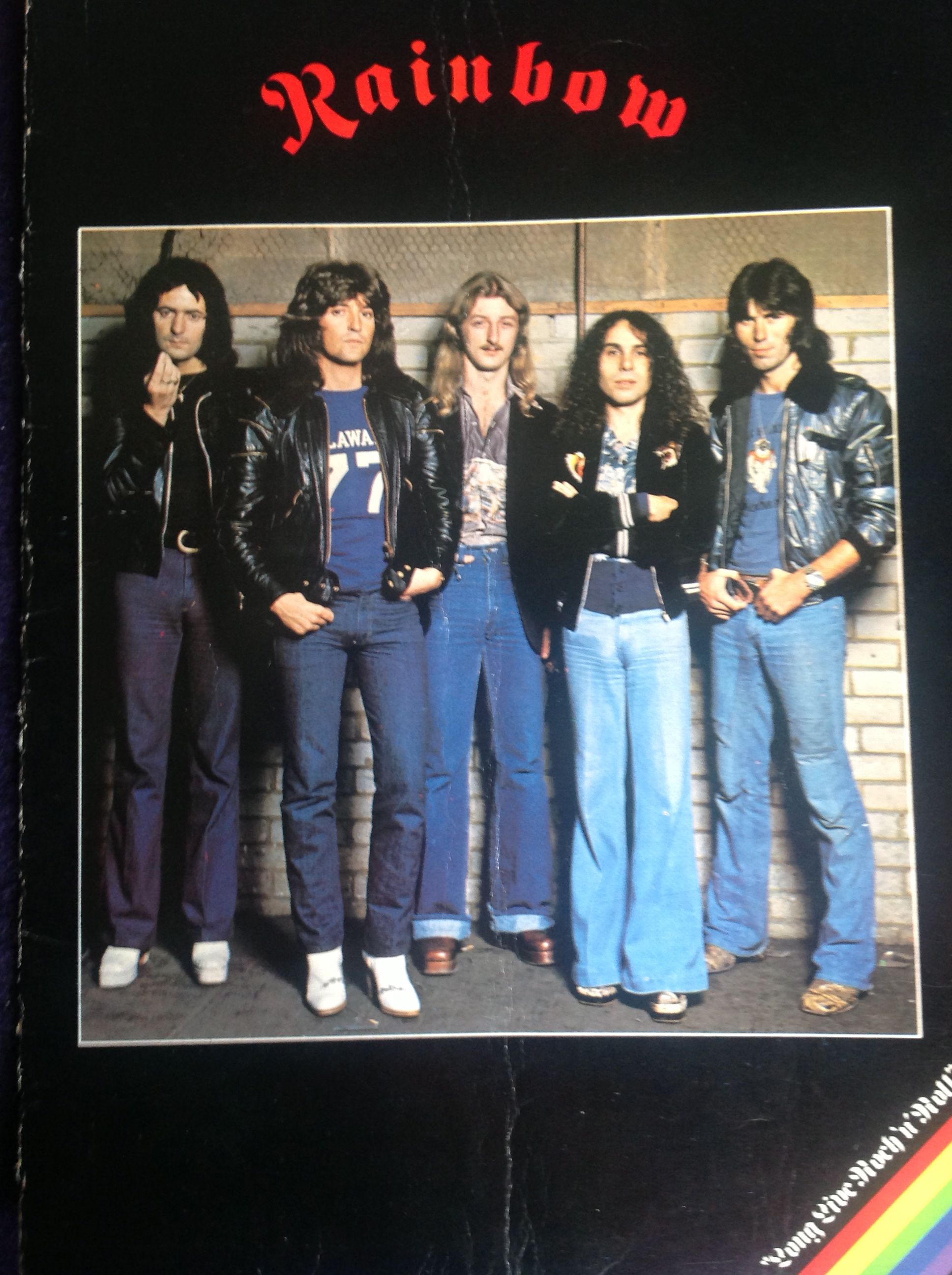 From the tour programme: “Welcome to one of the most exciting events in rock music today. This is not simply another travelling show. It is a spectacular of lights and music. Rainbow’s $100,000 computerised ‘firework machine’ brings a new dimension to the concert stage…Visually, it is stunning. Musically, it weaves through every emotion. But the emphasis on this tour is excitement. ‘If anyone has come for a nice, quiet night’ smiles Cozy Powell ‘they’d better head for the exit. If we don’t burst your ears, we’ll blind your eyes.’ Long Live Rock & Roll!”
Well said, Cozy.
Setlist: Kill The King; Mistreated; Sixteenth Century Greensleeves; Catch The Rainbow; Long Live Rock ‘n’ Roll; Lazy-Man On The Silver Mountain; Still I’m Sad.
17 Mar
Rainbow Newcastle City Hall 14th September 1976
Rainbow Newcastle City Hall 14th September 1976
 In 1975 Ritchie Blackmore was becoming disillusioned with Deep Purple, wanting to move their music in a different direction, drawing from his interest in classical music. He decided to try a few songs out with rock band Elf, fronted by Ronnie Jame Dio; Elf having supported Purple on the 1974 Burn tour. The liaison with Dio worked well and so Blackmore decided to leave Purple to form his new band Rainbow, although he was less than happy with the rest of Elf, and soon changed the rest of the line-up. By the time the band started to tour, and reached the UK; the line-up of Rainbow Mk2 consisted of Ritchie Blackmore (guitar), Ronnie James Dio (vocals), Jimmy Bain (bass), Tony Carey (keyboards) and Cozy Powell (Drums). Their first tour called at Newcastle City Hall on 14th September 1976.
Support came from Stretch, a band that was fronted by Elmer Gantry (of Elmer Gantry’s Velvet Opera and “Flames” fame). Stretch developed from a band put together in 1974 with (according to them) help from Mick Fleetwood, to perform as Fleetwood Mac on a US tour. In the end Fleetwood dropped out (and denied any involvement) and they toured without him, but punters soon realised that the band contained no members of Fleetwood Mac and the tour collapsed. They subsequently had a hit single in 1975 with “Why Did You Do It?”,which was a direct attack on Fleetwood. Stretch were a pretty good rock band, who I saw a couple of times in the mid-70s. 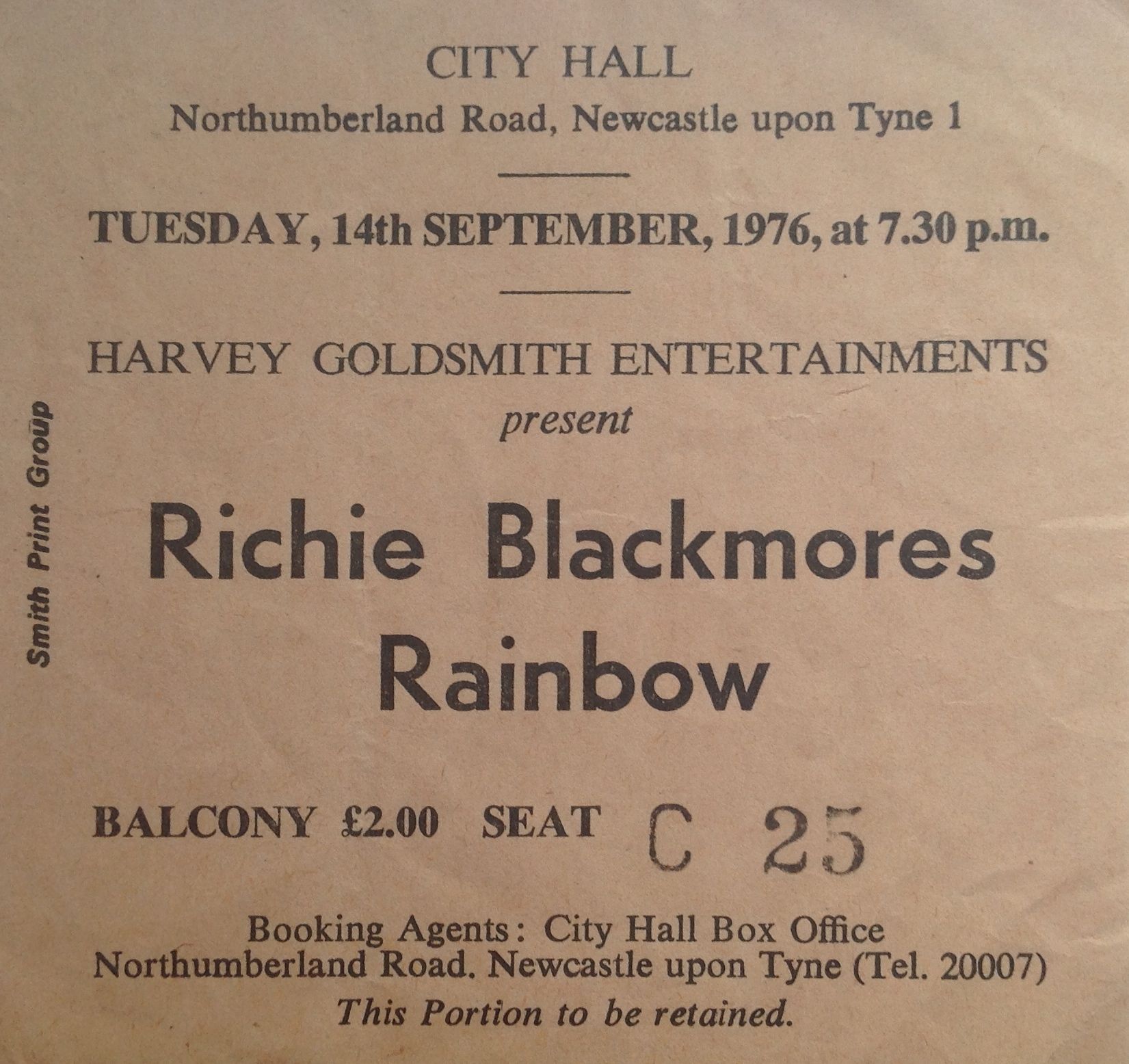
Rainbow concerts were tremendous events. The stage was surrounded by a massive rainbow which consisted of 3,000 coloured lights. And Blackmore was at the height of his powers in both guitar prowess and showmanship excess. He would climb on top of the stacks up and onto the balcony. I remember one show (I think it may have been this one) where he stood on top of a massive stack bashing his Strat against the side of the balcony, until it (the guitar that is) was totally demolished (I think it also left a few dents in the side of the balcony which had to be repaired afterwards). Of course we all cheered him on. Great stuff. Dio had an unbelievable vocal range, and added lyrics, and an atmosphere, of demons, goblins and mysticism to the proceedings. Their songs were excellent too: “Sixteenth Century Greensleeves”, “Man On The Silver Mountain” and “Stargazer” are classics from the time. Blackmore retained “Mistreated” from his days with Purple. In the early days of Rainbow their concerts consisted of a relatively small number of songs, each one becoming an opportunity for epic jamming, particularly by Blackmore. The guy was amazing and his performance simply breathtaking in those days.
Setlist: Kill The King; Mistreated; Sixteenth Century Greensleeves; Catch The Rainbow; Man On The Silver Mountain; Stargazer; Still I’m Sad; Do You Close Your Eyes.
Note added 20th July 2014. I found the programme below in my collection. I guess it must be an unofficial programme which I bought outside the City Hall show in 1976. 
16 Mar
Reading Festival 26th – 28th August 1977
Reading Festival 26th – 28th August 1977
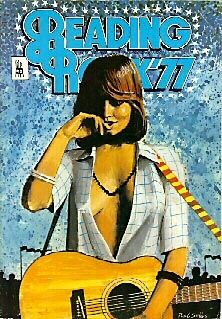 Reading 1977 was notable for a couple of reasons. First, the line-up finally (and sadly in my view) lost all traces of the festival’s jazz and blues roots. Instead we had lots of classic rock, with a (small) smattering of punk and new wave. Although 1977 was the year of punk, it was another year before the new music finally started to make its mark at Reading. And second, the main feature of the 1977 festival was MUD. Lots of it. Possibly the worst I have ever seen at a festival. It had been raining heavily for weeks before, which resulted in most of the site becoming a quagmire with rivers of mud, and a large mud lake right in front of the stage. Wellies were at a premium and were being sold for incredible prices in the town.
Friday’s line-up: Staa Marx; S.A.L.T; Woody Woodmansey’s U Boat; Kingfish; 5 Hand Reel; Lone Star; Uriah Heep; Eddie and the Hot Rods; Golden Earring.
A strange mix of bands on the first day. Woody Woodmansey’s U Boat (ex Bowie’s Spiders from Mars) closed their set with Suffragette City. A highlight for me was Uriah Heep; now with John Lawton on vocals. Heep were always one of my favourite bands, and still are; I was a little sad to see them third on the line-up; they would have headlined a few years earlier. Lone Star were also good; showing lots of promise at the time, and Eddie and the Hot Rods went down well with the crowd. Golden Earring closed the day with a strong performance (Radar Love!).
Saturday’s line-up: Gloria Mundi; Krazy Kat; No Dice; George Hatcher Band; Ultravox!; Little River Band; John Miles; Aerosmith; Graham Parker and the Rumour; Thin Lizzy.
I remember being impressed by Ultravox!; this was the early version with John Foxx on vocals. Aerosmith seemed a big band to feature third on the bill, drew a large crowd, and were excellent. “Dream On” from those days remains a favourite song of mine. But the stars of the day were Graham Parker (the whole crowd sang along to (Hey Lord) Don’t Ask Me Questions) and of course, headliners Thin Lizzy. Lizzy were massive at the time and played a classic set including: Jailbreak; Dancing in the Moonlight; Still in Love With You; Cowboy Song; The Boys Are Back in Town; Don’t Believe a Word; Emerald and closing with The Rocker as encore. A good way to spend a Saturday night.
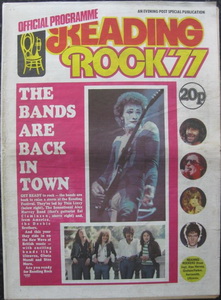 Sunday’s line-up: Widowmaker; The Motors; Tiger: The Enid; Blue; Racing Cars; Wayne County and the Electric Chairs; Hawkwind; Doobie Brothers; Frankie Miller; Alex Harvey.
The Enid were a big Reading favourite and Robert Godfrey got the tired crowd going with versions of classics like The Dambusters March. The Motors and Widowmaker got the day off to a good start. Steve Ellis had left Widowmaker by this point and had been replaced by John Butler, and they still featured that crazy showman Ariel Bender. Tiger featured the excellent guitarist Big Jim Sullivan (I used to love watching him play on the Tom Jones show in the ’60s), and Blue had some neat songs (try listening to “Little Jody”) and deserved bigger success. They were fronted my ex-Marmalade Hughie Nicholson. Racing Cars went down well with the crowd; this was the year that they had a massive hit with “They Shoot Horses Don’t They?” Wayne County was greeted by a hail of cans from a tired and twitchy crowd who didn’t take well to his punk songs, including the classic “If you don’t want to F**k me, F**k Off! Hawkwind were OK, as were the Doobies and Frankie Miller, but we were all there to see Alex Harvey. SAHB played the usual set and Alex told his quirky stories: Faith Healer; Midnight Moses; Gang Bang; Last of the Teenage Idols; Giddy-Up-A-Ding-Dong; St. Anthony; Framed; Dance to the Music. Alex hadn’t been well and this was their first gig for a few months. It was good to see them, but it wasn’t one of their best performances, and sadly it was the last time the band would play together. The end of an era.
By Sunday many people had given up and left because of the atrocious conditions. Poor John Peel tried to keep the crowd amused, partly be starting the famous “John Peel’s a C***” chant which continued into the next few years.
One final note. I had been to see The Sex Pistols play at Scarborough Penthouse club the night before the festival, and I was still buzzing with the memories of that gig. It had opened my eyes to the raw energy of punk, and that, coupled with the mud and awful conditions at Reading, meant I didn’t enjoy the weekend as much as usual. And just to make the experience complete, the alternator on my car packed in on the way back up the M1, and the car finally ground to a halt somewhere near Nottingham. After a wait of an hour or so, a kind AA man towed us back to Barnard Castle, where we waited (a few hours) for another AA relay van to pick us up and take us home. We arrived back after midnight on Monday, tired, hungry and very muddy, soggy and scruffy….the joys of festival going. Happy Days 🙂
15 Mar
Uli Roth and Pallas Newcastle City Hall 21st May 1983
Uli Roth and Pallas Newcastle City Hall 21st May 1983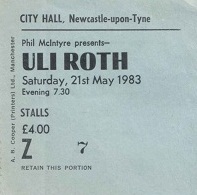
Uli Roth obviously has fond memories of Newcastle City Hall. When I last saw him in concert, at The Office in South Shields a year or so ago, the City Hall was facing possible closure, and Uli told us that we must not let it happen: “get a petition; do something, you can’t let it close, that hall is one of the most beautiful in your country”. Well Uli, we did. The City Hall gained a reprieve, and continues to host rock concerts. From the Newcastle Journal: “Newcastle’s under-threat City Hall has been saved from closure after the city council announced it would not axe 100% of its arts budget…Plans to remove the City Hall from the council’s books were met with strong opposition. Around 11,000 people, both online and on paper, signed a petition against the move, started by the North East Music History group.” Anyway, back to Uli Roth. Uli formed his band Electric Sun after leaving the Scorpions in the late ’70s.  Uli is a charismatic and flamboyant character who developed his own guitar style. Technically excellent, and a massive influence on many of today’s players, he blends the blues with indian and classical influences, and this; coupled with showmanship and virtuosity, make him a unique guitar player. He is also massively influenced by Jimi Hendrix. This show at Newcastle City Hall was recorded and segments of it appear on the 2006 DVD release Historic Performances. I remember being totally stunned by his playing, and the epic nature of his songs. Support came from the excellent Pallas, who had just released their first single “Paris is Burning”. I picked up a copy of their fanzine “The Sentinel” (pictured here) at the concert. Pallas were one of the few bands flying the prog-rock flag in the early ’80s, when that particular genre had become very unfashionable in the wake of punk, and the New Wave Of British Heavy Metal.
13 Mar
Riff Raff in 1973
Riff Raff in 1973
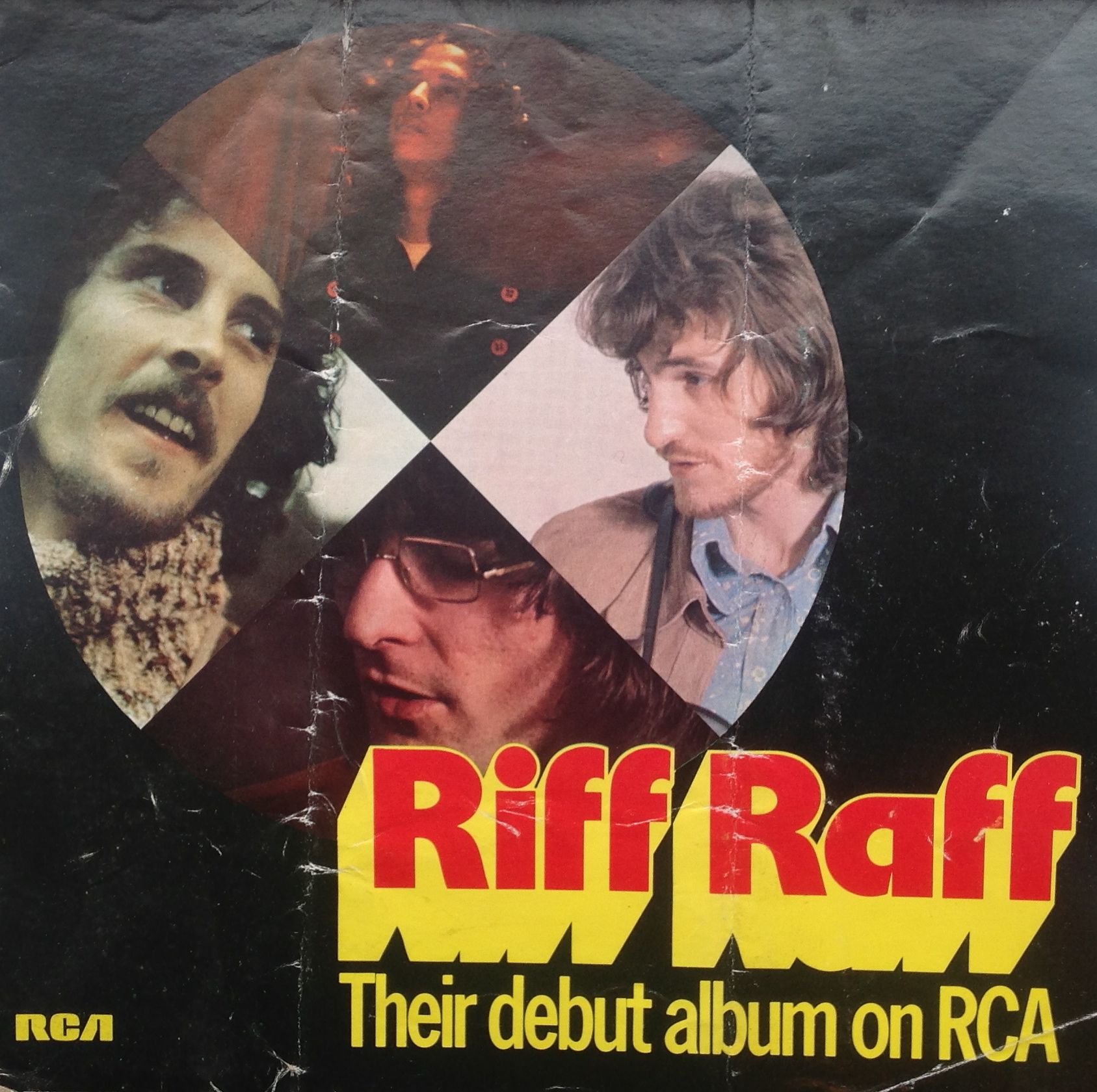 Now here’s a strange and obscure one for my blog entry day. In looking through my programmes and tickets for a band to write about, I found a programme for a band called Riff Raff. Now I have no recollection at all of where and when I saw Riff Raff, who they were and what sort of music they played. But the fact that I have the programme pictured here suggests that I did indeed see them. Quick googling tells me that Riff Raff were active around 1972 and 1973.
The programme tells me: “Riff Raff brings together four men of varying musical experiences whose sound spans both rock and modern jazz but cannot be pigeonholed in either camp. Their music is their own; they write, arrange and produce themselves, and the result is music of today that succeeds in avoiding the self-indulgence of many of their contemporaries. They named themselves Riff Raff with tongues firmly in cheek, although the name serves to emphasize the individuality of each member of the band. All four musicians have known or known of each other for a couple of years or more: that goes double for bassist Roger Sutton and keyboard man Tommy Eyre, who both ended a two-year run with the Mark-Almond band during the Summer of 1972; guitarist Pete Kirtley is a Geordie last seen as an Alan Price sideman; and percussionist Aureo de Souza hails, as all good percussionists should, from Rio de Janeiro. Riff Raff made a most encouraging if somewhat hasty debut at London’s Conway Hall and in something like half an hour manifested a superb show amalgamating moods with exciting melodies, catchy hooks and lots of free blowing. In fact, they exuded too much music, too much energy for the human mind to comprehend – the only way to dig the music was on a visceral level like you would on a night when the Buddy Miles Band or Santana were really cooking or if Shorter, Vitous and Zawinul suddenly walked into your local jazz cellar and took over.”
Actually I’ve thought a little more about this. I discovered that Riff Raff featured on the bill of the 1973 Reading Festival, so I think that is where I must have seen them. And if I think a little harder something deep in the back of my mind tells me that they were throwing these programmes out to the Reading crowd. The folded up and crumpled nature of it would support that possibility. I can even see some traces of mud 🙂 . I listened to Riff Raff on YouTube this morning; their music was a mix of avant-garde, jazz and prog-rock; they reminded me a little of Soft Machine, with a tinge of the melodic of early Genesis.
12 Mar
Queen and Paul Rodgers Newcastle Arena 3rd May 2005
Queen and Paul Rodgers Newcastle Arena 3rd May 2005
 Of course, it was never going to be the same. When I heard that Queen were going out on tour again with Paul Rodgers as front man, I could hardly believe it. How was that going to work? What would it be like? However, as an old Queen, Free and Bad Company fan I felt I should go along and support them, and see the new line-up for myself. Marie, David and Laura all came along and we were glad that we did. The way in which the show involved all members with video of Freddie was excellent. And a few Free / Bad Company songs were thrown in for good measure and worked well. You have to give if to them; they managed to pull off what many thought the impossible, to go out with a new front man and make it work. All credit to Paul Rodgers for the way in which he approached this. The show was slick, still relevant and a great tribute to Freddie’s legacy. It will be interesting to see what the new line-up, fronted by Adam Lambert is like.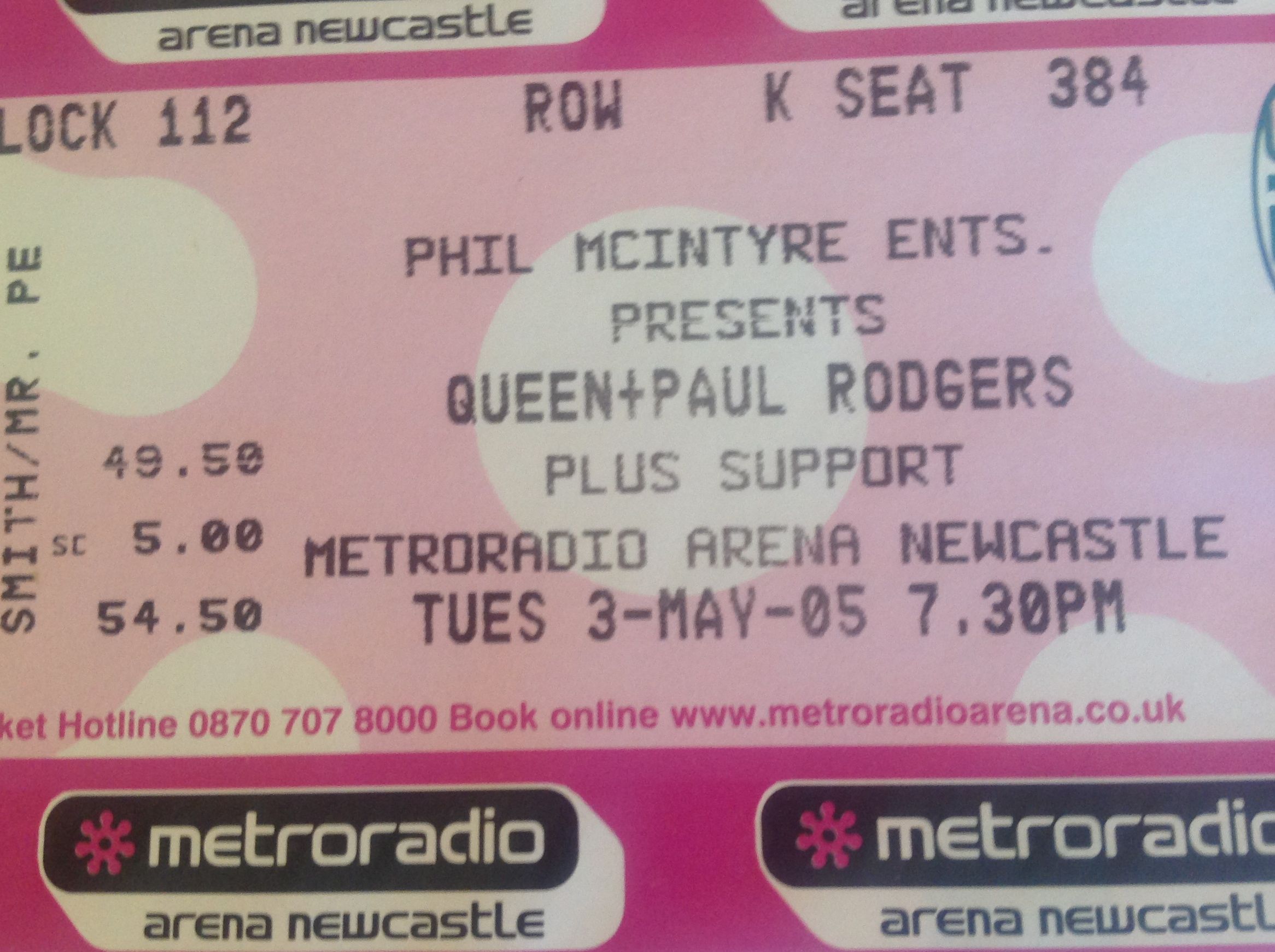
Setlist: Reaching Out; Tie Your Mother Down; I Want to Break Free; Fat Bottomed Girls; Wishing Well; Crazy Little Thing Called Love; Say It’s Not True; ’39; Love of My Life; Hammer to Fall; I’m in Love with My Car; Last Horizon; These Are the Days of Our Lives; Radio Ga Ga; Can’t Get Enough; A Kind of Magic; I Want It All; Bohemian Rhapsody. Encore: All Right Now; We Will Rock You; We Are the Champions
Line-up: Brian May – lead guitars, vocals; Paul Rodgers – lead vocals, rhythm guitar, piano, harmonica; Roger Taylor – drums, percussions, vocals. Touring musicians: Spike Edney – keyboards, backing vocals; Jamie Moses – rhythm guitars, backing vocals; Danny Miranda – bass, backing vocals
10 Mar
Queen Live Aid Wembley Stadium London 13th July 1985
Queen Live Aid Wembley Stadium London 13th July 1985
 The next time I saw Queen was at the massive historic Live Aid concert in Wembley Stadium on 13th July 1985. Queen’s performance at Live Aid at Wembley is often referred to as their greatest single live performance. Indeed, more than that, their short 21 minute set is often spoken of as one of the greatest rock performances ever (indeed; an industry poll in 2005 named it the greatest rock performance of all time). Their set was sandwiched between some great acts: U2 and Dire Straits preceded them; David Bowie and then The Who had the unenviable task of following Queen’s epic performance. It was one of those performances where everything came together. It was the right time of day, as the momentum and magnitude of the event was building, and the crowd were ready for the stadium-filling anthems of Queen. The band were on fire, clearly ready to give it their all, realising that they were performing to a world-wide audience. And Freddie was in command of us all, leading us through a few of their classic songs. Now I am a massive fan of Bowie and The Who, and for me they were the stars of the day, but I must agree that Queen delivered the strongest performance of the event.
From Wikipedia: “At Live Aid, held at Wembley on 13 July 1985, in front of the biggest-ever TV audience of 1.9 billion, Queen performed some of their greatest hits, during which the sold-out stadium audience of 72,000 people clapped, sang, and swayed in unison. The show’s organisers, Bob Geldof and Midge Ure, other musicians … and various music journalists ….. commented that Queen stole the show.
Queen’s short set consisted of “Bohemian Rhapsody” (ballad section and guitar solo), “Radio Ga Ga”, a crowd singalong, “Hammer to Fall”, “Crazy Little Thing Called Love”, “We Will Rock You” (1st verse), and “We Are the Champions”. Mercury and May returned later on to perform a version of “Is This the World We Created?”
I saw Queen once more, on their 1986 “Kind of Magic” tour, when it called at St James Park, Newcastle.
9 Mar
Queen Leeds Elland Road Stadium 29th May 1982
Queen Leeds Elland Road Stadium 29th May 1982
Support from Heart, Joan Jett And The BlackHearts, Teardrop Explodes
 In 1982 Queen toured in support of their new album “Hot Space”. “Hot Space” was Queen’s 10th album and saw them experimenting, not that successfully in my view, with disco. The UK leg of the tour consisted of two massive outdoor shows at Milton Keynes Bowl, and Leeds Elland Road football stadium, and two large indoor concerts at the Royal Highland Showground, Ingliston, Edinburgh. I drove down to the Leeds gig with a group of mates. It was a very hot Saturday, on a bank holiday weekend.
I think The Teardrop Explodes opened the show. Now, I was a fan of this band and of Julian Cope in particular. He was a crazy and intriguing front man and they had some pretty neat pop / new wave tunes; notably “Treason” and “Reward”. However, they were viewed as a “punk” band (and hence not “proper” rock) by a small section of the audience who decided to pelt them with bottles. Not a good start to the day.
We were all quite excited about seeing American rock band Heart who featured the amazing (and beautiful) Wilson sisters; Anne and Nancy. We had all been fans since one of us bought “Dreamboat Annie” in 1976; we all borrowed and played that album again and again. Heart’s set included great versions of some of our favourite tracks from their mid-’70s heyday: Magic Man”, “Crazy On You” and the excellent, rocking “Barracuda”. True to their classic rock roots, their encore was a cover of Led Zeppelin’s “Rock and Roll”.
The final guest act was ex-Runaway Joan Jett with her band the Blackhearts, who got the crowd singing along with “I Love Rock ‘n’ Roll” , which had been high in the charts a few weeks earlier.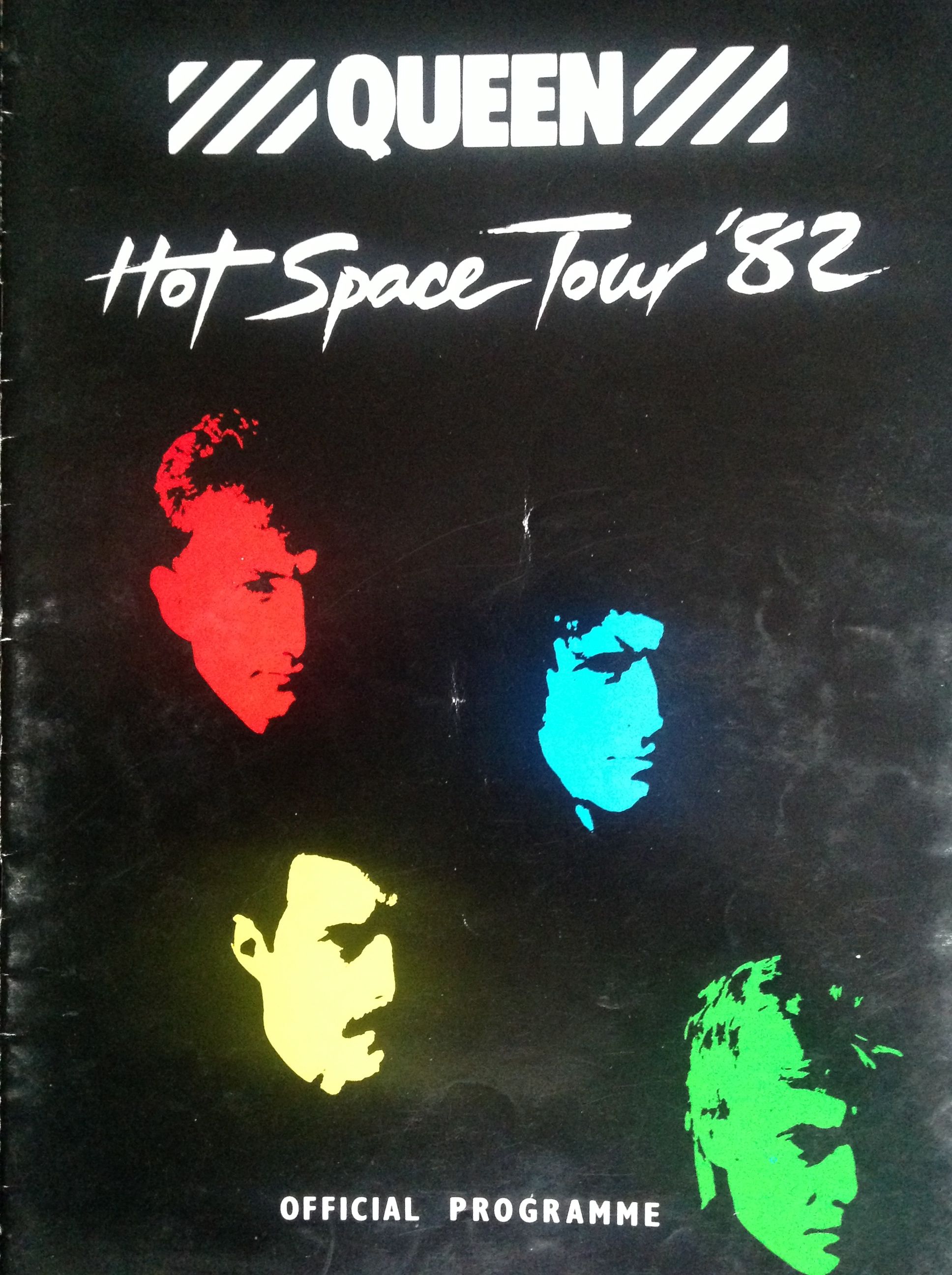
There was a long wait for Queen. I suspect that they were waiting until it was dark so that the light show would have its greatest effect. Finally, after what seemed forever, the intro to “Flash” boomed across the stadium, followed by ridiculously loud explosions and blinding white flashing lights. Queen exploded onto the stage, Freddie starting to sing “The Hero”. The sort of spectacular entrance that Queen had perfected. The rest of the show was similarly spectacular with Freddie leading the band in those anthemic classic songs, and goading the crowd to sing along. I remember wondering how they would recreate the David Bowie vocal on “Under Pressure” and secretly hoped that he might run out from stage left 🙂 (I wasn’t the only one; rumours were circulating that Bowie would appear with Queen to sing his parts onstage in Leeds and/or Milton Keynes; but of course he didn’t). Instead Freddie Mercury and Roger Taylor shared the vocal parts. Another great performance by Queen.
Setlist: Flash; The Hero; We Will Rock You; Action This Day; Play the Game; Staying Power; Somebody to Love; Now I’m Here; Dragon Attack; Now I’m Here; Love of My Life; Keep Yourself Alive; Save Me; Back Chat; Get Down, Make Love; Guitar Solo; Drum Solo; Under Pressure; Fat Bottomed Girls; Crazy Little Thing Called Love; Bohemian Rhapsody; Tie Your Mother Down. Encore: Another One Bites the Dust; Sheer Heart Attack; We Will Rock You; We Are the Champions; God Save the Queen
Musicians: Freddie Mercury – lead vocals, piano, tambourine, acoustic rhythm guitar; Brian May – electric & acoustic guitars, backing vocals, piano; John Deacon – bass guitar, rhythm guitar; Roger Taylor – drums, electronic drums, backing vocals; Morgan Fisher – piano, synthesizer, backing vocals.
8 Mar
Queen Newcastle City Hall 3rd December 1979
Queen Newcastle City Hall 3rd December 1979
A Crazy night watching rock gods grow in front of my eyes
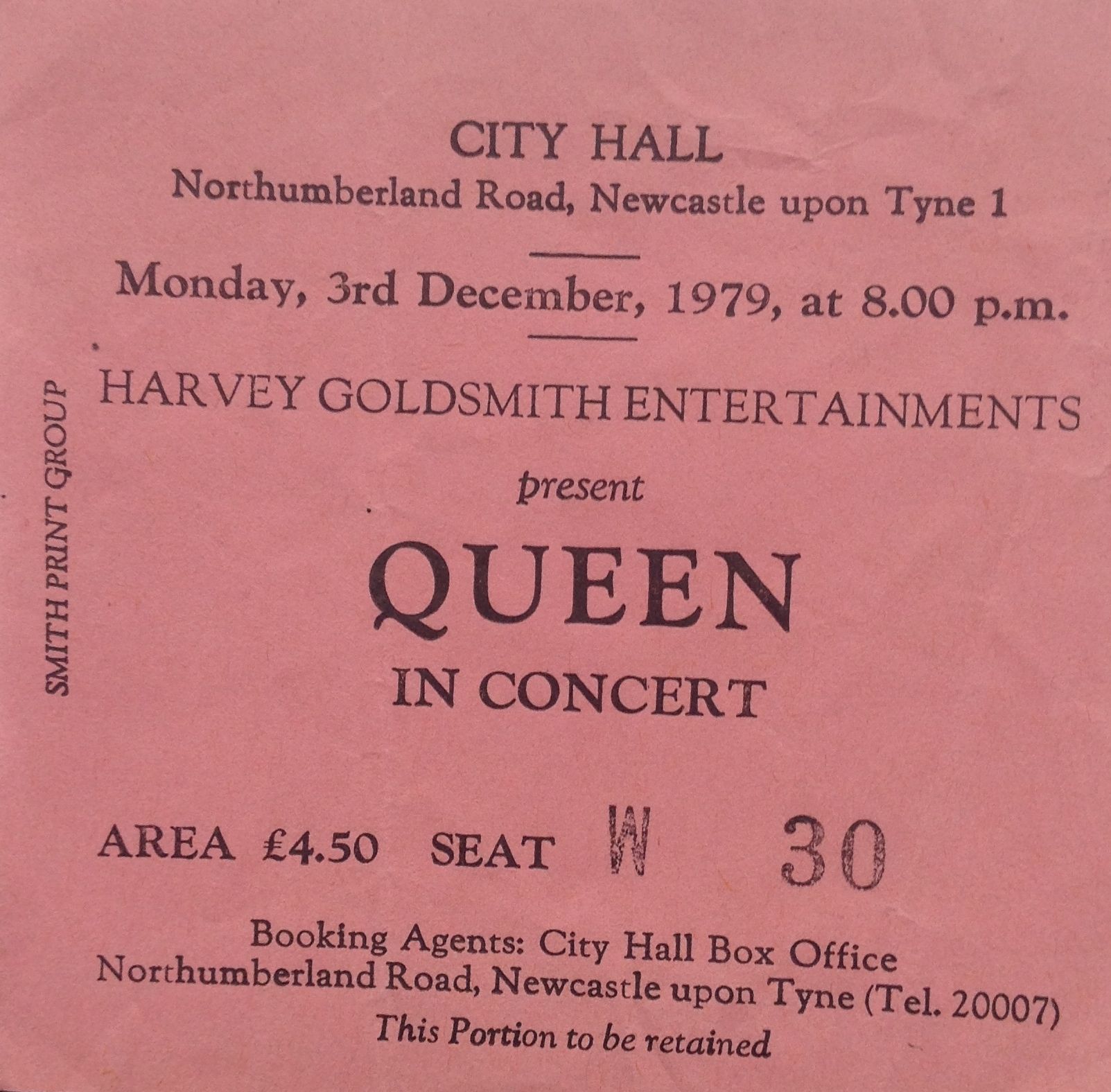 This gig came as a pleasant surprise. I didn’t think that I would ever see Queen back in the City Hall again. By 1979 Queen were a massive band, and had reached a point in their career where they were becoming much more used to playing arenas and stadiums, than in small provincial concert halls. So I got quite a shock when they announced a UK tour which saw them return to their roots; going back to play some of the smaller venues which they had packed when they were paying their dues in the early days of their career. The tour included two nights at Newcastle City Hall on 3rd and 4th December. Great! I made sure that we got tickets; no more hanging around outside trying to blag my way in, no climbing through a window this time.
  As soon as we entered the venue is was very clear just how big a band Queen now were, and how much of a “show” we were about to witness. A massive extended stage seemed to take up almost half of the stalls (or the “Area” as the tickets always called it in those days 🙂 …..always seemed a strange name to me), complete with a walkway for Freddie to come out into the crowd. A mass of lights surrounded the stage set-up, and the drum kit stood majestically on a massive raised platform. Pretty impressive and very different from the early days.
 The show itself was ultra-professional, and in parts very staged; at times I felt a little too much so, and my mind reflected back to the early days when Queen were a little more of a rock band. The Queen I saw in 1979, and from then on, was majestic, pomp-rock, a true spectacle. Don’t get me wrong, I continued to admire and follow the band, but I must also admit to missing some of the raw rock’n’roll that the early band were so good at. And in each concert, Freddie seemed to grown a little more in confidence, craziness and stature; he began to truly command the audience, and his vocal strength also seemed to grow alongside his presence.
  This would, of course, reach its peak in Wembley Stadium, at Live Aid in 1985, where Freddie and the band stepped up into yet another league. But that’s for a blog in a few days time. The City Hall show that night saw Queen take us through all their classics in what was quite a long set. Very impressive. It was almost as it they were marking their territory as one of the UK’s, and the world’s, major bands; and they probably were. We left the hall that night, feeling privileged to have see something truly legendary, unique and spectacular.
 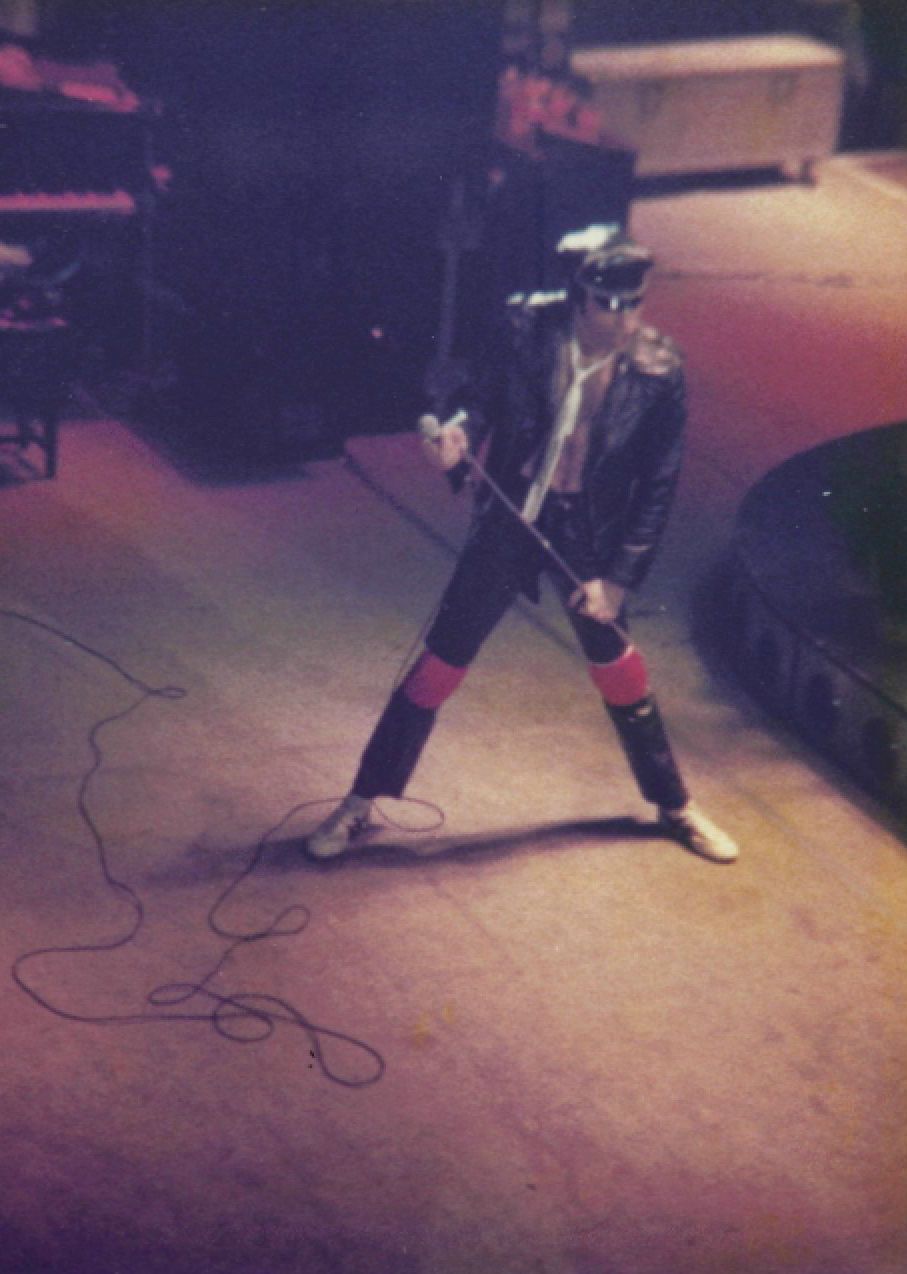 Setlist: Let Me Entertain You; Tie Your Mother Down; Somebody to Love; If You Can’t Beat Them; Mustapha; Death on Two Legs; Killer Queen; I’m in Love with My Car; Get Down, Make Love; You’re My Best Friend; Save Me; Now I’m Here; Don’t Stop Me Now; Spread Your Wings; Love of My Life; ’39; Fat Bottomed Girls; Keep Yourself Alive; Brighton Rock; Bohemian Rhapsody. Encore: Sheer Heart Attack; Crazy Little Thing Called Love; We Will Rock You; We Are the Champions; God Save the Queen.
 This was the last time I was to see Queen in such an intimate setting. From that night onward, I would watch them from the pitch or stands of a football stadium. It was inevitable that their career would progress that way; their anthems and Freddie’s stage presence were made for the rousing singalongs of the terraces. I’ll write about those experiences over the next few days.
Many thanks again to Mitch for allowing me to use his excellent pictures of Queen, which he took at Newcastle City Hall on 4th December 1979, the second of the two nights which they played there as part of the “Crazy tour”.
 Vintagerock's Weblog.