 Paul McCartney has recently written a wonderful book entitled The Lyrics, which is a beautifully presented, two-volume (in a presentation box) selection of 154 of his lyrics. The book was edited by the poet, Paul Muldoon, who helped Paul choose the lyrics to be included. This live stream was from a question-and-answer/audience with event which saw the two Pauls interviewed by Samira Ahmed in the Southbank Centre, London. I would have loved to attend the actual event in London but, given my circumstances, it was more practical to settle for the live streaming. Having said that the live stream was excellently done, and I really enjoyed it. It was actually almost “like being there”!
“More often than I can count, I’ve been asked if I would write an autobiography, but the time has never been right. The one thing I’ve always managed to do, whether at home or on the road, is to write new songs. I know that some people, when they get to a certain age, like to go to a diary to recall day-to-day events from the past, but I have no such notebooks. What I do have are my songs, hundreds of them, which I’ve learned serve much the same purpose. And these songs span my entire life.” – Paul McCartney, The Lyrics
“In this extraordinary book, with unparalleled candour, Paul McCartney recounts his life and art through the prism of 154 songs from all stages of his career – from his earliest boyhood compositions through the legendary decade of The Beatles, to Wings and his solo albums to the present.” (From Paul McCartney website)

I have just received my own copy of the book and haven’t had time to go through it properly yet. However I can confirm that it is a beautiful artefact, well presented, and provides fascinating insights into the lyrics of one of our true musical geniuses, and one of my heroes. I look forward to going through the book in more detail in the weeks to come.
Paul McCartney’s collaborator and editor in this venture comes with an incredible pedigree and background, which makes him an excellent choice for working on The Lyrics. Apparently the two Paul’s worked together for five years, carefully selecting which songs to include, spanning Paul McCartney’s entire career: “Paul Muldoon is an Irish poet. He has published more than thirty collections and won a Pulitzer Prize for Poetry and the T. S. Eliot Prize. At Princeton University he is currently both the Howard G. B. Clark ’21 University Professor in the Humanities and Founding Chair of the Lewis Center for the Arts. He held the post of Oxford Professor of Poetry from 1999 to 2004 and has also served as president of the Poetry Society (UK) and Poetry Editor at The New Yorker.” (From Wikipedia).

Chair and chief questioner Samira also comes with impeccable credentials: “On TV I present Newswatch on BBC1 and the BBC News channel. I was named the British Broadcasting Press Guild Audio Presenter of the Year 2020. On radio I present Front Row on Radio 4 and the Intelligence Squared podcast How I Found My Voice.” (In her own words, from her website).
The event was fascinating and well presented. Samira did an excellent job, questioning the two Paul’s. It was very clear that Paul and Paul have built up a very close working relationship. Paul Muldoon clearly has a deep understanding of Paul McCartney’s lyrics and throughout the evening it became very clear the very careful and almost forensic way in which they had approached the selection of the lyrics. They felt that the final collection represents the entirety of Paul’s career and includes important lyrics each of which tell their own story. The lyrics are presented alphabetically, rather than chronologically (which is what I for some reason expected), as they explain: “Arranged alphabetically to provide a kaleidoscopic rather than chronological account, it establishes definitive texts of the songs’ lyrics for the first time and describes the circumstances in which they were written, the people and places that inspired them, and what he thinks of them now.” (From Paul McCartney website).

The first thing that came over to me very clearly was just how natural Paul McCartney sounded and behaved. I don’t know what I was expecting, but what I saw was an ordinarily guy, without any big ego, chatting about his work and his life. It was a pleasure to see and hear him talk so naturally about songs which have become parts of all of our lives and which mean so much to many of us. There were many little snippets which came out and revealed aspects of the songs and their lyrics of which I was not aware. A few I remember, I will recount below.
“Ticket to Ride”. Paul revealed that there was a double meaning to this song. Apparently, he and John Lennon wrote the song during a trip to a family home on the Isle of Wight and “Ride” has a double meaning, referring to “Ryde”, the town on the Isle of Wight where they were heading.
“Eight Days a Week”. Paul was travelling in a taxi and he asked the driver what sort of week he had had. The taxidriver replied “It has been really busy. I have full on working eight days a week!” Paul rushed to see John and said “I have a great title for our next song!” The rest is history. I wonder if that taxidriver ever clicked on.
“Let It Be”. This iconic song came to Paul in a dream where his mother appeared to him and, as Paul appeared worried about something, she gave him a piece of advice. She simply said to Paul “Let It Be”. He said she seemed completely real in the dream. I think we all have such dreams which seem real to us. I often wonder if they do have a deeper meaning and represent some alternative reality.
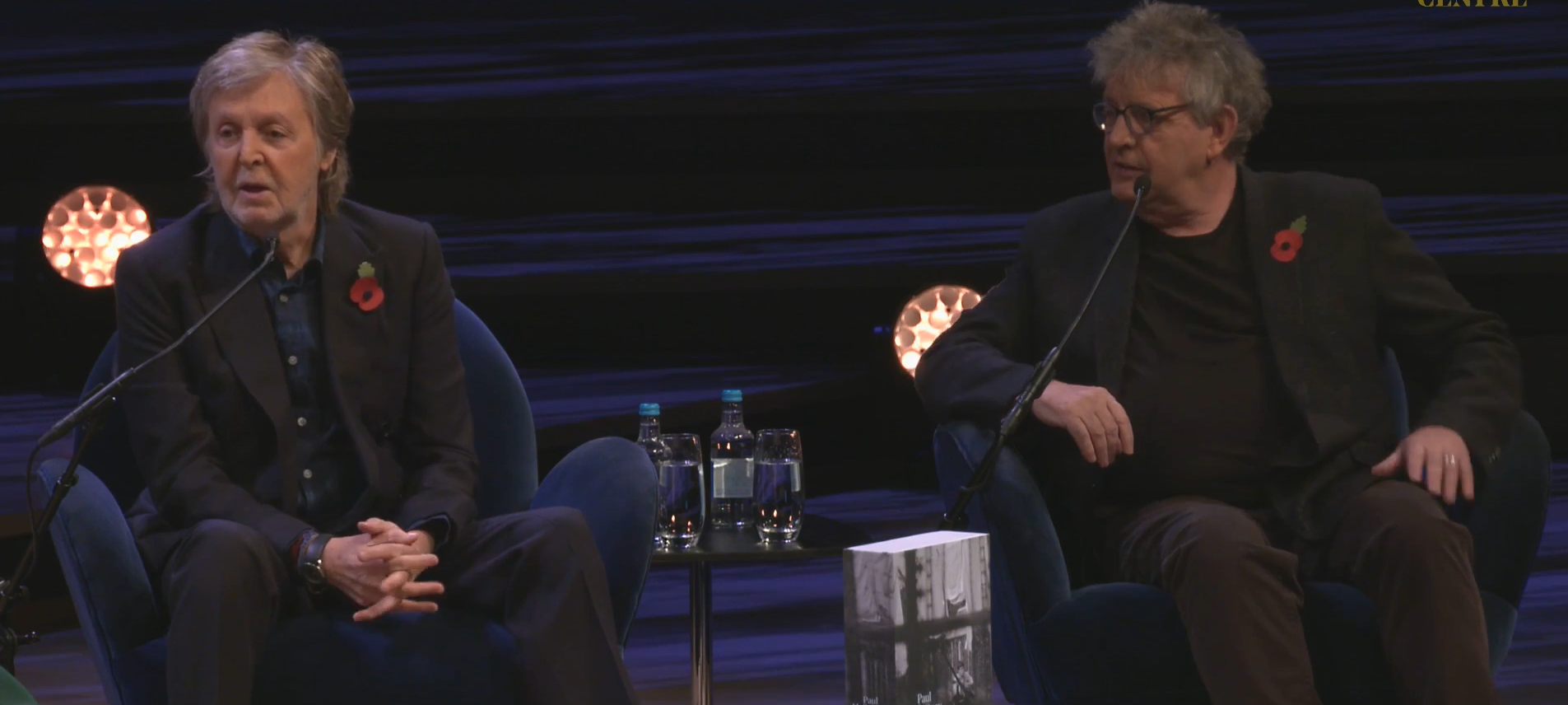
Paul also discussed how the fact that he is left-handed and John was right-handed helped them when writing songs together. Instead of the necks of their guitars getting in the way and hitting each other, they would point in opposite directions, enabling the two to watch each other as they played and sang. Paul said he could watch John’s guitar playing and this would help him complement it with his own guitar or bass playing. He also said it brought the two young men closer together which helped with their singing, harmonies and songwriting. A fascinating insight which, in some ways, is obvious yet reveals a lot.
The evening concluded with Samira selecting a small number of questions from the audience within the Southbank Centre and from those sent in online.
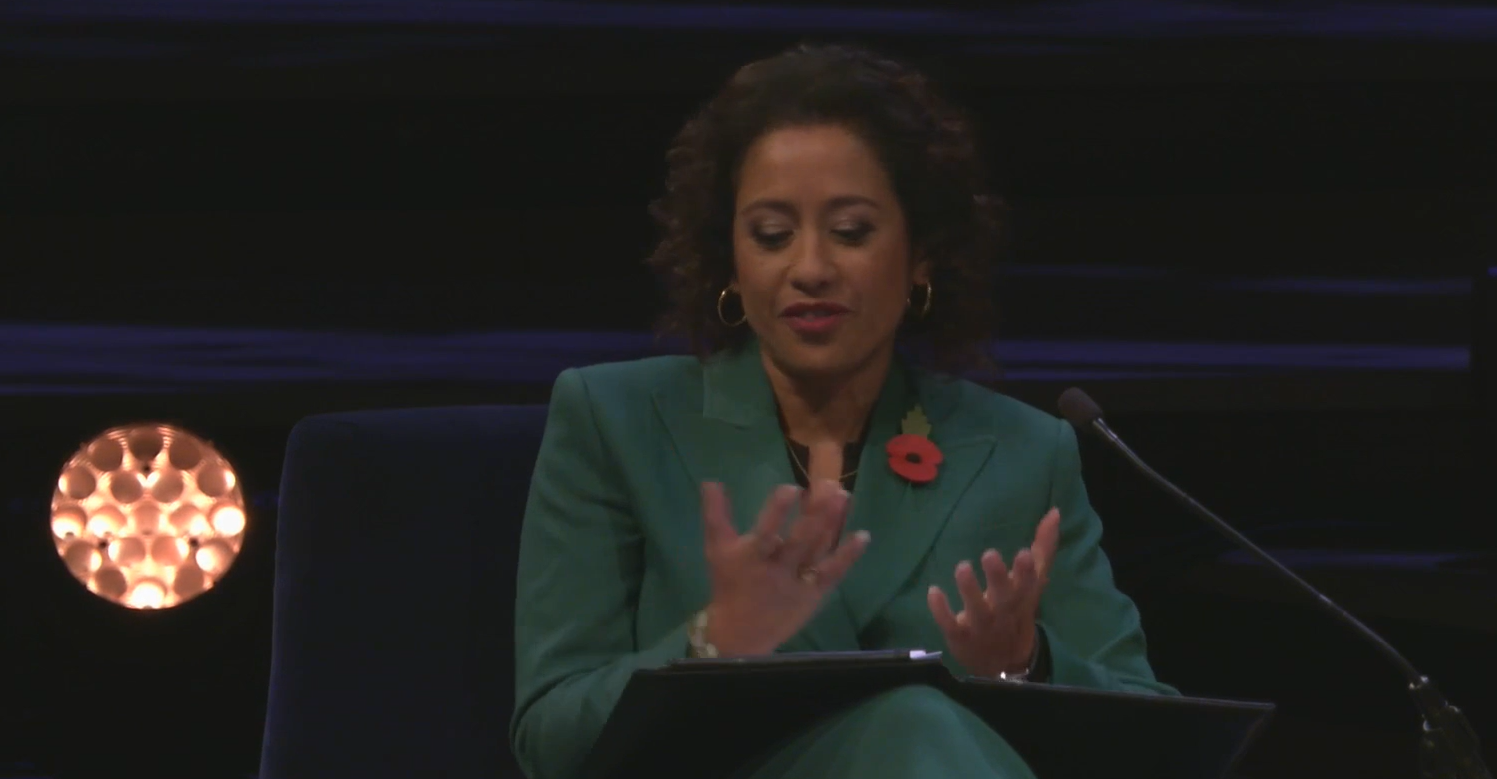
A fascinating event, which complements a wonderful book, and gave some unique insights into the thought processes behind the lyrics and songs of one of our musical geniuses.
It is not often that we get an opportunity to gain intimate insights into the mind and thoughts of a musical genius. One thing I forgot. Paul also spoke lovingly of his education at school. He admitted that, although he did not realise it at the time, he learnt a lot from one particular teacher, who taught him English Literature. He said that he particularly enjoyed Chaucer and the Canterbury Tales (“very rude, filthy!”) He also admitted that all four Beatles gained a lot from school and that influenced their songwriting, perhaps without them realising.
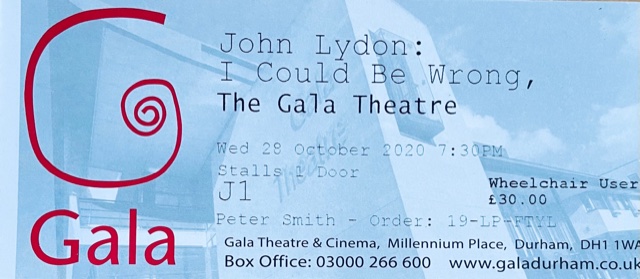 “He’s a legend and an icon, a revolutionary and an immortal.
 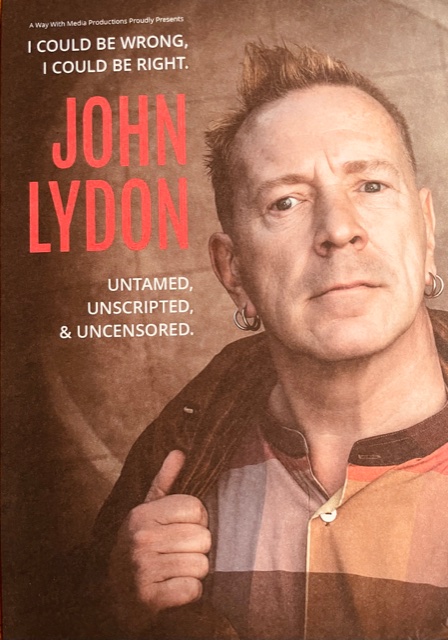 You couldn’t get much more of a contrast: Cliff Richard two days ago and then John Lydon! Two very different icons of popular music. But then, perhaps not as far apart as you might imagine: “Lydon, the uncompromising man of punk, explained his admiration for Cliff Richard: “My parents had a fantastic collection. It wasn’t just Irish folk tunes and accordion diddly-doos, there was early Beatles and lots of Cliff Richard too. The first record I would have ever wanted to buy was ‘Move It!’ by Cliff Richard. It was a really good song at the time and still is.” Richard may be a bit square now, but he influenced tonnes of acts form the sixties. “Early Cliff was a riotous assembly of sorts, and he had moves that left a good impression on a 5 year old.”” (
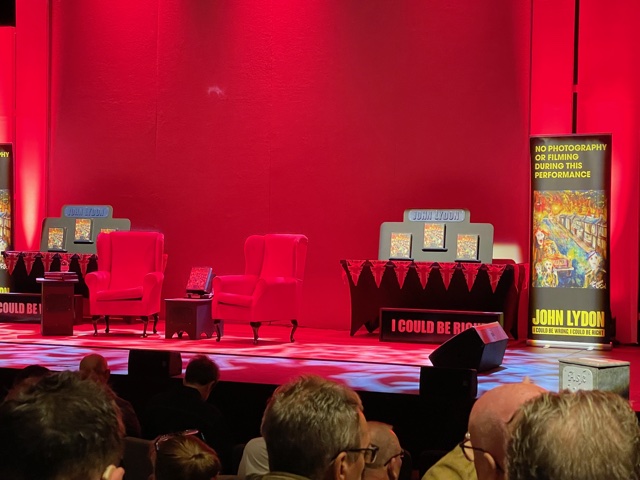 The stage was nicely set out with two red velvet chairs, one for John and one for his on tour interviewer. We weren’t allowed to take photographs, hence the image of the stage setup. The evening consisted of two segments separated by a short interval. The entire show lasted around two hours. The first segment was devoted to John telling us some memories of his life. The second and final segment took the form of a question-and-answer session. Attendees were allowed to write questions on special cards and post these in a box, placed at the front of the stage, during the interval.
 ways. He talks a lot, and becomes quite emotional, about his wife Nora who has Alzheimers and for whom John is now primary carer. He has been with Nora since the 1970s and she is of German origin and the mother of the late Ari Up of the all girl punk band,
  Guinness which goes down really well (even through one of those horrible paper straws).
 Both Lisa and Elaine really enjoyed the show, as did I. A very entertaining evening with an icon of punk rock and popular culture. It doesn’t come much better than Cliff one night and John two nights later. A short taxi ride and we were back home where Lisa and Elaine hoisted me back into my bed with thoughts of John and Edgar Broughton swirling around in my head, no doubt aided by the pint of Guinness. A great night.
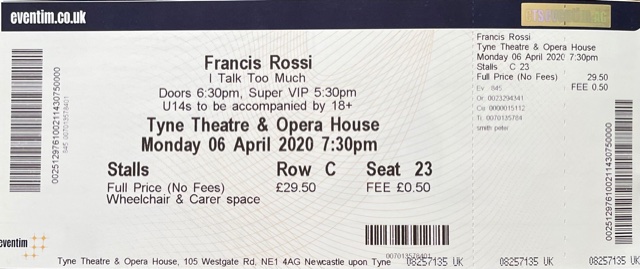 Well it finally came. My first concert for almost 2 years. I was excited and, I must admit, a little nervous. My first outing was to see my old friend/hero
  “In this explosive new memoir, the famously indiscreet Rossi reveals the true-life stories behind his unbelievable career. Painfully honest at times, the book covers the glory years, the dark days, the ups and downs of his relationship with the late Rick Parfitt and the real stories behind the creation of some of the greatest rock music of all time” (
 Those of you who have ever seen Status Quo live will know that Francis is, by nature, a cheeky, chatty chap. He started by going back to his early life, reminiscing about his Italian, ice cream shop and van, roots in London and how his father would sing to him in Italian and how he soon learned to play the trumpet and then the guitar. The story moved on to forming a band with old friend and ex-Status Quo bass player, Alan Lancaster, how they went on to play at Butlins and met a flashy young face called Rick Parfitt. Soon they were together as Status Quo and Francis told us of how he wrote “Pictures of Matchstick Men”, basing it roughly on Jimi Hendrix’s “Hey Joe”. Francis picked up a guitar, playing and singing to demonstrate how he wrote their first hit record.
 During the interval I treated myself to a glass of red wine, sat back in my chair and waited for Francis to return. Soon the show resumed and we moved on to tales of how they opened Live Aid, which I was lucky enough to attend in Wembley Stadium, Francis explaining that nobody really wanted the opening slot but they realised how important the concert, the event would be and how being the opening act would be a great place to be on the bill. Then there were tales of the breakup of the band, the re-emergence with Francis and Rick leading a new version of Status Quo and being back in the charts with “In the Army Now”. All of this was delivered with Francis’ usual cheeky Cockney charm. Then he moved through the years talking quite emotionally about the sad passing of Rick and the latest Francis led version of Status Quo. I must admit I always had my doubts about Francis continuing after Rick’s passing but I guess it is in his blood and to him it obviously seemed the natural thing to do.
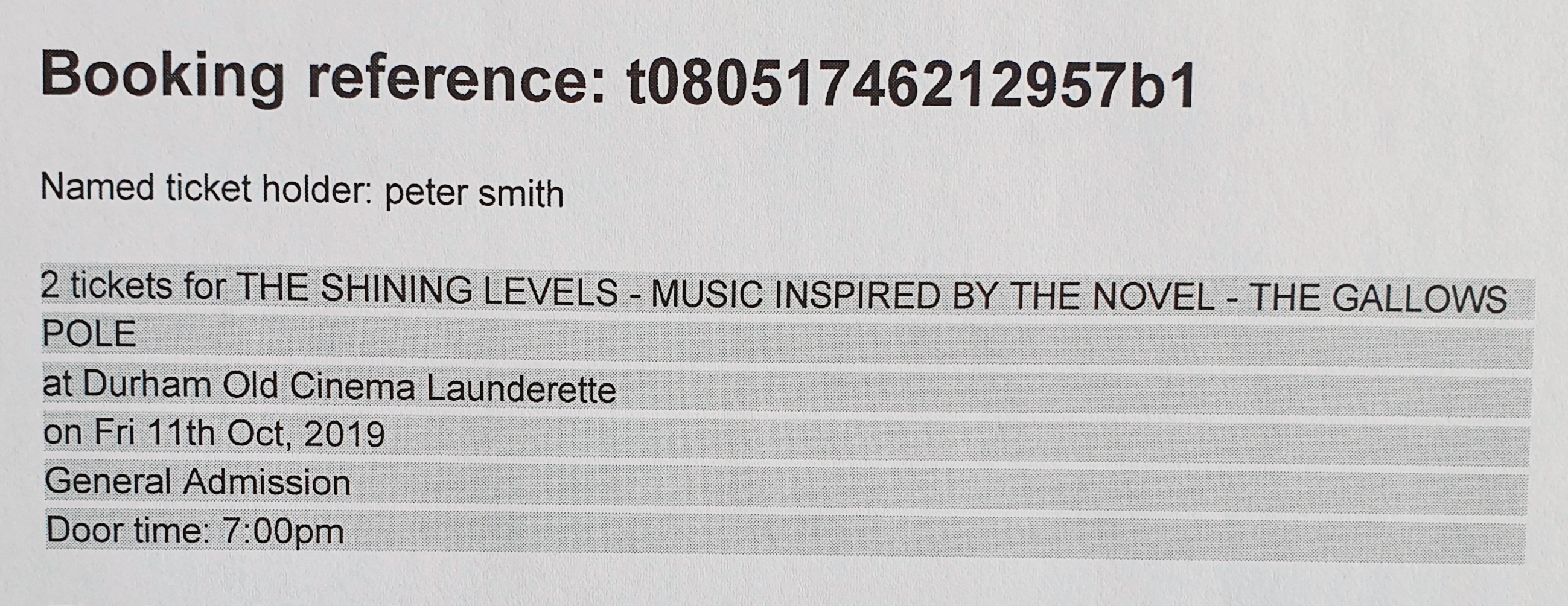 This was my second
 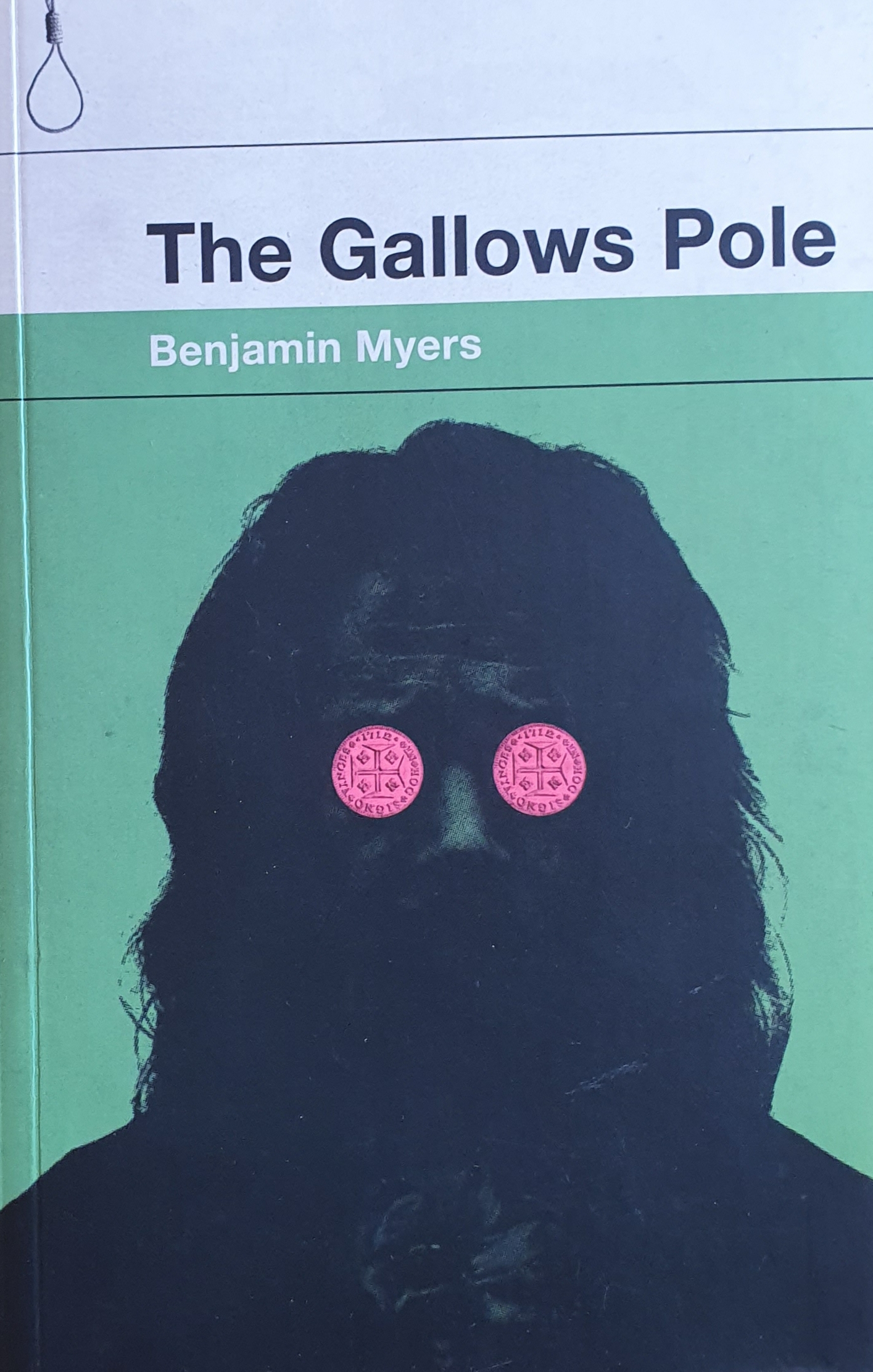 “Benjamin Myers was born in Durham, UK, in 1976. He is an author and journalist, translated into several languages. Published in May 2017 and now in its 9th print run, The Gallows Pole won the Walter Scott Prize – the world’s biggest award for historical fiction – was recipient of a Roger Deakin Award and longlisted for the Republic of Consciousness Prize. It has been optioned for film/TV by Element Pictures and also available on Audible.”(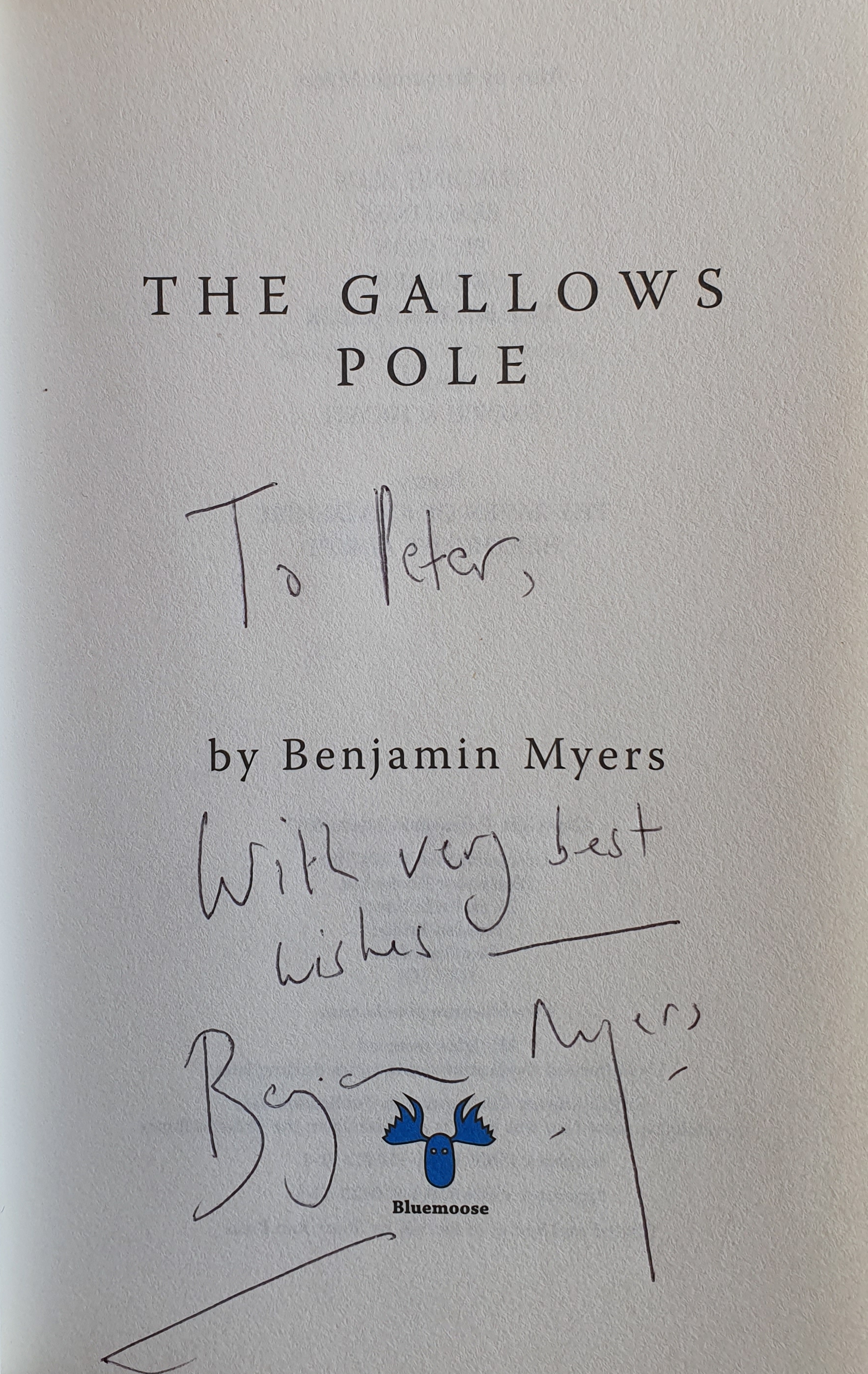
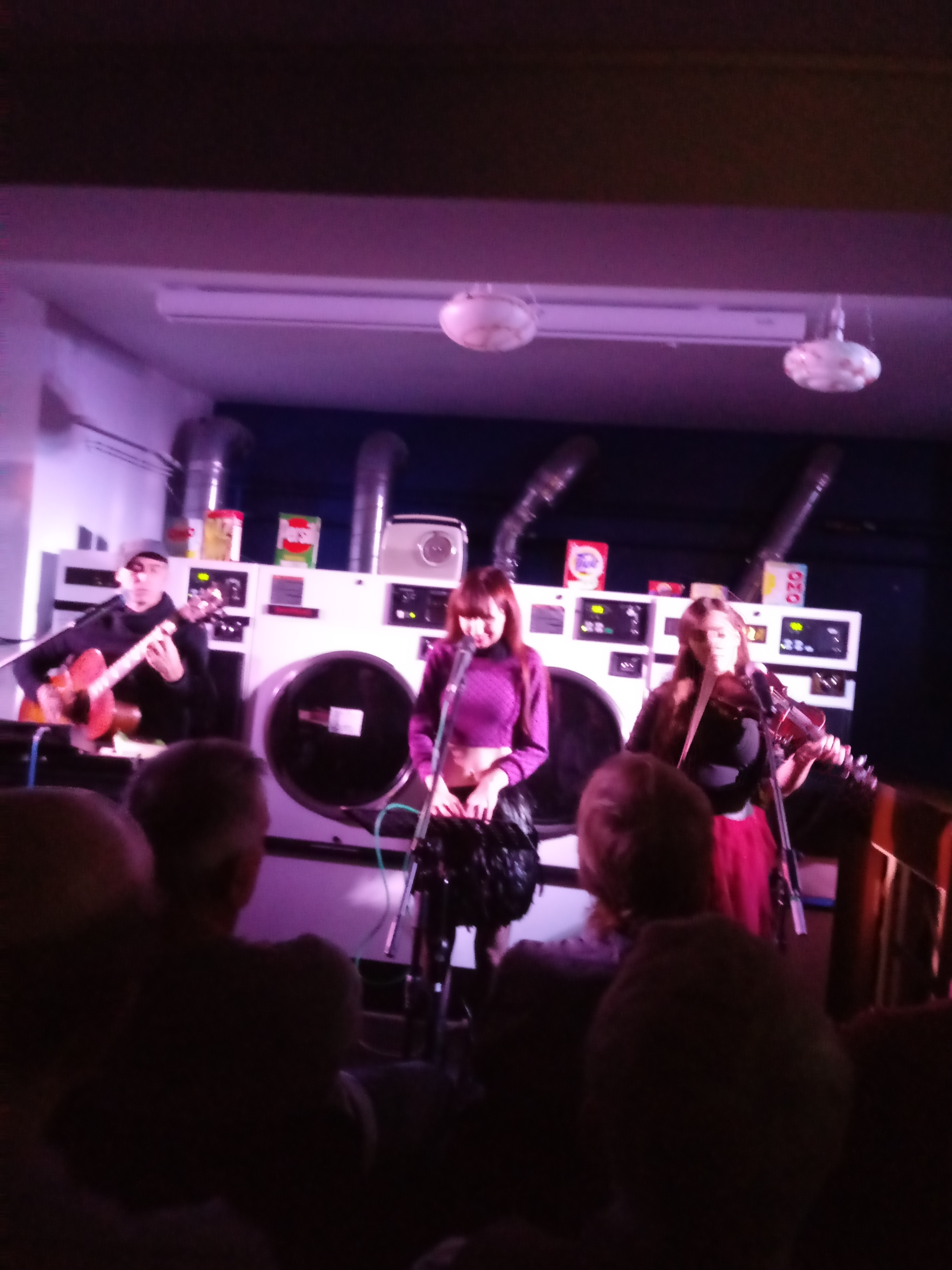 time dark and powerful, their sounds can be.
 A taxi from Sunderland to Darlington (return) is expensive. But, what the hell, my lovely daughter Laura was singing in the band The Shining Levels at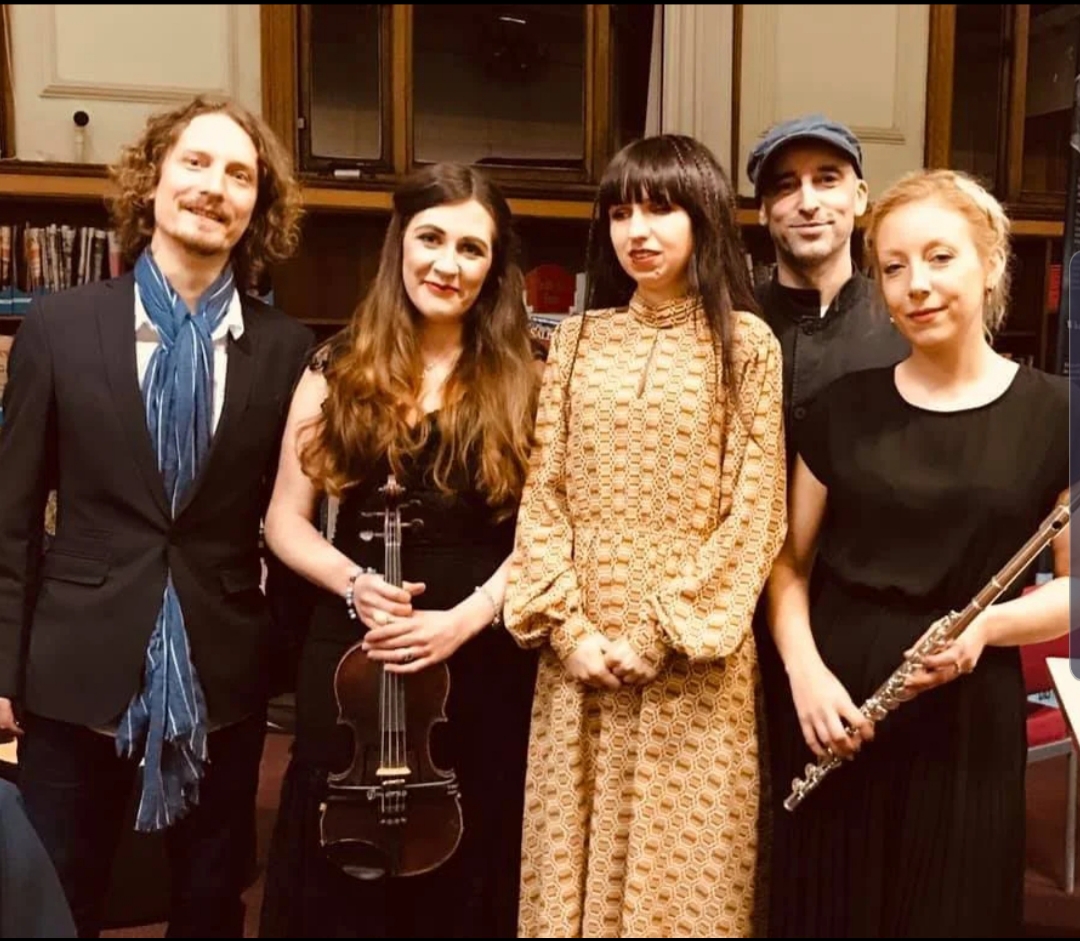
 and transfixed the audience in their haunting, swirling mix of sounds. The eclectic combination of folk music, book readings and mix of flute, violin, a female trio of vocals and male vocals has to be experienced to understand just how beautiful, yet at the same time dark and powerful, their sounds can be.
  Vintagerock's Weblog.