UK Newcastle City Hall 4th May 1978
 U.K. were a progrock supergroup formed by singer/bassist John Wetton (King Crimson, Roxy Music), keyboardist/electric violinist and local north east rock hero Eddie Jobson (Fat Grapple, Curved Air, Roxy Music), guitarist Allan Holdsworth (Soft Machine) and drummer Bill Bruford (Yes, King Crimson, Genesis). The original line-up of the band was short-lived, although new versions of the band have reformed in more recent times. UK’s music was technically amazing musicianship, and a combination of jazz/rock and prog, with a sense of the gothic thrown in for good measure. And this was after punk! Aaah, the days of prog pomposity, musical dexterity and OTT-ness 🙂
Setlist: Alaska; Time to Kill; The Sahara of Snow; Carrying No Cross; The Only Thing She Needs; Forever Until Sunday; Thirty Years In the Dead of Night; By the Light of Day; Presto Vivace and Reprise; Caesar’s Palace Blues
Posts Tagged ‘prog rock’
18 Nov
UK Newcastle City Hall 4th May 1978
27 Oct
Steve Hackett Genesis Extended Tour York Barbican 26th October 2014
Steve Hackett Genesis Extended Tour York Barbican 26th October 2014
Support from Mostly Autumn (Acoustic)
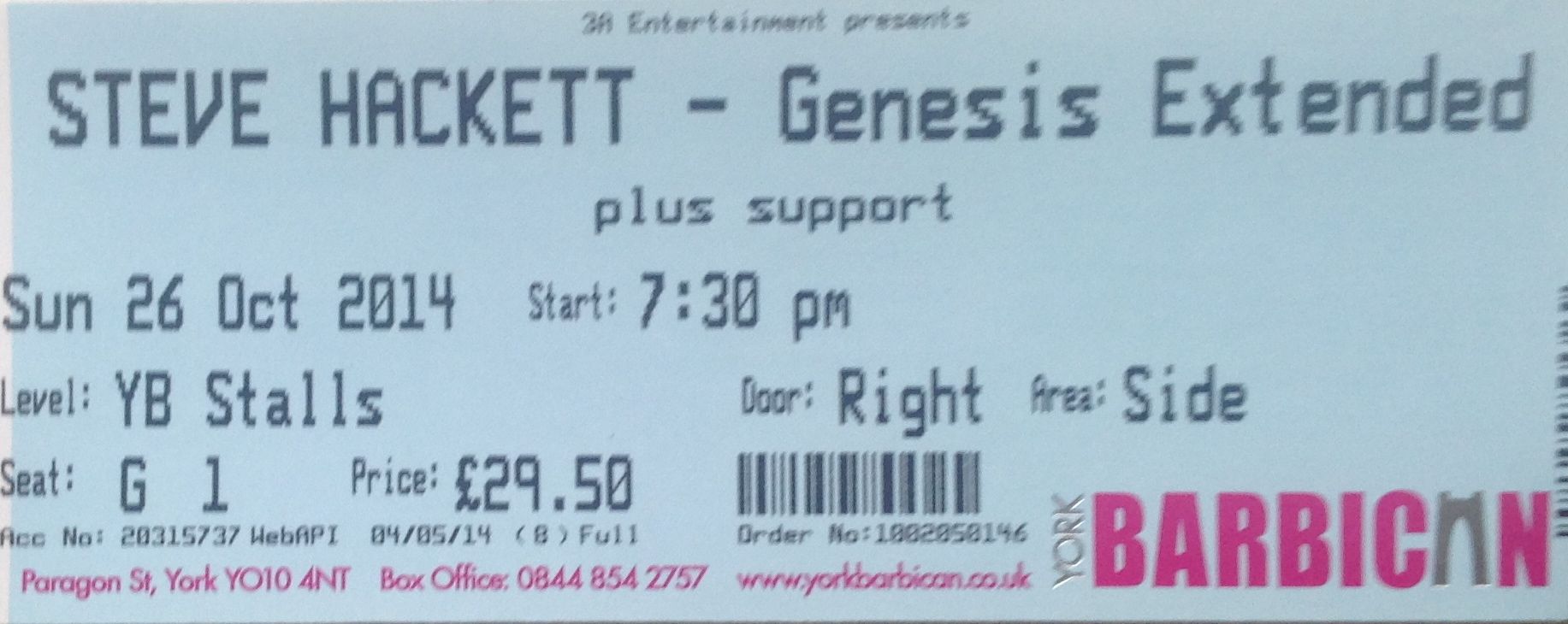 The success of Steve Hackett’s Genesis Revisited project has grown over the past couple of years. He started with a few classic Genesis songs, playing in smaller venues, but the tour soon developed to a full blown Genesis set, playing in theatres up and down the country, including sold out concerts at Hammersmith Apollo and the Royal Albert Hall. Hackett is now touring with “Genesis Extended” a new show which includes many of the classic songs from the early to mid -’70s era.
Steve has put together a great band featuring Gary O’Toole on drums, Nad Sylvan on vocals, Roger King on keyboards, Rob Townsend on flute, sax and percussion, and Nick Beggs (ex Kajagoogoo) on bass. There are all excellent musicians and manage to do justice to this formidable back catalogue. 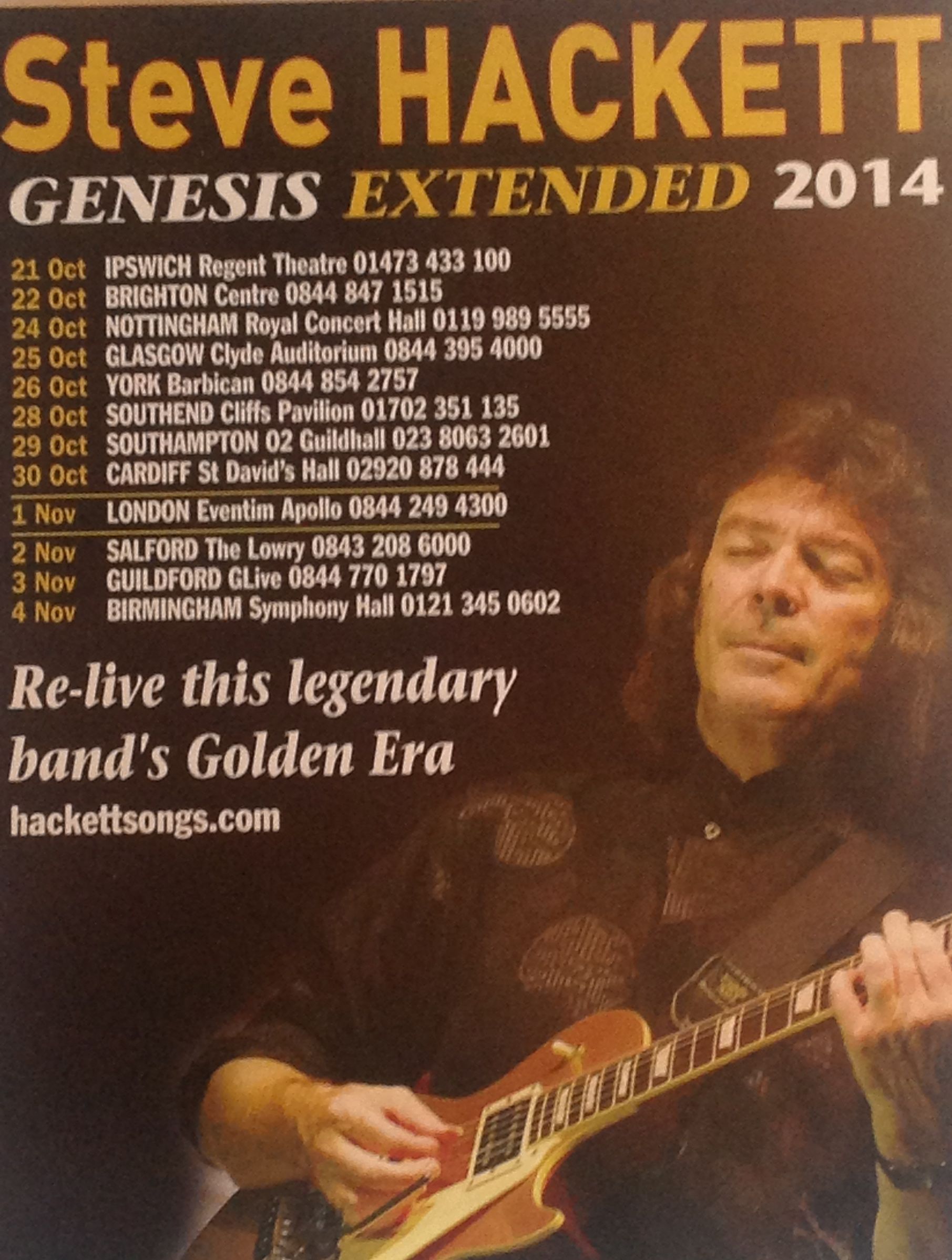 They started with Dance on a Volcano and featured gems such as Return of the Giant Hogweed, Fountain of Salmancis, Dancing With the Moonlit Knight and Lilywhite Lilith. My favourites were always going to be The Musical Box, which got the first full standing ovation of the evening, and The Knife. Both dark, moody stories and enduring pieces of rock theatre. The intricate beautiful music of The Musical Box was recreated perfectly as was the swirling, manic dance of The Knife. I was a little nervous that I wasn’t going to enjoy this concert, as I songs like The Musical Box and The Knife hold a special place in my memory, and I feared that they could never be played with the detail and reverence they deserve. However Steve and the band managed to strike the right balance of playing the music perfectly, and setting a mood that matched that of the originals, including some of the theatrical elements that Peter Gabriel so famously pioneered. Much of that was down to the performance of Nad Sylvan who was incredible, and pulled off the impossible. I wasn’t sure how this long-haired blonde guy, dressed in a ruffle shirt and tight black trousers would be able to play the part of Gabriel, and I remained a little unconvinced during the first few songs. However as the performance progressed I started to warm to the guy. He introduced his own performance, his own theatre to the songs, yet also drawing heavily from the mannerisms and style of Gabriel.
  Little jerky mannequin movements and twisting hand gestures in The Musical Box, a dark dancing figure in The Knife, wildly grabbing the mike and tearing the words out of his throat and an epic performance in old fan favourite Supper’s Ready dressed in a cloak, and with the crowd helping out with vocals (A Flower?). Epic. The red light eyes even returned in Watcher of the Sky. I even sort of enjoyed Supper’s Ready; I always found it too long and a little tedious in the ’70s. Special mention to Nick Beggs, who played bass, and second guitar flawlessly. And there was dry ice. Perfect.
Setlist: Dance on a Volcano; Squonk; Dancing With the Moonlit Knight; Fly on a Windshield; Broadway Melody of 1974; The Return of the Giant Hogweed; The Fountain of Salmacis; The Musical Box; I Know What I Like; Horizons; Firth of Fifth; Lilywhite Lilith; The Knife; Supper’s Ready.
Encore: Watcher of the Skies; Los Endos
18 Oct
Traffic Newcastle City Hall 24th April 1974
Traffic Newcastle City Hall 24th April 1974
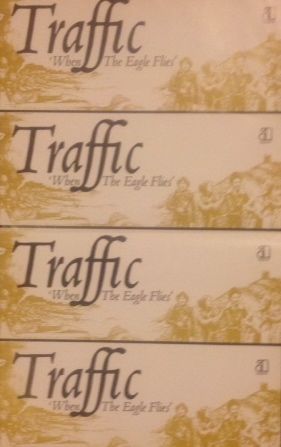 Concert going was a much less expensive hobby in the 70s. I saw lots of great bands, and it didn’t cost me the fortune it does these days. For £2 I had my train fare, a good seat, a pint or two and a programme. John and I went to see Traffic at Newcastle City Hall on 24th April 1974, and the tickets cost £1 each, and well worth it too 🙂 Traffic were just about to release their ninth, and final (for then, anyway) album “When the Eagle Flies”, and the line-up of the band was Steve Winwood (vocals, guitar, keyboards), Chris Wood (flute, sax), Jim Capaldi (drums, percussion), Rosko Gee (bass) and Rebop (percussion and crazy bongos). Support came from husband and wife duo Richard and Linda Thompson. My enduring memory is of a long-haired Stevie Winwood singing “John Barleycorn”, accompanying himself on acoustic guitar. It remains one of my favourite songs. My other memory is of an incredible performance by Rebop, as he hopped from bongo to bongo, beating out crazy rhythms, dazzling us with lightning-fast percussion work. John’s comments on the gig: “I only saw Traffic once and it was towards the end of the bands career when the band when they were struggling to keep it all together and perhaps were not at there very best. That said, I have great and very happy memories of the show. The tour was to promote the album “When the Eagle Flies” and I believe the support was Richard and Linda Thompson (who closed their set with I Want to See the Bright Lights Tonight, which was the title track of their current, and best, album).
  The City Hall was not full and we had great seats pretty near the front and to one side of the stage. A set list is shown from the Rainbow show and I can recall a number of the songs – John Barleycorn was just great, followed by 40,000 Headman, Empty Pages, Pearly Queen and the outstanding Dear Mr Fantasy, which is one of the best extended jams of the period and a favorite of mine to this day. They played a number of tracks from the new album, as was the standard practice for the time, but I can only recall the title track. While the setlist from the Rainbow differs, I thought they closed with Low Spark of High Heeled Boys but I may be getting this mixed up. [My memory is of an encore of Feelin’ Alright?, but that could be my imagination]. A great band whose contribution to 70’s music is often overlooked and I am grateful to have caught them (almost) at their prime.”
Traffic setlist from London Rainbow May 1974: Heaven Is in Your Mind; John Barleycorn; Forty Thousand Headmen; Graveyard People; Empty Pages; Pearly Queen; Vulcan ?; Dear Mr. Fantasy; When the Eagle Flies; Walking in the Wind; Dream Gerrard; Memories of a Rock ‘n’ Rolla.
I saw Traffic once more, when they headlined the Reading festival a few months later in August 1974. It was another great set with some lengthy but nver boring jams (thanks in great part to Rebop’s antics), and exactly the right sort of music for a dark summer evening at a rock festival, the music drifting across the riverside fields, as the cool breeze made us all shiver a little.
Reading setlist: Empty Pages; Graveyard People; Who Knows What Tomorrow May Bring; John Barleycorn; Forty Thousand Headmen; Love
When the Eagle Flies; Walking in the Wind; Dream Gerrard
Thanks to John for the image of his poster.
11 Oct
Tangerine Dream Newcastle City Hall 23rd March 1978 and 2nd November 1980
Tangerine Dream Newcastle City Hall 23rd March 1978 and 2nd November 1980
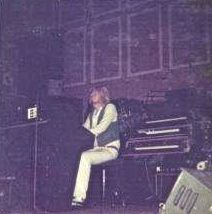 I saw Tangerine Dream on two more occasions. It is difficult to describe the concerts, as each time the band performed it was so different. In 1978 the line-up was Edgar Froese (keyboards), Christopher Franke (keyboards), Steve Jolliffe (saxophone, flute) and Klaus Krüger (drums, percussion). By the time I saw them in 1980 the line-up had changed again and had reverted back to a three piece, keyboard based, ensemble featuring Froese, Franke and Johannes Schmoelling. Their concerts continued to feature unique improvised soundscapes, loud and swirling music; psychedelic, spacey, rhythmic, sometimes dark and moody. They sometimes performed in cathedrals, I can imagine that the space and surroundings fitted the music well. One of those performances was in York Minster; I recall considering going and didn’t, which I regret to this day; I would imagine that it will have been an unforgettable experience.
The 1978 tour featured the Laserium light show which were produced live by a “laserist”. The Laserium projector (from the tour programme) “uses a one-watt Krypton gas laser as its light source, and refracts the tiny beam into four primary colors which travel through a series of optics to emerge as laser snowflakes or cloud formations suspended in space. This Laserium projector was especially designed for Tangerine Dream, and the custom made rear projection screen enables the live laser images to appear three-dimensional.” I was, and remain, intrigued by the band.  I found their concerts fascinating, challenging, interesting at times uplifting, and yet at other times tedious and tiring. Looking back they were, and remain, a unique and hugely important and influential band. Edgar Froese drew his influences from the Rolling Stones: ”The first time I heard The Rolling Stones was in the middle of a rehearsal with a rock ‘n’ roll group. I was first of all attracted by their looks. Their faces were absolutely damaged. They were the absolute opposite of The Beatles… ” and the surrealist painter Salvador Dali, who he met also played in his villa: ”This was the biggest change I ever had in music…..By seeing the way he was working, talking and thinking, I found that everything was possible. I thought that I would do the same as he did in painting in music.” He explained his approach to Paul Morley in the NME (1978): “We never do anything just for success….We could do all the Donna Summer things, and make a lot of money. But what do you do in the end? If you’re interested in being rich, the record industry is very much part of the world’s commercial activity, and it’s very easy to be successful by doing your own thing, without compromise.”
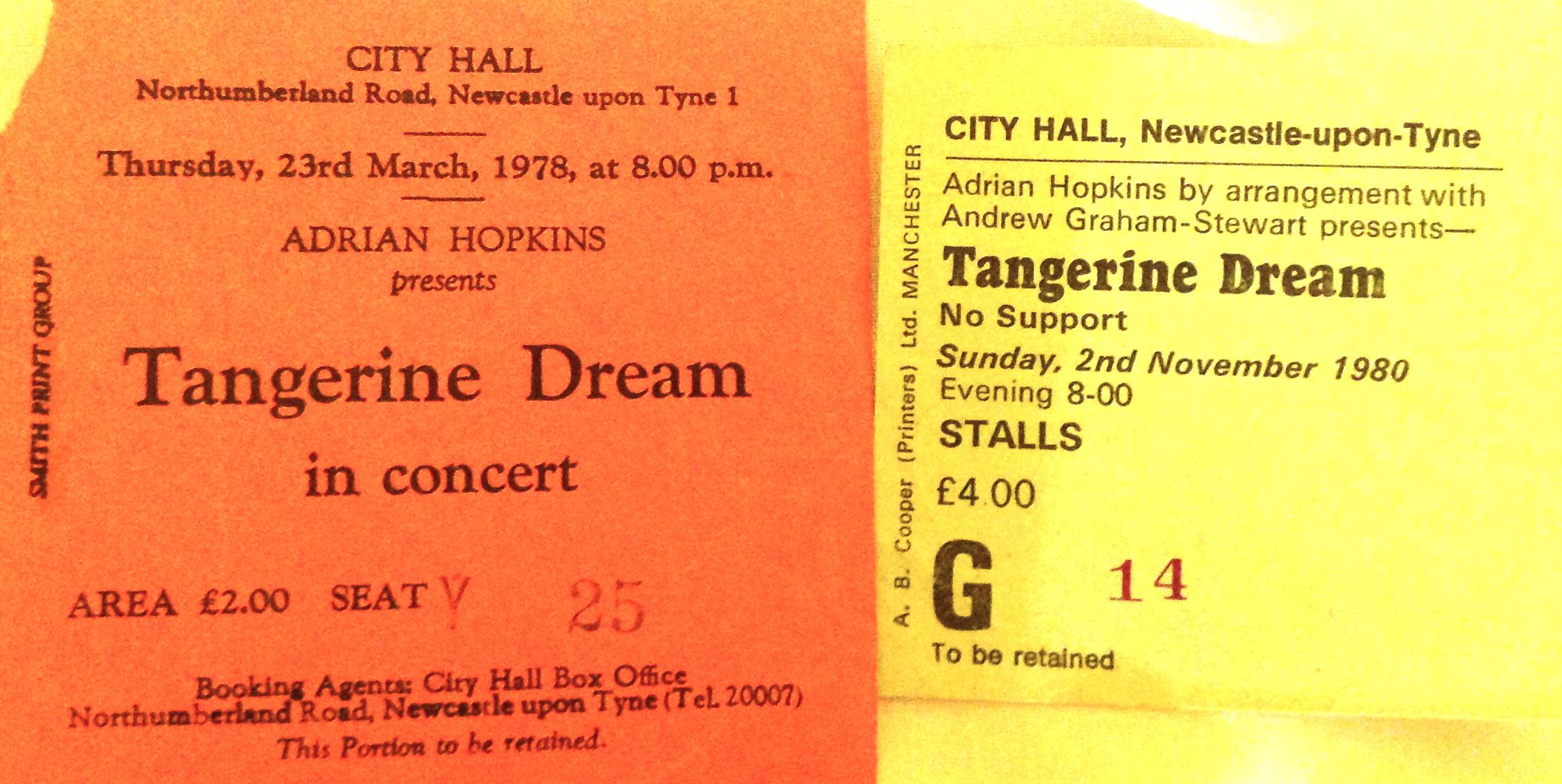 I remember for one of the performances I attended the band played the entire concert from behind a new curtain. There was never any set numbers, no “act”, no props other than the light shows. Everything was improvised directly on stage, in the moment. The performance was fed by the musicians, how they were feeling that day, but also by the venue, the acoustics, and the audience and their reaction. The musicians would walk on stage, tune, explore and calibrate their synths and then sit behind their futuristic consoles in the dark and create sounds and music. They would be no interaction with the audience. Each piece would last an hour or so, and a concert would feature a couple of such pieces, followed by, if it felt right to do so, an encore of 20 minutes or so. Then they would leave the astounded, bewildered, fascinated, perplexed audience until next time. Because of the uniqueness of the events many were bootlegged. I’ve just listened to a recording on YouTube which was made from a 1978 live show in Berlin. Fascinating stuff, and it reminded me of what the experience was like. The music from that show includes some scary screaming vocals., which isn’t something I can remember from the gigs I attended. Tangerine Dream continue to perform to this day.
Thanks to Mitch for his picture of Edgar Froese taken at Newcastle City Hall on 23rd March 1978.
9 Oct
Tangerine Dream Newcastle City Hall 4th December 1974
Tangerine Dream Newcastle City Hall 4th December 1974
Or “Is This The End Of Rock As We Know It?” (Max Bell, NME, 1974)
 Or “Is This The End Of Rock As We Know It?” (Max Bell, NME, 1974)
Tangerine Dream were formed in Berlin in 1965 by Edgar Froese. Fascinated by technology, and influenced by rock, pop and classical music, he formed a psychedelia band which would prove to be hugely important in the development of Krautrock, electronica, and trance music. Tangerine Dream’s haunting and transcendental soundscapes paved the way for many other bands to follow. By 1974 Tangerine Dream consisted of Edgar Froese (keyboards, guitars), Christopher Franke (keyboards, drums) and Peter Baumann (keyboards). They had signed to the new Virgin label, and released the highly acclaimed album “Phaedra” which was “an amazing record, the most effective mating of the mellotron and synthesizer to date, and its lush employment of rich sonic textures makes it an immensely enjoyable experience.” (Gordon Fletcher, Rolling Stone).
Tangerine Dream set out on their first UK tour in autumn 1974. The 20 date tour started in London at the Rainbow Theatre on 26th October, and closed at Newcastle City Hall on 4th December. The music was visually supported by a “Video Synthesizer” which controlled the visuals in synch to the music, so that the sounds made by the band determined the images and patterns which were displayed on the screen at the back of the stage.  The concerts were hailed unique and “fascinating experiences” (Melody Maker). Tangerine Dream gigs (were they “gigs”?) were unlike any other rock (and were they “rock”?) concerts I had seen, and consisted mainly of lengthy improvisations with zero interaction between the band and the audience. The band set themselves a challenge of never playing the same piece twice, and the concerts were often performed in complete darkness.
From the tour programme: “Tangerine Dream do not play conventional instruments. Their mass of synthesisers and electronic keyboards are probably the most sophisticated in the world…..their commitment to total improvisation moulds their concerts into an unusual form: at the beginning there has to be a period of attunement – musicians to each other, and then musicians to the audience. Finally the band tries to sensitize itself to the particular acoustics of the auditorium.” The tour also featured a quadrophonic sound system, all of which promised a very different and interesting experience.
 “Don’t categorise us. We’re influenced by everything; sound, pictures, a walk in the woods, looking at clouds from a plane even. Without Debussy, Presley, Beatles, Pink Floyd, Tangerine Dream would be impossible. Our music is the end result of these things in that we become a filter, our instruments, the keyboards, moogs and VCS3’s are just the ones with which we can best express our sensations” (Pete Baumann) “Because we never repeat a concert it’s hard to define whether we get excitement or satisfaction from it. After a good presentation, we may not do an encore – there’s nothing left to give.” (Edgar Froese).
I found the City Hall concert interesting, very different and, to be honest, simply strange. The stage was set with banks of synthesisers, and there was, as described in the programme, a period at the start of the evening where the three band members seemed to be setting up their instruments. I think the analogue equipment that they used at the time needed to warm up. Once the music got started it filled the City Hall with swirling rhythmic soundscapes, and the visuals, although quite basic compared to today’s effects, flashed and swirled in sequence with the music. I found the lack of audience interaction and the length of the pieces challenging, to say the least.
An experience like no other, at least until I saw them again, back at the City Hall four years later.
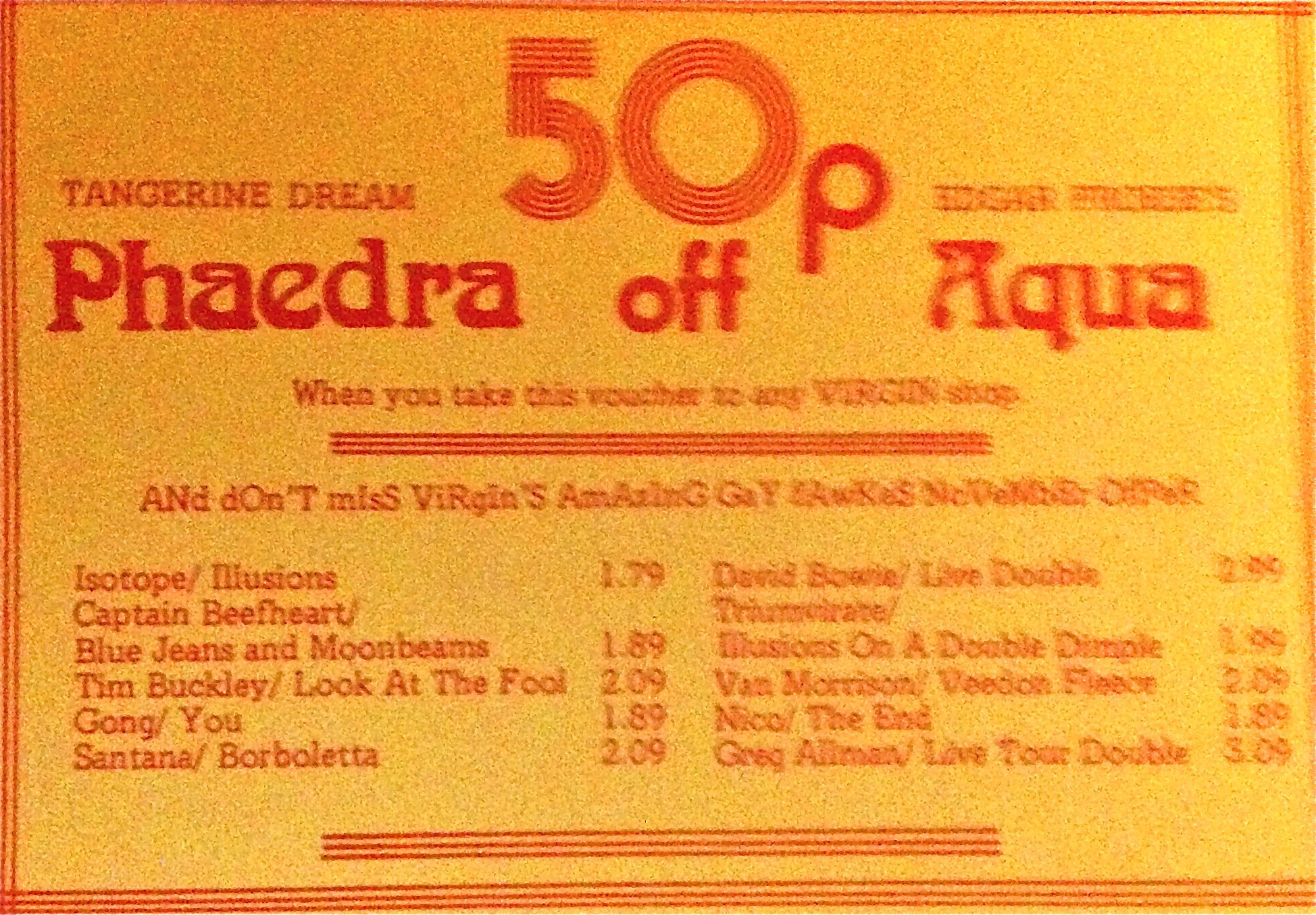
PS I found a voucher (above) which entitles me to 50p off the price of “Phaedra” at my local friendly Virgin store. Is it still valid ? 🙂
27 Sep
Julie Tippetts (Julie Driscoll) The Argus Butterfly Peterlee March 1976
Julie Tippetts (Julie Driscoll) The Argus Butterfly Peterlee March 1976
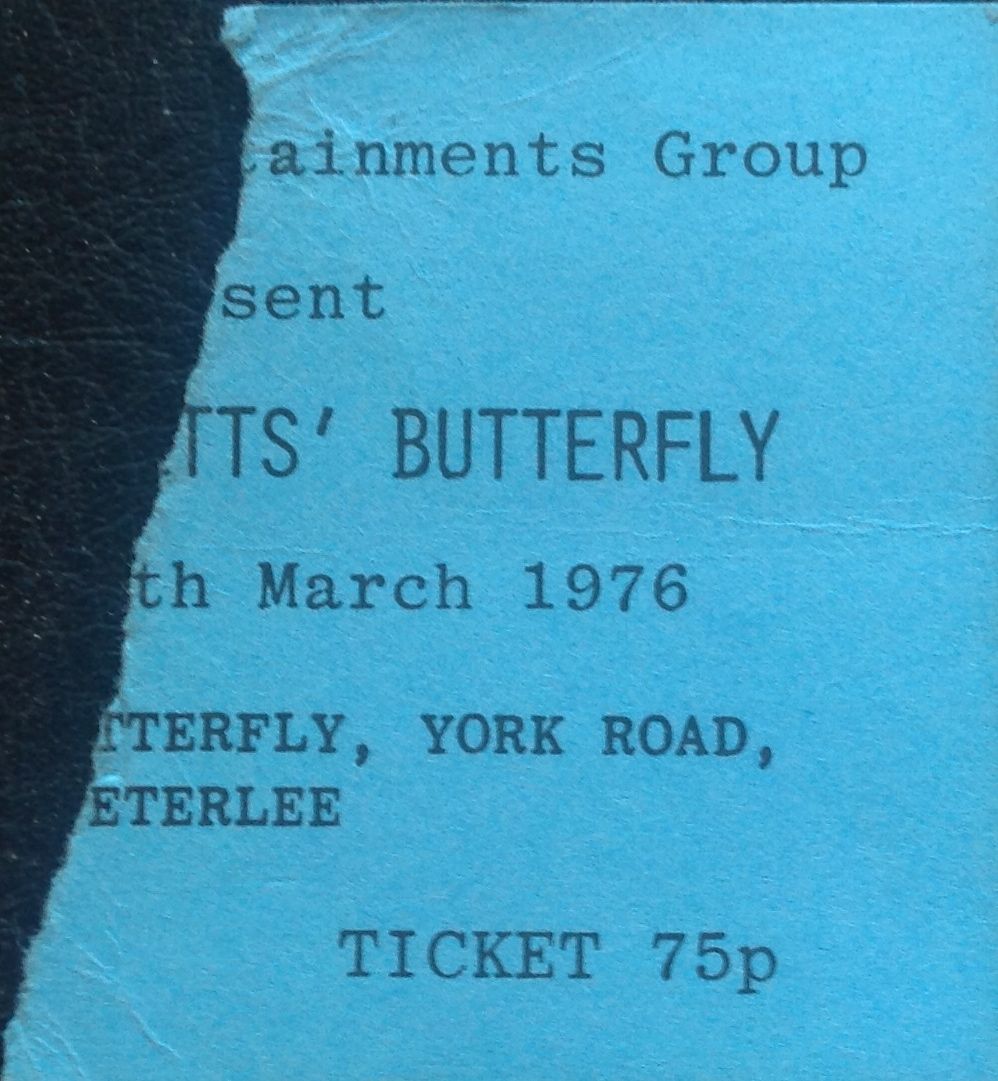 I’m going to start my meander through acts beginning with the letter “T” with a gig that was strange, musically scary, and unique. And it is also one that I am so glad I attended. But first I’ll think back to when I was a kid in the ’60s.
The image of Julie Driscoll on TV, with her wide made-up eyes and scary hair, singing “Wheels on Fire”, remains forever etched in my memory. I would have loved to see her perform during that period; her work with Brian Auger is simply incredible, and I watch her quite often on YouTube. The first chance that I got to see her live was when she came, with her band Butterfly, to perform at the Argus Butterfly pub in Peterlee. By then she had married, become Julie Tippetts, and had undergone a radical change in vocal style and musical direction. The Argus was, of course, a legendary venue (see below for a picture of the pub) having hosted many bands in the late 60s, when it was the home of the Peterlee Jazz and Folk Club, including an early show by Led Zeppelin, and gigs by Family, Jethro Tull, Free, Deep Purple, Man and others. It was a sparse crowd that gathered to see Tippetts that night in 1976, which was a shame, because what we witnessed was something simply astounding. Tippetts had released the album “Sunset Glow” the year before.
Miles explained in the NME (1975): “In 1970 Julie Driscoll married Keith Tippett, the modern composer, and entered the mysterious other world of contemporary music….She began training her voice and got more involved with experimental work”. All Music Guide says: “After her soul, pop, and R&B beginnings, Tippetts redeveloped her voice… began to extend its reach in improvisation, breath control, and uncommon phrasing. She is one of the most compelling and original singers in recorded music’s history. Sunset Glow is a curious recording, one that walks the razor’s edge of composition and improvisation….strange song structures, varying dynamics”.
Her performance that night was truly way out there in left field. This was vocal improvisation and strange curious songs, and timings. 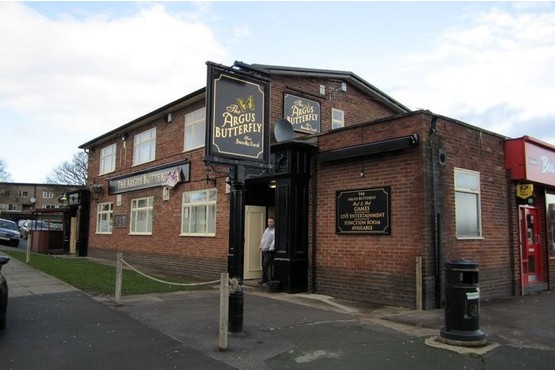 Unlike anything I had heard before. Her band was Brian Godding (guitar), Harry Miller (bass), Mark Charig (cornet) all of who were with Julie in Centipede in 1973, and a “new” guy John Mitchell (percussion) who used to be with Arthur Brown. Julie accompanied herself on piano. One song ‘Mongezi Feza’ consisted entirely of Julie singing the name over and over again, improvising and playing with the sounds. To call the music avant garde jazz does it a disservice; this was experiments in sound, using the voice as an instrument and seeing how far she could take it. It was mind blowing stuff. Sometimes so strange I wanted to laugh, yet compelling and so challenging and moving. Marie and I sat near the front, wondering what on earth we were experiencing.
The gig sticks in my mind today, and I keep promising myself that one day I will go and see Julie perform again. She performs rarely these days, usually with her husband on piano, and in London or the south-west. I really must try and see her again.
26 Sep
Stackridge Live 1972 – 1976
Stackridge Live 1972 – 1976
 Stackridge toured endlessly in the early to mid 70s. I must have seen them at least half a dozen times including performances at the Reading Festival in 1972 and 1973, at the Elton John and Beach Boys show at Wembley Stadium, supporting Lindisfarne at Newcastle City Hall, and headlining at Sunderland Polytechnic Wearmouth Hall. I am sure there will have been other occasions which have slipped my mind. For me it was the original Stackridge line-up which was in place up until 1973, which was the classic band. This was the band which was fronted by Mutter Slater, recorded the album “The Man in the Bowler Hat” (Mutter would always wear a bowler hat on stage), and had great songs which married intricate prog, Beatle-ish tunes, with fascinating storytelling, great hooks, and some west country humour thrown in for good measure. The song “Slark”, from their first album was the highlight of the set. “Slark” tells a somewhat dark, yet poignant story of a (friendly, I think) monster and was an eccentric lengthy prog/folk epic, during which Mutter captivated us all, and lead us in the sing-a-long chorus. I would look forward to seeing them play “Slark” and would go home disappointed if the song wasn’t aired. But there were other classics songs: “Dora the Female Explorer”, “Let there be Lids” (the band would all bang dustbin lids, while we clapped along with them), “Do the Stanley” (the “Stanley” was Stackridge’s very own dance, which the band invented, and encouraged us all to join in with on several drunkens ocassions), and other great Stackridge stories including “Amazingly Agnes”, “Purple Spaceships Over Yatton” and “The Road To Venezuela”.
Stackridge always seemed to be on the verge of bigger success, but it then somehow seemed to allude them. Perhaps the ever-changing line-up didn’t help. At one point, Mutter and a couple of other members left the band, and a new Stackridge went out on tour with a very different line-up to promote their third album “The Man in the Bowler Hat” (and of course the man who actually wore the bowler hat wasn’t there!). The album was produced by George Martin and should have ensured great success. Mutter and the others did return to the fold, and the band were signed to Elton John’s Rocket label. However by 1976 it was all over, and Stackridge split, leaving fanatical followers up and down the country and a bunch of great memories and excellent songs. For me, Stackridge were an important, yet often forgotten, part of the early 70s music scene.
Stackridge reformed ten years or so ago, and are touring again.
“Careering along in my creosote car
From Kebeeble to Kenn I didn’t get very far
The sky turned black and a dark cloud grew
The monster Slark came in to view
I pleaded with Slark to pass me by
“I’ve done nothing wrong, I don’t want to die”
He scooped me up in his huge grey claws
And bore me away without any cause”
(Slark, Stackridge, 1971)
This is absolutely the last (at least for now) of my blog entries on acts beginning with the letter “S”. I will definitely move onto the letter “T” tomorrow 🙂
25 Sep
Soft Machine Live 1974 and 1975
Soft Machine Live 1974 and 1975
 I saw Soft Machine twice; once at a concert at Newcastle Guildhall on 29 June 1974, and again at Reading Festival on August bank holiday weekend 1975. But my first recollections of Soft Machine are much earlier. I recall listening to a Radio 1 in concert by the band in the late 60s or early 70s, and was totally blown away by the experimental free-form improvisation, which was, to a young teenager, simply mind-blowing and unlike anything I had heard; very different from the rock and pop that I was listening to at the time. I held that concert in my mind, but it was a few years until I finally got to see the band. By then they had transformed from the early psych band of the late 60s to a much more jazz-oriented outfit playing purely instrumental concerts, featuring long numbers with extended improvisation. Allan Holdsworth had joined the band and they had become a much more guitar-oriented band. They were promoting their album ‘Bundles’ at the time and the line up at the time was Mike Ratledge – keyboards; John Marshall – drums, percussion; Karl Jenkins – oboe, saxophone, keyboards, synthesisers; Roy Babbington – bass and Allan Holdsworth – guitar. By the time I saw them at Reading Holdsworth had been replaced by John Etheridge.
The 1974 concert that I attended was part of the Newcastle Jazz Festival. I found a review of that concert in Melody Maker, posted on the website of support act the Steve Brown Band: “The Softs began to project their intricate, fluent music to a packed house. Each solo was performed to perfection, especially some stunningly complex drumming from John Marshall. They blended their inborn jazz origin with the essential urgency of rock to full effect and produced a generally rich all-round sound. Allan Holdsworth emerged as one of the all-round stars of the evening with some really fine guitar playing on “Hazard Profile”, “Floating World” and the exceptional “The Man Who Waved At Trains”. If I remember correctly this was a late night concert with doors at 9pm, and Soft Machine coming on stage very late, and sadly we had to leave before the end to catch our train home.
Neil commented on one of my earlier posts on a 1975 City Hall concert by Soft Machine, which I missed: “Soft Machine came on and didn’t speak a word all night to a third full City Hall. Incredible gig – can still picture Mike Ratledge doing a solo bit – as the band were walking off he just played one note that went on forever. Marshall did a lengthy drum solo and Karl Jenkins showed us he had something special and he’s proved it lately with his popular classical works.” (Thanks Neil).
A bootleg exists of the Reading performance I witnessed which records the set as: The Floating World; Ban Ban Caliban; Out of Season; Bundles; Land of Bag Snake; The Man Who Waved At Trains; Peff. Mind-blowing stuff.
An amazing and much missed act, who successfully blended rock, jazz and prog to produce a unique, challenging sound. I notice that John Marshall and John Etheridge sometimes perform these days as Soft Machine Legacy and have been meaning to go and see them.
22 Jul
Supertramp Newcastle City Hall 14th October 1977
Supertramp Newcastle City Hall 14th October 1977
 I first saw Supertramp when they played as support for Ten Years After at Newcastle City Hall in 1971. It was at the time of their second album “Indelibly Stamped”. The thing I remember most was that the album sleeve was quite controversial for the time, as it featured a picture of the tattooed torso of a woman, including her bare breasts. Apparently two gold stars were pasted over the nipples for the US issue of the lp. The line-up of the band at the time was Roger Hodgson (vocals and guitars), Rick Davies (keyboards and vocals), Dave Winthrop (flute, saxophone, vocals), Frank Farrell (bass) and Kevin Currie (drums). They played a solid set that night, but I’d gone to see TYA, and the truth is I remember little about their performance. I next saw them at the 1975 Reading festival. By this time the band had released “Crime of the Century” and were starting to receive major recognition, particularly for “Dreamer” which reached No 13 in the UK singles chart. I made a point of watching their performance that weekend, and was impressed by them. The band’s line-up had changed quite a bit by then with Hodgson and Davies being the only members remaining from the band I saw in 1971. They were joined by John Helliwell who as well as playing sax, flute and singing also took on the role of addressing the audience and cracking jokes with the crowd, Dougie Thomson (bass) and Bob Siebenberg (drums).
  The next, and last time, I saw Supertramp was at Newcastle City Hall on 14th October 1977. By then they were a major band. They had released two more albums “Crisis? What Crisis?” (1975) and “Even in the Quietest Moments…” (1977), both of which were chart successes. They also hot the UK singles chart with “Give a Little Bit”. Support came from a new artist called Chris De Burgh. Their set is likely to have included: Give a Little Bit, Bloody Well Right, Lady, Dreamer, Give a Little Bit, Bloody Well Right, Sister Moonshine and Crime of the Century. I enjoyed the show, but can’t pretend that I was a big fan. Supertramp went on to even greater success with the “Breakfast in America” album and hits including “”The Logical Song”. I never saw them live again, which I now regret as their music has grown on me over the years, and I realise now how great a band they were. Supertramp last toured a few years ago, although the current line-up does not feature Roger Hodgson, with Davies and Helliwell now fronting the band. I really should try to see Supertramp, and Roger Hodgson, again if/when they next play.
3 Jul
Strawbs 1972, 1973 and Newcastle City Hall 23rd September 1976
Strawbs 1972, 1973 and Newcastle City Hall 23rd September 1976
 My mate Tony had the Strawbs lp “Just a Collection of Antiques and Curios” which we listened to endlessly. It must have been 1970 or 1971. Our favourite tracks were “Fingertips”, the epic “Where Is This Dream of Your Youth”, which still sounds great today, and (strangely) Rick Wakeman’s piano solo “Temperament of Mind”. I didn’t get to see Strawbs live until May 1972 at the Lincoln festival, where they played on a cold wet evening between I think Stone The Crows and The Faces. By then Rick Wakeman had departed and the line-up was Dave Cousins (vocals), Tony Hooper (guitar), Richard Hudson (drums), John Ford (bass) and Blue Weaver (keyboards). By that point their set contained classics such as “The Man Who Called Himself Jesus”, “The Hangman and the Papist” and “Benedictus”.
There was, and is, something unique about Strawbs music which sets them apart from many of their folk-rock contemporaries. Dave Cousins voice has a strange, other worldy, yet vpleasant, quality and their songs tell great stories.
The line-up of the band changed dramatically in late 1972 and early 1973, and Strawbs began to pursue a more rock/pop sound, hitting the charts with the excellent “Lay Down” and “Part of the Union”. By the time I saw them again in, I think, 1973 at Sunderland Locarno the line-up was Dave Cousins (now the only original member), Dave Lambert (guitar), Chas Cronk (bass) and Rod Coombes (drums). This was much more a rock band; Dave Cousins even wore a bright sparkling glittery jacket 🙂
The ticket here is for a later gig, in 1976 at Newcastle City Hall. By then the band were focussing more on playing in the USA. They called it a day in 1980, but soon reformed. Cousins, Lambert and Cronk continue to play today. I’ve written elsewhere on recent Strawbs gigs which I have attended, and pretty good they are too.
 Vintagerock's Weblog.