Loudon Wainwright III Newcastle City Hall 16th Sep 1979
 Loudon Wainwright is a funny guy.
“Loudon Wainwright III is a direct descendant of Peter Stuyvesant, renowned one-legged Dutch Governer of New York. Loudon I was an insurance salesman, Loudon II is a mild mannered reporter for a former great metropolitan magazine. And Loudon III is a “post-psychedelic beatnik” who has been lauded far and wide as a writer-performer of uncommon wit, intelligence and insight, and with a unique capacity for capturing irony and absurdity in his work, that sets him apart from the great majority of similar entertainers” (from Loudon 1979 programme).
I went along to this gig with a group of friends from college. One of the guys, Vaughan, had recently become a big fan of Loudon Wainwright and sand many of his crazy songs to us. He persuaded us all to go along with him to see Loudon when he came to the City Hall (not that I needed much persuading to go along to a concert in those days). The concert wasn’t well attended, but those of there spent an enjoyable evening listening to Loudon’s crazy, funny songs and stories. Loudon was promoting his 8th album “A Live One”, which had been recorded during his 1976 UK tour.
Personal Note (from Loudon 1979 programme): “Loudon Wainwright III is now living in California. He is the father of two children, Rufus and Martha. He has written songs for both of them – “Rufus is a Tit Man” and “Pretty Little Martha”. Loudon is a sports fanatic, and drives a 15 year old blue Checker.”
 “Crossin’ the highway late last night, He shoulda looked left and he shoulda looked right,
He didn’t see the Station Wagon car, The skunk got squashed and there you are,
You got yer, Dead skunk in the middle of the road,
Dead skunk in the middle of the road, Dead skunk in the middle of the road,
Stinkin’ to high heaven, Take a whiff on me that ain’t no rose,
Roll up yer window and hold yer nose, You don’t have to look and you don’t have to see,
‘Cause you can feel it in your olfactory.”
(Loudon Wainwright III, Dead Skunk, 1972).
Note 1. “Dead Skunk” was a hit in the US singles chart reaching No 12.
Note 2. The “olfactory” system is the sensory system used for the sense of smell.
Posts Tagged ‘folk’
5 Jan
Loudon Wainwright III Newcastle City Hall 16th Sep 1979
18 Oct
Traffic Newcastle City Hall 24th April 1974
Traffic Newcastle City Hall 24th April 1974
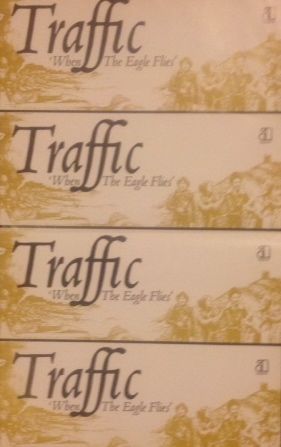 Concert going was a much less expensive hobby in the 70s. I saw lots of great bands, and it didn’t cost me the fortune it does these days. For £2 I had my train fare, a good seat, a pint or two and a programme. John and I went to see Traffic at Newcastle City Hall on 24th April 1974, and the tickets cost £1 each, and well worth it too 🙂 Traffic were just about to release their ninth, and final (for then, anyway) album “When the Eagle Flies”, and the line-up of the band was Steve Winwood (vocals, guitar, keyboards), Chris Wood (flute, sax), Jim Capaldi (drums, percussion), Rosko Gee (bass) and Rebop (percussion and crazy bongos). Support came from husband and wife duo Richard and Linda Thompson. My enduring memory is of a long-haired Stevie Winwood singing “John Barleycorn”, accompanying himself on acoustic guitar. It remains one of my favourite songs. My other memory is of an incredible performance by Rebop, as he hopped from bongo to bongo, beating out crazy rhythms, dazzling us with lightning-fast percussion work. John’s comments on the gig: “I only saw Traffic once and it was towards the end of the bands career when the band when they were struggling to keep it all together and perhaps were not at there very best. That said, I have great and very happy memories of the show. The tour was to promote the album “When the Eagle Flies” and I believe the support was Richard and Linda Thompson (who closed their set with I Want to See the Bright Lights Tonight, which was the title track of their current, and best, album).
  The City Hall was not full and we had great seats pretty near the front and to one side of the stage. A set list is shown from the Rainbow show and I can recall a number of the songs – John Barleycorn was just great, followed by 40,000 Headman, Empty Pages, Pearly Queen and the outstanding Dear Mr Fantasy, which is one of the best extended jams of the period and a favorite of mine to this day. They played a number of tracks from the new album, as was the standard practice for the time, but I can only recall the title track. While the setlist from the Rainbow differs, I thought they closed with Low Spark of High Heeled Boys but I may be getting this mixed up. [My memory is of an encore of Feelin’ Alright?, but that could be my imagination]. A great band whose contribution to 70’s music is often overlooked and I am grateful to have caught them (almost) at their prime.”
Traffic setlist from London Rainbow May 1974: Heaven Is in Your Mind; John Barleycorn; Forty Thousand Headmen; Graveyard People; Empty Pages; Pearly Queen; Vulcan ?; Dear Mr. Fantasy; When the Eagle Flies; Walking in the Wind; Dream Gerrard; Memories of a Rock ‘n’ Rolla.
I saw Traffic once more, when they headlined the Reading festival a few months later in August 1974. It was another great set with some lengthy but nver boring jams (thanks in great part to Rebop’s antics), and exactly the right sort of music for a dark summer evening at a rock festival, the music drifting across the riverside fields, as the cool breeze made us all shiver a little.
Reading setlist: Empty Pages; Graveyard People; Who Knows What Tomorrow May Bring; John Barleycorn; Forty Thousand Headmen; Love
When the Eagle Flies; Walking in the Wind; Dream Gerrard
Thanks to John for the image of his poster.
10 Sep
Steeleye Span Middlesbrough Town Hall 22nd August 1977
Steeleye Span Middlesbrough Town Hall 22nd August 1977
 Steeleye Span brought in producer Mike Batt (best known for his work with the Wombles) to work on their eighth album “All Around My Hat”. The single release of the title track reached number 5 in the UK Charts in late 1975, giving them their biggest chart success.
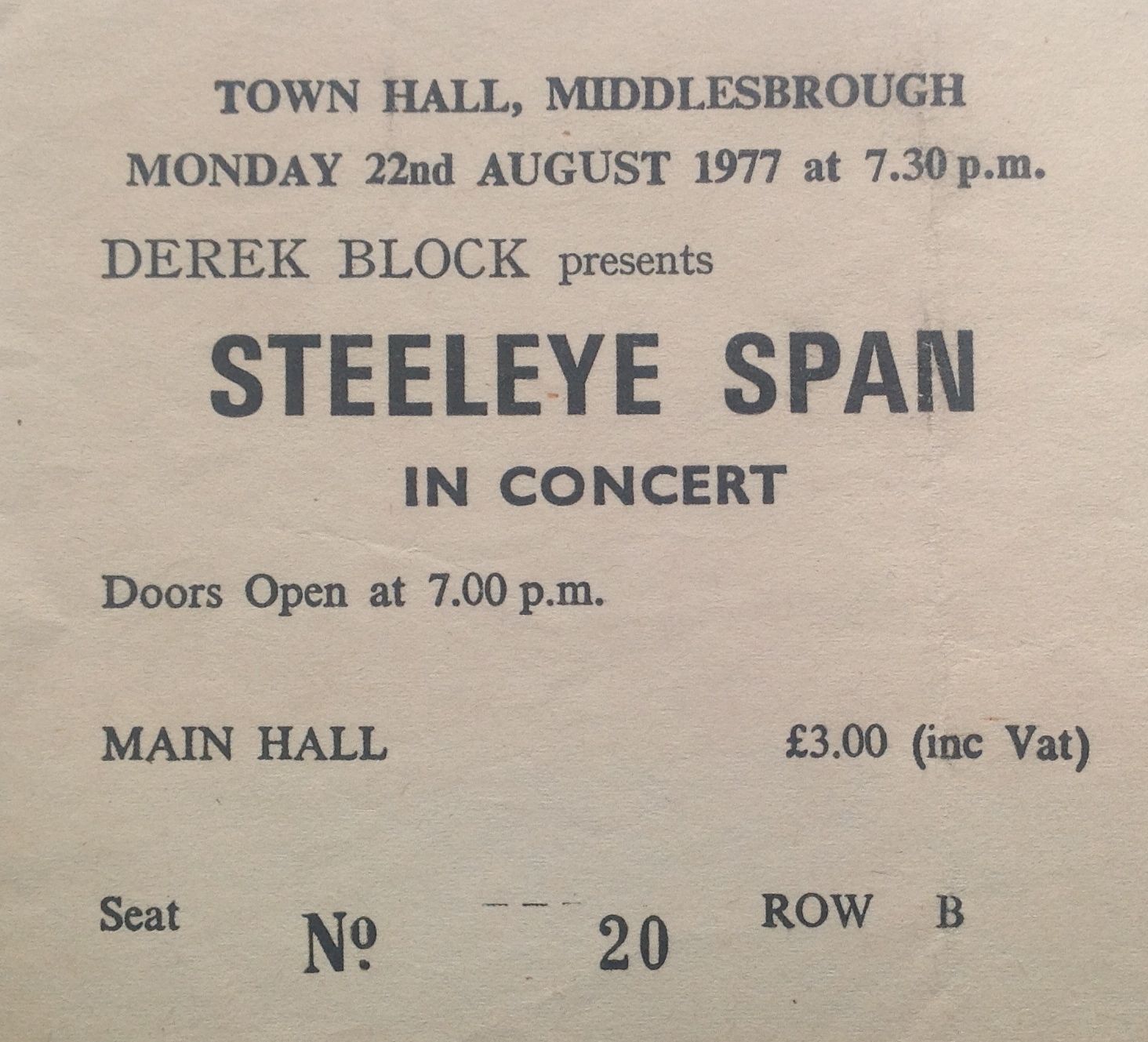
The next time I saw Steeleye Span was at Middlesbrough Town Hall on 22nd August 1977. The Town Hall was packed, and my mate and I had seats right down the front, in the second row. My enduring memories of the gig are of two things. The first is just how rocky the band had become. Of course they played “All Around My Hat”, which is actually a rock’n’roll song, but I was surprised how many of the other songs had an electric boogie rhythm. They even did a great version of Buddy Holly’s “Rave On”. And the second memory is of Maddy dancing. She was wearing a long, pure white skirt which swirled around as she danced and twirled. She danced across the stage, and down into the audience, up one aisle, across the back of the hall and back down the other aisle. That night Maddy was our English maid, with the voice of our green and pleasant land, and dancing the morris dance for us all. A great concert, and the best time I saw Steeleye Span.
The line-up of the band at the time was: Tim Hart (guitars, vocals), Maddy Prior (vocals and dance), Rick Kemp (bass, vocals), Nigel Pegrum (drums, percussion), the return of Martin Carthy (guitars, vocals) and John Kirkpatrick (accordion, vocals)
“Doesn’t it move you just a little bit?
And if you watch I think the chance is
That it will lift your heart a little bit
Ooh, well I mean, when Maddy dances
Ooh, well I mean, when Maddy dances”
(When Maddy Dances, by Ralph McTell)
9 Sep
Steeleye Span & Amazing Blondel Newcastle City Hall 26th October 1972
Steeleye Span & Amazing Blondel Newcastle City Hall 26th October 1972
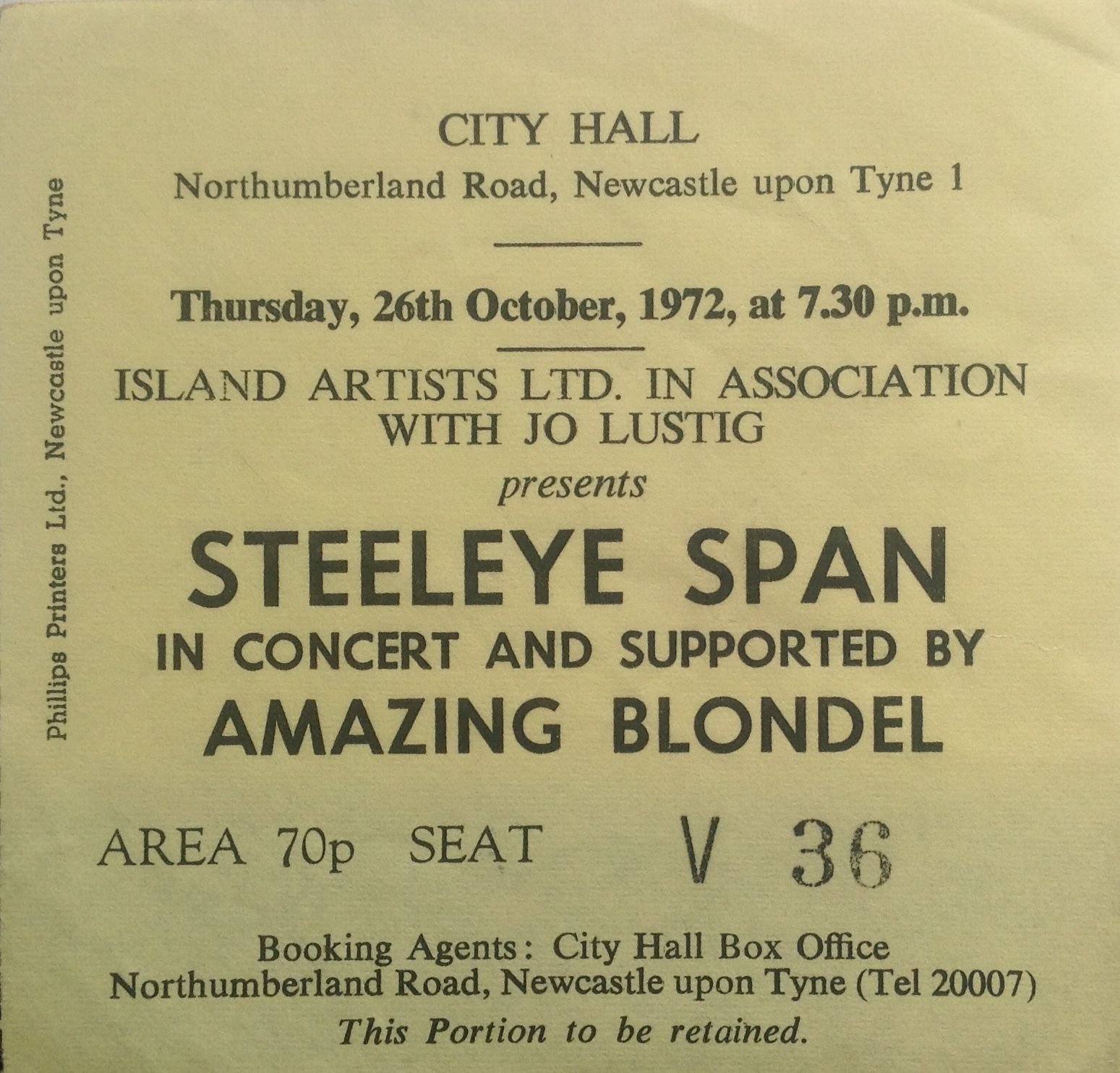 Steeleye Span, along with Fairport Convention, are pioneers of British folk rock. Their music successfully marries traditional English folk music with a harder, electric sound. In their early days, Steeleye Span played almost exclusively traditional folk songs. I first saw them as the support act for the mighty Jethro Tull on their spring 1971 tour when it called at Sunderland Empire. Steeleye Span’s line-up was, at that time, Tim Hart (guitars, vocals), Maddy Prior (vocals and twirling skirt dancing), Ashley Hutchings (bass), Martin Carthy (guitars, vocals) and Peter Knight (strings, keyboards, guitars, vocals). Note, the band had no drummer, which made the line-up seem somewhat different.
By the time of this 1972 headlining concert at Newcastle City Hall, Ashley Hutchings and Martin Carthy had both departed and had been replaced by Bob Johnson (guitars, vocals) and Rick Kemp (bass, drums, vocals).
 This was a strong double bill, and I remember that my reason for going along to the concert was partly to see support act Amazing Blondel. Some of my friends had seen Amazing Blondel supporting Free, and came back gushing with glowing reports of these three crazy guys with amazingly long hair who played strange quaint medieval instruments. Amazing Blondel were indeed “amazing”. They were reportedly influenced by their childhood memories of the Robin Hood TV series, and its mediaeval soundtrack. Indeed, they named their band after Blondel de Nesle, a musician in the court of Richard the First. Their Medieval brand of folk rock was, in fact, an authentic attempt to recreate Renaissance music, using genuine period instruments such as lutes and recorders, and interlacing their songs with old English banter and bawdy jokes. Great stuff!
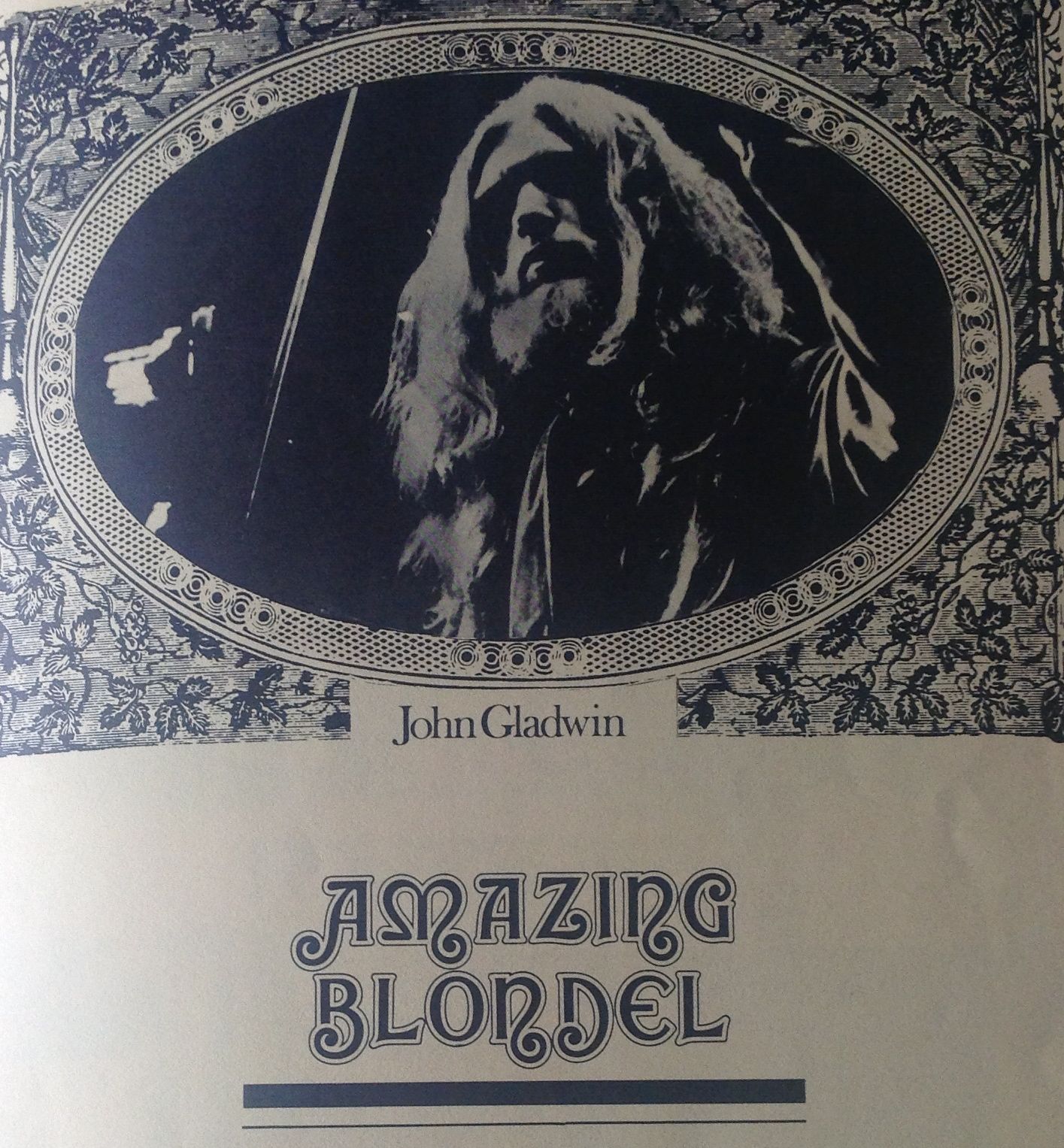 Steeleye Span were starting to gain their own following, and their version of the 16th Century Christmas carol “Gaudete” was becoming a big live concert favourite. The City Hall was full and both bands went down well. Steeleye Span’s set also featured some quite dark folk songs which told stories of medieval goings on, murders, affairs, etc. and a great version of “John Barleycorn”.
I had a double dose of Steeleye Span, having seen them just a month or so before when they featured on the bill at the Grangemouth pop festival. Happy days.
“Gaudete, gaudete
Christus est natus
Ex Maria Virgine
Gaudete”
31 Jul
Paul Simon London Palladium 12th December 1975
Paul Simon London Palladium 12th December 1975
 I first saw Paul Simon in the historic surroundings of the London Palladium in December 1975. He had just released his fourth solo album “Still Crazy After All These Years” and I went with my friend Ian. We bought day returns and went down to London by train, catching the midnight train home after the concert. Paul had just released a single from the album, “50 Ways to Leave Your Lover”. “50 Ways to Leave Your Lover” was a No 1 hit in the US, but only reached No 23 in the UK singles charts. The concert was the second of four nights at the Palladium. He also played a concert in Birmingham and in Manchester. Simon played songs from “Still Crazy After All These Years”, plus several Simon and Garfunkel classics. I remember that we both really enjoyed the concert, and that he finished with “Sound of Silence”, which has always been my favourite of his songs.
Penny Valentine reviewed the concert for Street Life at the time and described Paul Simon as “immaculate”, commenting on how the audience “checked their coats neatly and queued neatly afterwards to get them. I wouldn’t have been surprised if they’d ordered interval tea like a matinee crowd. They had come to pay homage. They did it through three encores then they quietly left. It was a very polite evening.”
Based on published setlists from the period, it is likely that the set was something like this:
Set 1: America. Duncan, Something So Right, 50 Ways to Leave Your Lover, Loves Me Like a Rock, Some Folks´ Lives Roll Easy, Bridge Over Troubled Water, Me & Julio Down By the Schoolyard, Homeward Bound, Mother & Child Reunion, I Do It For Your Love, You´re Kind, Bluesette
Set 2: Have A Good Time, Still Crazy After All These Years, My Little Town, The Boxer, Mrs. Robinson, Gone at Last, American Tune, The Sound of Silence
Paul Simon’s band: Steve Gadd (drums), Randy Brecker (trumpet), Richard Tee (piano), Tony Levin (bass), Michael Brecker (sax), Hugh McCracken (guitar), Toots Thielemans (harmonica), Jessy Dixon and possibly Phoebe Snow (vocals).
30 Jul
Simon and Garfunkel Manchester Arena 14th July 2004
Simon and Garfunkel Manchester Arena 14th July 2004
 I really didn’t expect to get the chance to see Simon and Garfunkel together again. But, 20 years after touring the world, including a show at Wembley Stadium, the duo reformed again, and were back out on the road on their “Old Friends” tour. Support this time came from their childhood heroes and influences the Everly Brothers. The show was in three parts. Simon and Garfunkel started with “Old Friends / Bookends” and then were straight into one of my favourites, “Hazy Shade of Winter”. The first half featured other classics including “America” and “Kathy’s Song”. For the last song of the first set the pair took us right back to their first hit, “Hey Schoolgirl”, from the days when they were known as Tom and Jerry. That song gave them a chance to pay tribute to the guys whose songs and harmonies influenced them, as they welcomed Don and Phil Everly to take the stage. The Everlys then played a short set of four songs: “Wake Up Little Susie”; “All I Have to Do Is Dream”; “Let It Be Me” and “Bye Bye Love”.
  Simon and Grafunkel returned for a second set including all the other great tunes: “Scarborough Fair”; “Homeward Bound”; my all-time favourite “The Sound of Silence”; “Mrs. Robinson” and “Bridge Over Troubled Water”. Paul Simon also sang a number of his solo hits. The screens behind them showed videos of them as kids, and during the ’60s, bringing back lots of memories for all of us. The audience called them back for a few encores, including the haunting “Leaves That Are Green”. Wonderful stuff. Now whats the chances of them coming back again in another 10 years? Well you never know, do you.
Set 1: Old Friends/Bookends; A Hazy Shade of Winter; I Am a Rock; America; At the Zoo; Baby Driver; Kathy’s Song; Hey, Schoolgirl.
The Everly Brothers set: Wake Up Little Susie; All I Have to Do Is Dream; Let It Be Me; Bye Bye Love
Set 2: Scarborough Fair/Canticle; Homeward Bound; The Sound of Silence; Mrs. Robinson; Slip Slidin’ Away; El Condor Pasa (If I Could); Keep the Customer Satisfied; The Only Living Boy in New York; American Tune; My Little Town; Bridge Over Troubled Water.
Encore: Cecilia; The Boxer
Encore 2: Leaves That Are Green; The 59th Street Bridge Song (Feelin’ Groovy)
29 Jul
Simon and Garfunkel Wembley Stadium 19th June 1982
Simon and Garfunkel Wembley Stadium 19th June 1982
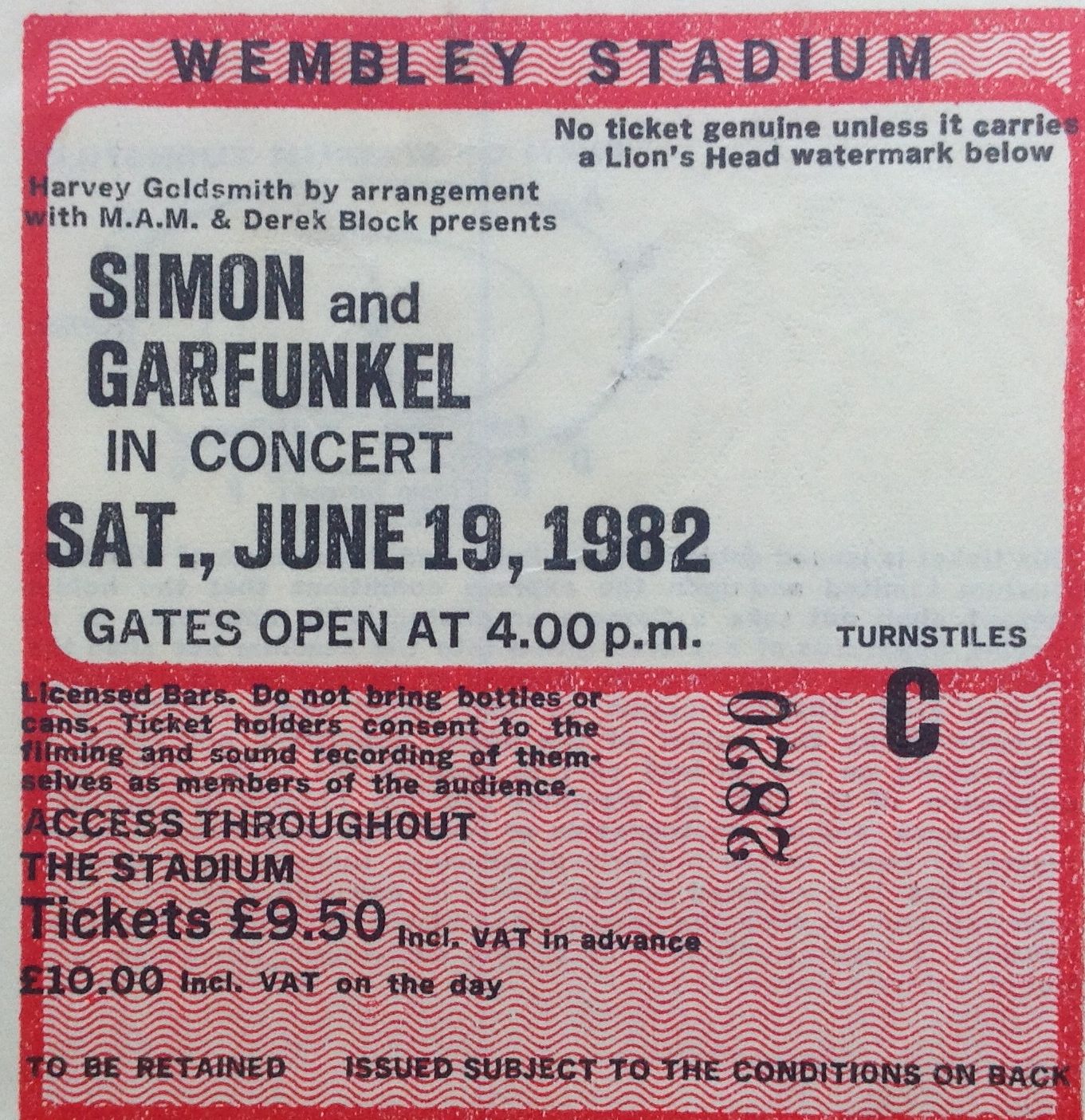 I never thought I’d get the chance to see Simon and Garfunkel in concert. I’d seen Paul Simon once at a concert in the London Palladium in the 1970s, but felt that the chance of a reunion with Art Garfunkel was slim. However, Simon and Garfunkel did reunite for a free concert in New York City’s Central Park on September 19, 1981. The Central Park concert was attended by over 500,000 people, a recording of it was released as a live album, and the duo then went on to go on a world tour in 1982–83, including a performance at London in June 1982. This was a great concert, with Paul and Art singing all their classic hits, along with a couple of Paul Simon solo songs, Art Garfunkel’s “Bright Eyes” and a nod to their influences in the form of a couple of Everly Brothers’ songs. At the time I thought it strange going to see a folk-based act in a vast stadium, and wondered if the songs would get lost in such a vast venue.
 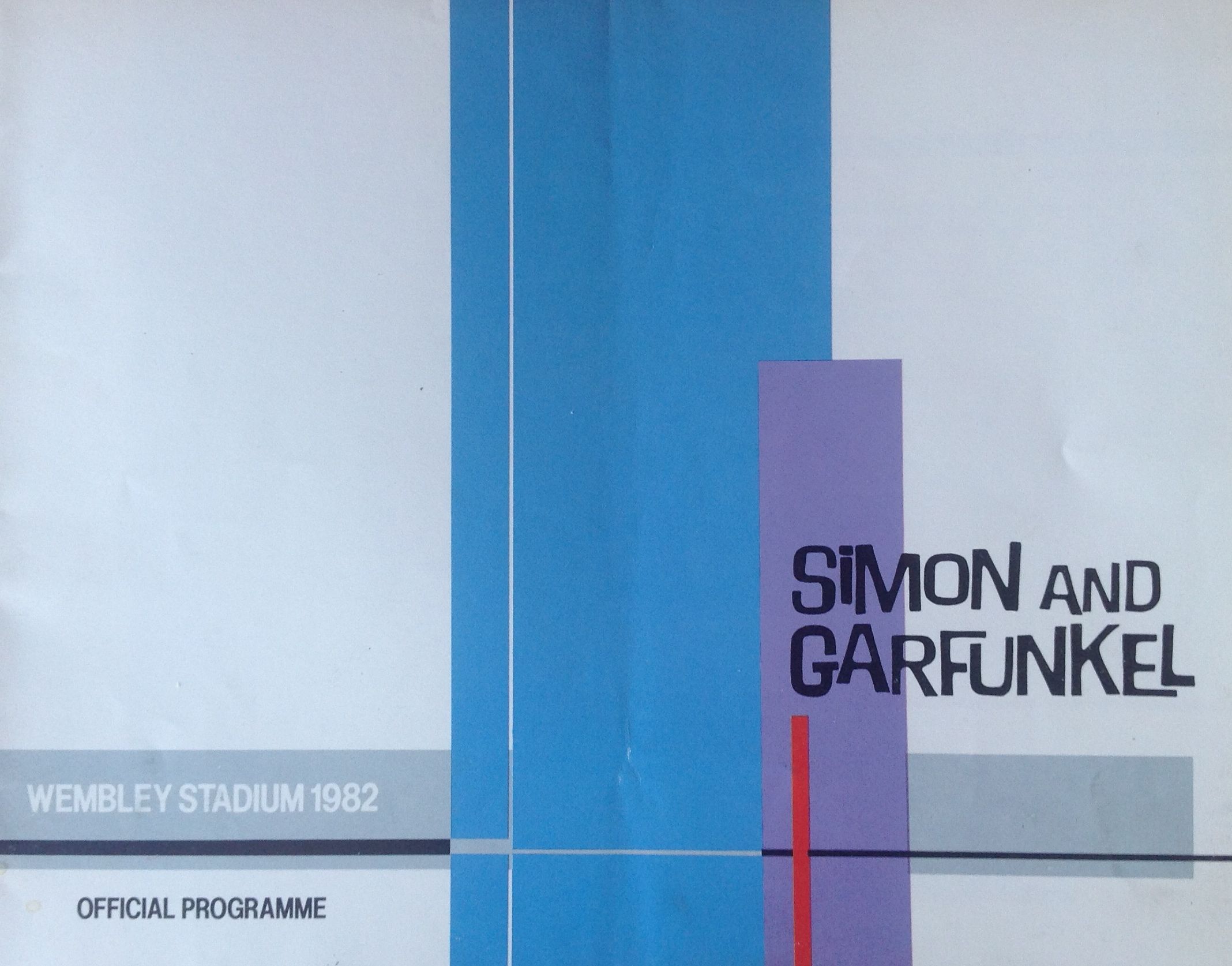 I needn’t have worried. The beauty and power of those simple songs transfixed the crowd of 72,000 people. The stage set was similar to the Central Park concert, and as far as I recall, there was no support act.
Setlist: Mrs. Robinson; Homeward Bound; America; Me And Julio Down By The Schoolyard; Scarborough Fair; My Little Town; Wake Up Little Susie; Still Crazy After All These Years; Bright Eyes; Late In The Evening; Slip, Sliding Away; El Condor Pasa; American Tune; The Late Great Johnny Ace; Kodachrome/Mabellene; Bridge Over Troubled Water; The Boxer; Old Friends/Bookends; 59th Street Bridge Song; Cecilia; Sounds Of Silence; All I Have To Do Is Dream
27 Jul
Bruce Springsteen Dublin The Point The Seeger Sessions tour 19th Nov 2006
Bruce Springsteen Dublin The Point The Seeger Sessions tour 19th Nov 2006
 In 2006 I was travelling to Dublin on a regular basis and often tried to arrange my trips around concerts. This didn’t usually work out, but this was one of the few occasions when it did. At the time, I’d lost touch with Bruce Springsteen, but my interest in his music was reignited when I heard the Seeger sessions CD. I read the very positive reviews of the album, and I liked the concept: Bruce returning to the roots music which inspired him, and those who influenced him. I missed the tour when it first visited the UK, and kicked myself when I read the rave reviews of the concerts. When Bruce added further dates including a three night stint at the Point, Dublin, I decided to try and get tickets and arrange my next trip to the city around the concert. My plan worked, and I flew over to Dublin on the Sunday morning, attended the concert on the Sunday evening, and went to meetings on Monday, returning home Monday evening.
The Point was a concert venue on the site of an old train depot along the dockland, off O’Connell Street. It operated during the period 1988 to 2007, and played host to the world’s top acts. In 2007 it was redeveloped as an O2 arena with a capacity of 14,000 (the old Point held 8,000). Several bands recorded live albums at the Point, including two which I attended: this series of concerts by Springsteen, and a two night stay by David Bowie.
This was a truly amazing and joyous concert. How could it be anything else? Springsteen singing those simple class gems of Americana with his Seeger sessions band in a lovely, relatively small, venue in Dublin; a city whose people are renowned for song and singing and for taking acts to their hearts. I just knew that this was going to be a special evening. From the minute I entered the Point, I could feel the atmosphere, and the cameras and mikes all over the auditorium made doubly sure that the Dublin crowd was going to give Bruce a reception like no other. From the minute that Springsteen came on stage, held his acoustic guitar high while strumming away at it, standing in line with his massed group of players, the whole hall was singing along as one, and the power and atmosphere continued at full pelt for a couple of hours. There were smiles on all of the band members’ faces, you could see that they were all enjoying the experience and the reaction from the Dublin crowd.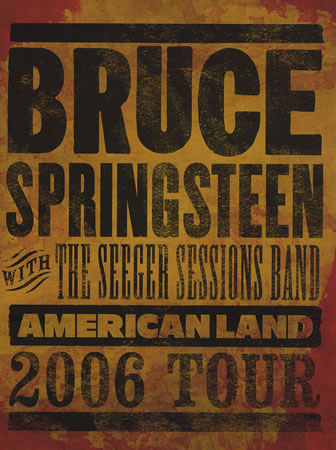 There was a sense of a mass party, a celebration, and a religious, gospel gathering, all rolled into one. It was unlike any other performance I have been to, and easily matched the previous Springsteen shows I had been to. At the end of the show, the band brought all of their families, kids and the crew on to the stage, and the whole crowd gave the performer, all their people, and themselves, an ovation that seemed to go on for ever. As we all wandered out into the cold Dublin air, and made our way back along the road to O’Connell Street, we knew we had all been part of something special. I have the DVD, which was drawn from selections across the three nights at the Point, and it captures the excitement and joyous mood of the evening. I was a Springsteen fan again, and have seen him four time since, at concerts in Hampden Park Glasgow, The O2 London, Stadium of Light Sunderland and Leeds Arena.
Setlist: Atlantic City; John Henry; Old Dan Tucker; The Ghost of Tom Joad; Mary Don’t You Weep; Jesse James; Further On (Up the Road); Erie Canal; For You; My Oklahoma Home; If I Should Fall Behind; Mrs. McGrath; How Can a Poor Man Stand Such Times and Live?; Jacob’s Ladder; Long Time Comin’; Jesus Was an Only Son; Open All Night; Pay Me My Money Down; We Shall Overcome; Blinded by the Light; When the Saints Go Marching In; This Little Light of Mine; American Land
Band (this was a bog band!): Bruce Springsteen (vocals, guitar, harmonica); Sam Bardfeld (violin, vocals); Art Baron (sousaphone, trombone, mandolin, penny whistle, euphonium); Frank Bruno (acoustic guitar, vocals, field drum); Jeremy Chatzky (bass guitar, double bass; Larry Eagle (drums, percussion); Clark Gayton (trombone, vocals, percussion); Charles Giordano (accordion, piano, Hammond organ, vocals); Curtis King Jr. (vocals, percussion); Greg Leisz (banjo, vocals); Lisa Lowell (vocals, percussion); Ed Manion (tenor and baritone saxophones, vocals, percussion); Cindy Mizelle (vocals, percussion); Curt Ramm (trumpet, vocals, percussion); Marty Rifkin (steel guitar, dobro, mandolin); Patti Scialfa (acoustic guitar, vocals); Marc Anthony Thompson (acoustic guitar, vocals); Soozie Tyrell (violin, vocals).
3 Jul
Strawbs 1972, 1973 and Newcastle City Hall 23rd September 1976
Strawbs 1972, 1973 and Newcastle City Hall 23rd September 1976
 My mate Tony had the Strawbs lp “Just a Collection of Antiques and Curios” which we listened to endlessly. It must have been 1970 or 1971. Our favourite tracks were “Fingertips”, the epic “Where Is This Dream of Your Youth”, which still sounds great today, and (strangely) Rick Wakeman’s piano solo “Temperament of Mind”. I didn’t get to see Strawbs live until May 1972 at the Lincoln festival, where they played on a cold wet evening between I think Stone The Crows and The Faces. By then Rick Wakeman had departed and the line-up was Dave Cousins (vocals), Tony Hooper (guitar), Richard Hudson (drums), John Ford (bass) and Blue Weaver (keyboards). By that point their set contained classics such as “The Man Who Called Himself Jesus”, “The Hangman and the Papist” and “Benedictus”.
There was, and is, something unique about Strawbs music which sets them apart from many of their folk-rock contemporaries. Dave Cousins voice has a strange, other worldy, yet vpleasant, quality and their songs tell great stories.
The line-up of the band changed dramatically in late 1972 and early 1973, and Strawbs began to pursue a more rock/pop sound, hitting the charts with the excellent “Lay Down” and “Part of the Union”. By the time I saw them again in, I think, 1973 at Sunderland Locarno the line-up was Dave Cousins (now the only original member), Dave Lambert (guitar), Chas Cronk (bass) and Rod Coombes (drums). This was much more a rock band; Dave Cousins even wore a bright sparkling glittery jacket 🙂
The ticket here is for a later gig, in 1976 at Newcastle City Hall. By then the band were focussing more on playing in the USA. They called it a day in 1980, but soon reformed. Cousins, Lambert and Cronk continue to play today. I’ve written elsewhere on recent Strawbs gigs which I have attended, and pretty good they are too.
23 Jun
Splinter “Costafine Town” live at Newcastle City Hall
Splinter “Costafine Town” live at Newcastle City Hall
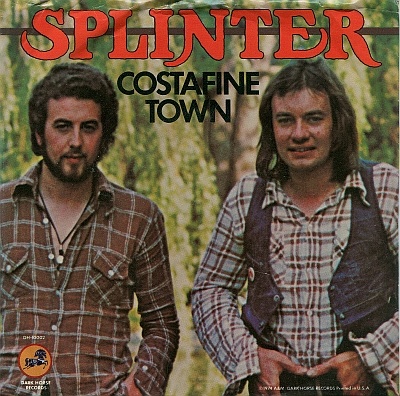 My friend John mentioned the band Splinter to me in an email the other day, which brought back memories of this fine duo. Splinter was a two-man vocal group from the North East, South Shields in fact. The two members were Bill Elliott and Bobby Purvis and they formed in the early 1970s. Elliott and Purvis had both been members of local rock band Half Breed, who were quite popular on the circuit in the early 70s; I remember seeing them at Newcastle Mayfair or Sunderland Mecca. Splinter were connected with George Harrison, being the first act to sign to Harrison’s Dark Horse Records label. The band’s sound was often compared to The Beatles and Badfinger. Their debut album, “The Place I Love” was released in 1974 and contained the hit single “Costafine Town”. “Costafine Town” is a great pop song, and a favourite of mine at the time.
I remember seeing Splinter live at the City Hall at least once; I think they were support act for the Kinks. I recall making a special effort to pass on visiting the City Tavern or the City Hall bar, so that I could see them, largely to hear them play Costafine Town, which they of course did. I have an old vinyl copy of their debut lp upstairs. Time to get on the turntable again.
I often wondered what Costafine Town was about, and a little googling revealed the answer, which I found on the Sheilds Gazette website: “Costafine Town took its inspiration from Corstorphine Town in Shields, the stretch of the riverside between West Holborn and Templetown, which includes McNulty’s shipyard. The name was said to derive from Robert Corstorphine, the landlord of the Cookson’s Arms there in the 1830s, but it later emerged that his surname was actually, originally, Robert Marsham, and he had simply adopted the name of the locality.”
“A dirty old hole, In the side of the road, For the man who cleans the streets, Open pub doors, Where the working class goes at night.
Written on walls, Where the cats never crawl, For the glass along the top, Man I was born there, I’m gonna walk right back.
Costafine town, it’s a fine town, I’m coming home
I feel so lonely, I’ve been too long away
Costafine town, it’s a fine town, I’m coming home
I wish I’d never, Made up my mind to stray”
(Splinter, 1974)
There’s a YouTube video of the guys performing Costafine Town on the Whistle Test. Check it out. Great song.
 Vintagerock's Weblog.